
Loading, please wait...
LOT 0933
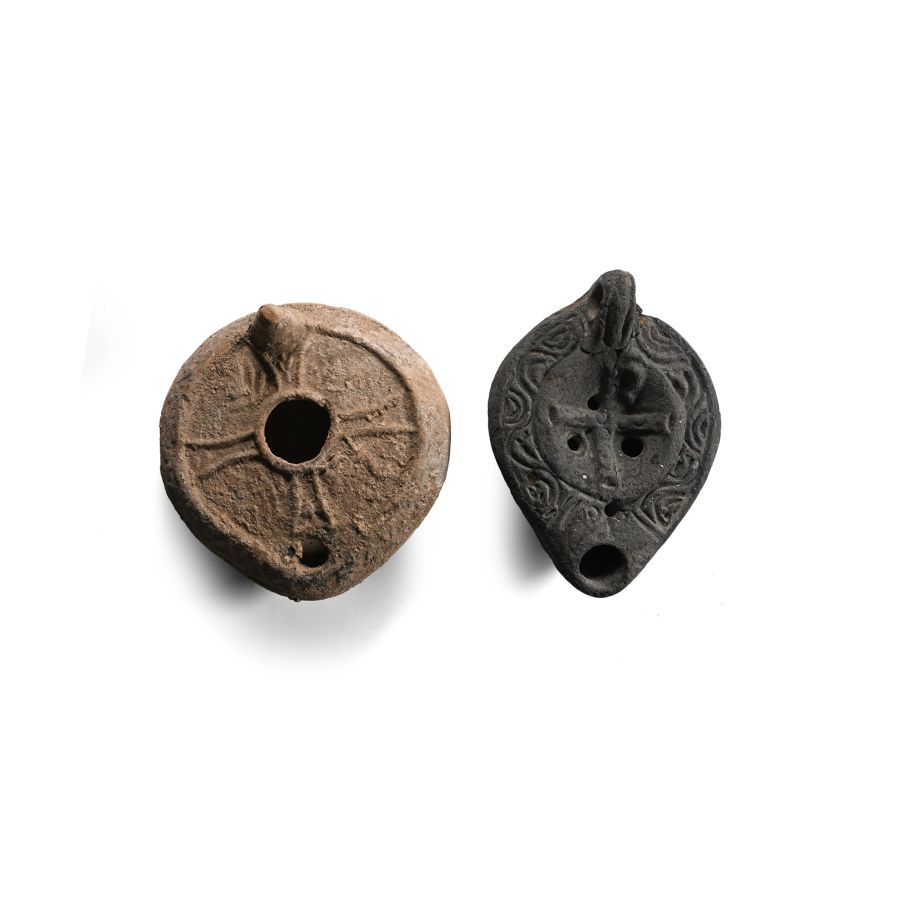
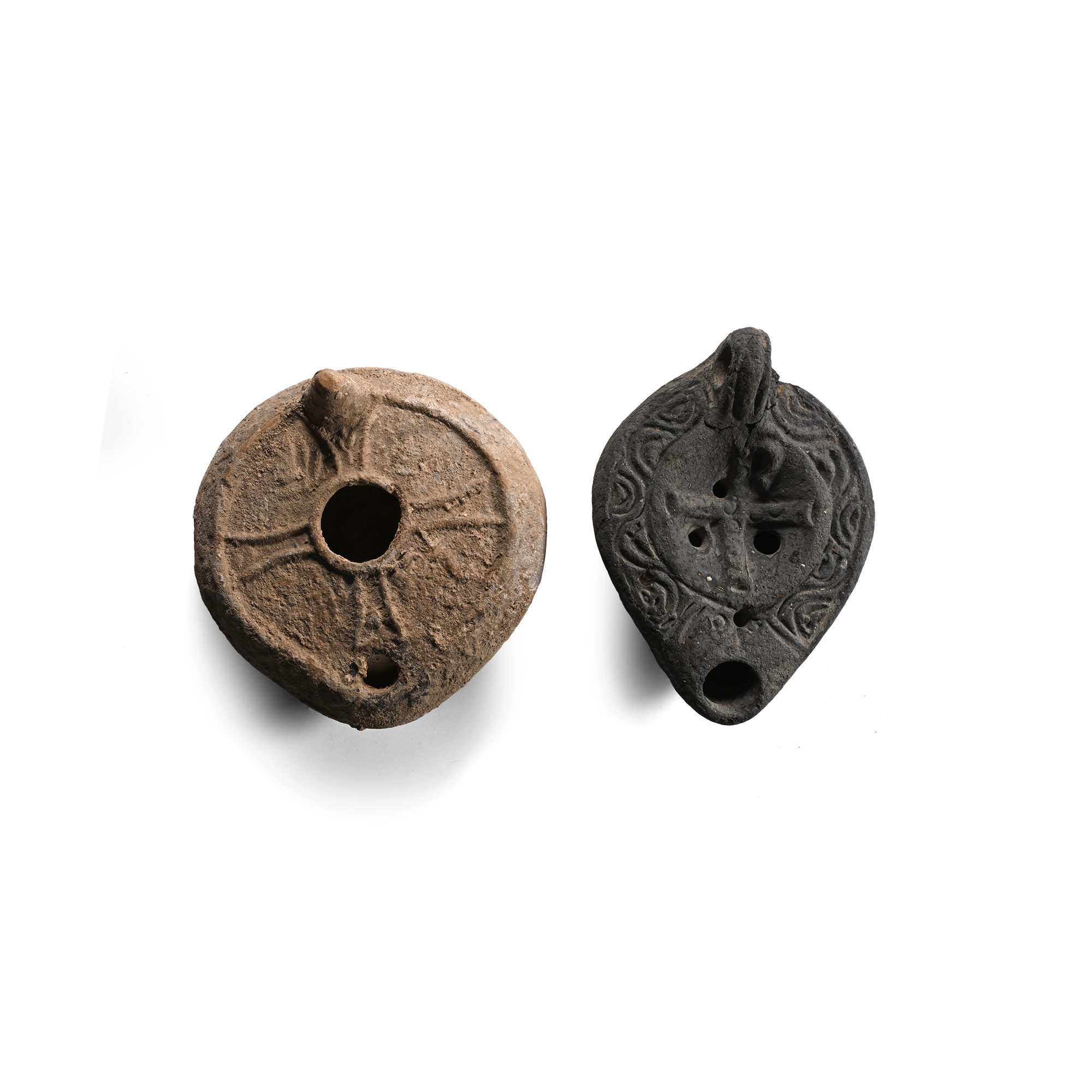
Byzantine Ceramic Oil Lamp Collection
5TH-6TH CENTURY A.D.
3 3/4 - 4 in. (194 grams total, 9.5-10 cm).
Comprising: a piriform oil lamp with short nozzle and ring handle, low discus with three filler holes and a Chi Rho motif, base fragmentary; a round lamp with a low-relief expanding cross on the discus, a palm branch to the top left quadrant, and the other three quadrants with different symbols, a cross beneath the nozzle with wavy lines circulating the low basal ring. [2]
Provenancewith Galerie Rhéa, Zurich, Switzerland.
This lot is accompanied by an illustrated lot declaration signed by the Head of the Antiquities Department, Dr Raffaele D'Amato.
TimeLine Auctions follows a vetting process to ensure the authenticity and legality of all items, reinforcing our commitment to integrity and responsible trading. Each antiquity, antique, and coin lot undergoes thorough examination by a vetting committee of at least ten external specialists, professional trade association members, scientists, and archaeologists: Our Vetting Process
AUCTIONS:
TimeLine is a leading auction house specialising in antiquities, ancient art, collectables, natural history, coins, medals, and books. Our auctions offer museums, collectors, historians, and enthusiasts the opportunity to acquire unique and historically significant pieces.
-
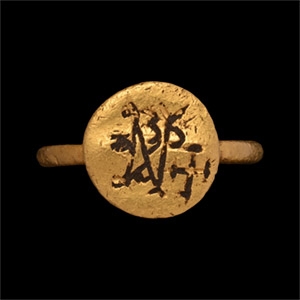
Byzantine Gold Ring with Monogram
6th-7th century A.D.Sold for (Inc. bp): £1,300
Round-section hoop supporting a disc bezel with engraved monogram incorporating a cross potent and the letters N, O, P, E, Z and others. 3.29 grams, 17.57 mm overall, 15.91 mm internal diameter (approximate size British I 1/2, USA 4 1/2, Europe 8.07, Japan 7)
From an early 20th century collection based on the collector's ticket. Property of a Californian, USA, collector. This lot is accompanied by an illustrated lot declaration signed by the Head of the Antiquities Department, Dr Raffaele D'Amato. -
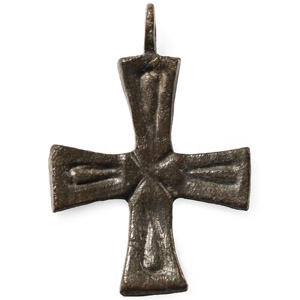
Byzantine Bronze Cross Pendant
12th-14th century A.D.Sold for (Inc. bp): £65
Expanding cross with a central X-motif, integral suspension loop. 4.63 grams, 35 mm
Ex German art market, 2000s. Acquired from an EU collector living in London. From the collection of a Surrey, UK, gentleman. This lot is accompanied by an illustrated lot declaration signed by the Head of the Antiquities Department, Dr Raffaele D'Amato. -
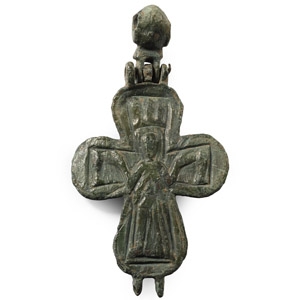
Byzantine Bronze Reliquary Cross Pendant Plate
10th-12th century A.D.Sold for (Inc. bp): £124
With a low-relief figure in orans pose with a fish flanking each arm, and three fish above the head; articulated suspension loop above. 12.27 grams, 66 mm
Ex German art market, 2000s. Acquired from an EU collector living in London. From the collection of a Surrey, UK, gentleman. This lot is accompanied by an illustrated lot declaration signed by the Head of the Antiquities Department, Dr Raffaele D'Amato.
