
Loading, please wait...
LOT 0973
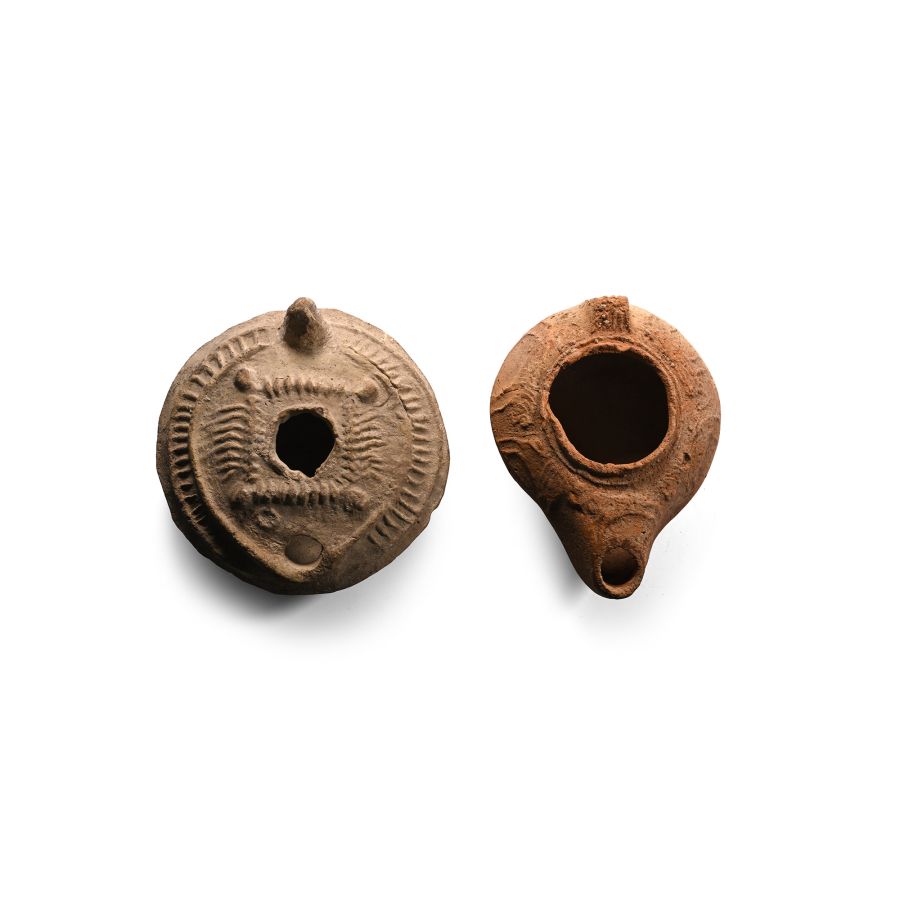
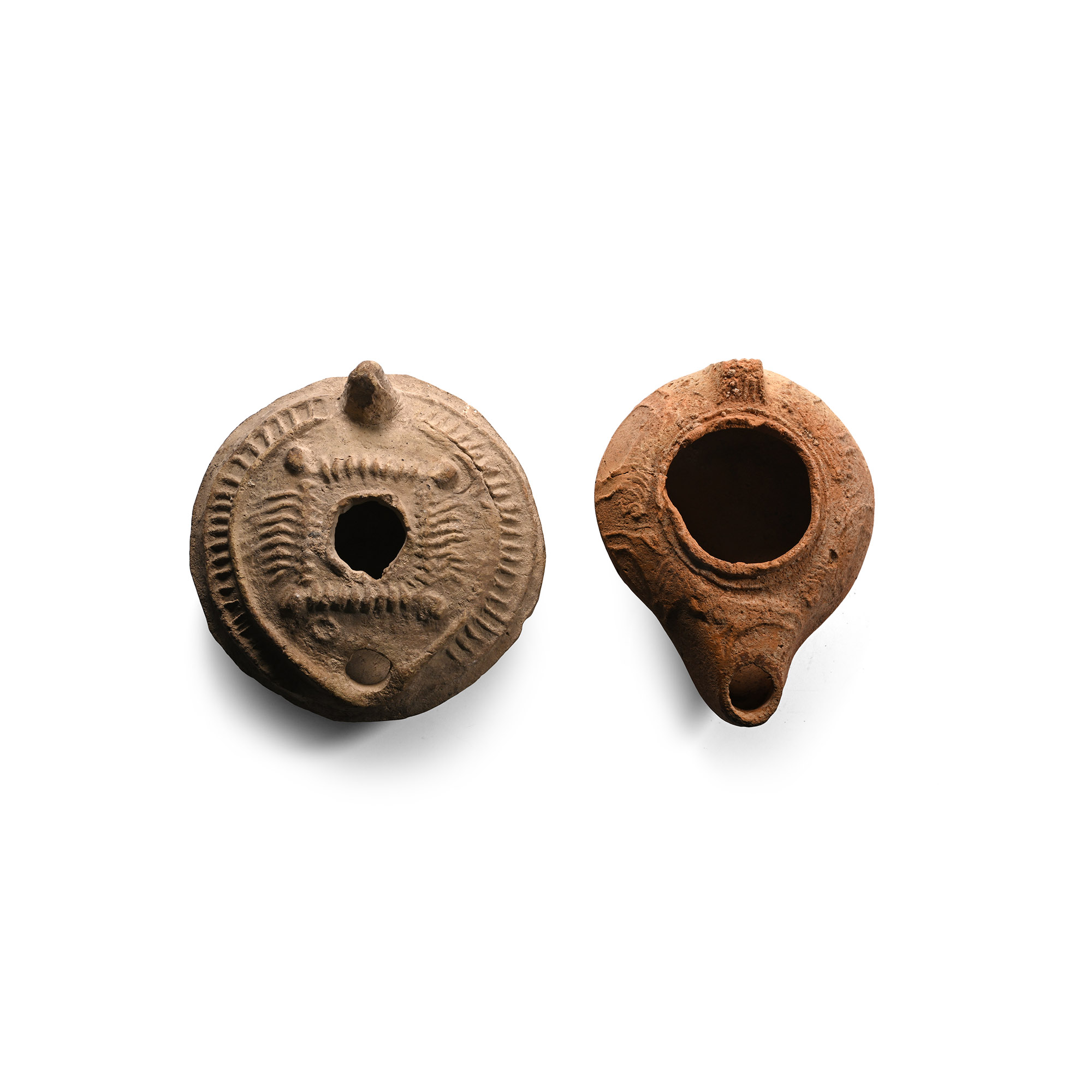
Byzantine Ceramic Oil Lamp Collection
6TH-8TH CENTURY A.D.
3 3/4 - 4 in. (195 grams total, 9.6-10.1 cm).
Comprising: a piriform lamp with a band of stylised quadrupeds surrounding the large filler hole, ribbed handle; a discoid lamp with raised linear decoration, wheel motif to base. [2,]
Provenancewith Galerie Rhéa, Zurich, Switzerland.
This lot is accompanied by an illustrated lot declaration signed by the Head of the Antiquities Department, Dr Raffaele D'Amato.
TimeLine Auctions follows a vetting process to ensure the authenticity and legality of all items, reinforcing our commitment to integrity and responsible trading. Each antiquity, antique, and coin lot undergoes thorough examination by a vetting committee of at least ten external specialists, professional trade association members, scientists, and archaeologists: Our Vetting Process
AUCTIONS:
TimeLine is a leading auction house specialising in antiquities, ancient art, collectables, natural history, coins, medals, and books. Our auctions offer museums, collectors, historians, and enthusiasts the opportunity to acquire unique and historically significant pieces.
LOT 0973
Byzantine Ceramic Oil Lamp Collection
Estimate £200 - 300€230 - 350 (for guidance only)$270 - 410 (for guidance only)
-
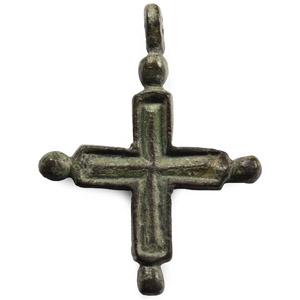
Byzantine Bronze Cross Pendant
10th-12th century A.D.Sold for (Inc. bp): £72
Thick arms with knop finials, low-relief cross to both faces; integral suspension loop. 13.6 grams, 52 mm
Ex German art market, 2000s. Acquired from an EU collector living in London. From the collection of a Surrey, UK, gentleman. This lot is accompanied by an illustrated lot declaration signed by the Head of the Antiquities Department, Dr Raffaele D'Amato. -
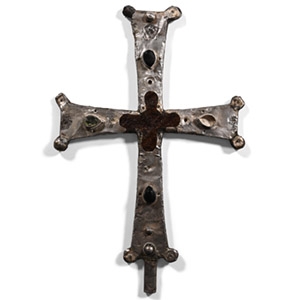
Byzantine Silver Processional Cross with Cabochons
Circa 10th-11th century A.D.Estimate: £4,000 - 6,000 (+bp*)
Opening Bid: £2,000
A sheet-silver cross with expanding arms terminating in pairs of circular lobes, the upper and lower arm with an applied boss at the centre, each arm with a later pear-shaped cell with bead wire decoration, three set with a glass gem, a cross-shaped opening at the centre; twelve small holes to the body for attachment of decorative elements; attaches to lot 357. 272 grams, 27.7 cm
From the collection of an antiquarian and collector of medieval art. Acquired on the London art market. Private collection, London, UK. Accompanied by an academic report by Dr Raffaele D'Amato. This lot has been checked against the Interpol Database of stolen works of art and is accompanied by a search certificate number no.12732-234560. This lot has been cleared against the Art Loss Register database, and is accompanied by an illustrated lot declaration signed by the Head of the Antiquities Department, Dr Raffaele D'Amato. -
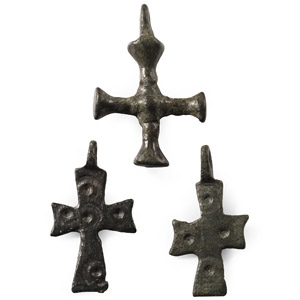
Byzantine Bronze Cross Pendant Group
10th-12th century A.D.Sold for (Inc. bp): £117
Comprising three small cross pendants, two with ring-and-dot motifs and one with expanding arms. 7.32 grams total, 26-29 mm
Ex German art market, 2000s. Acquired from an EU collector living in London. From the collection of a Surrey, UK, gentleman. This lot is accompanied by an illustrated lot declaration signed by the Head of the Antiquities Department, Dr Raffaele D'Amato.
