
Loading, please wait...
LOT 0988
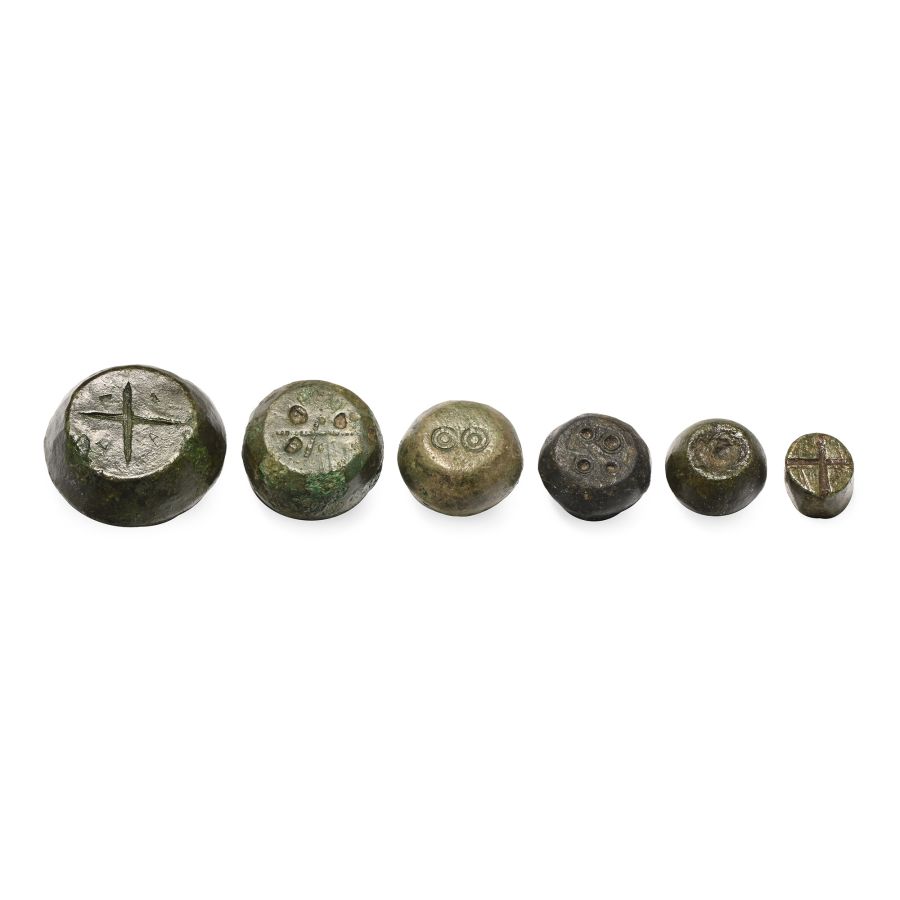
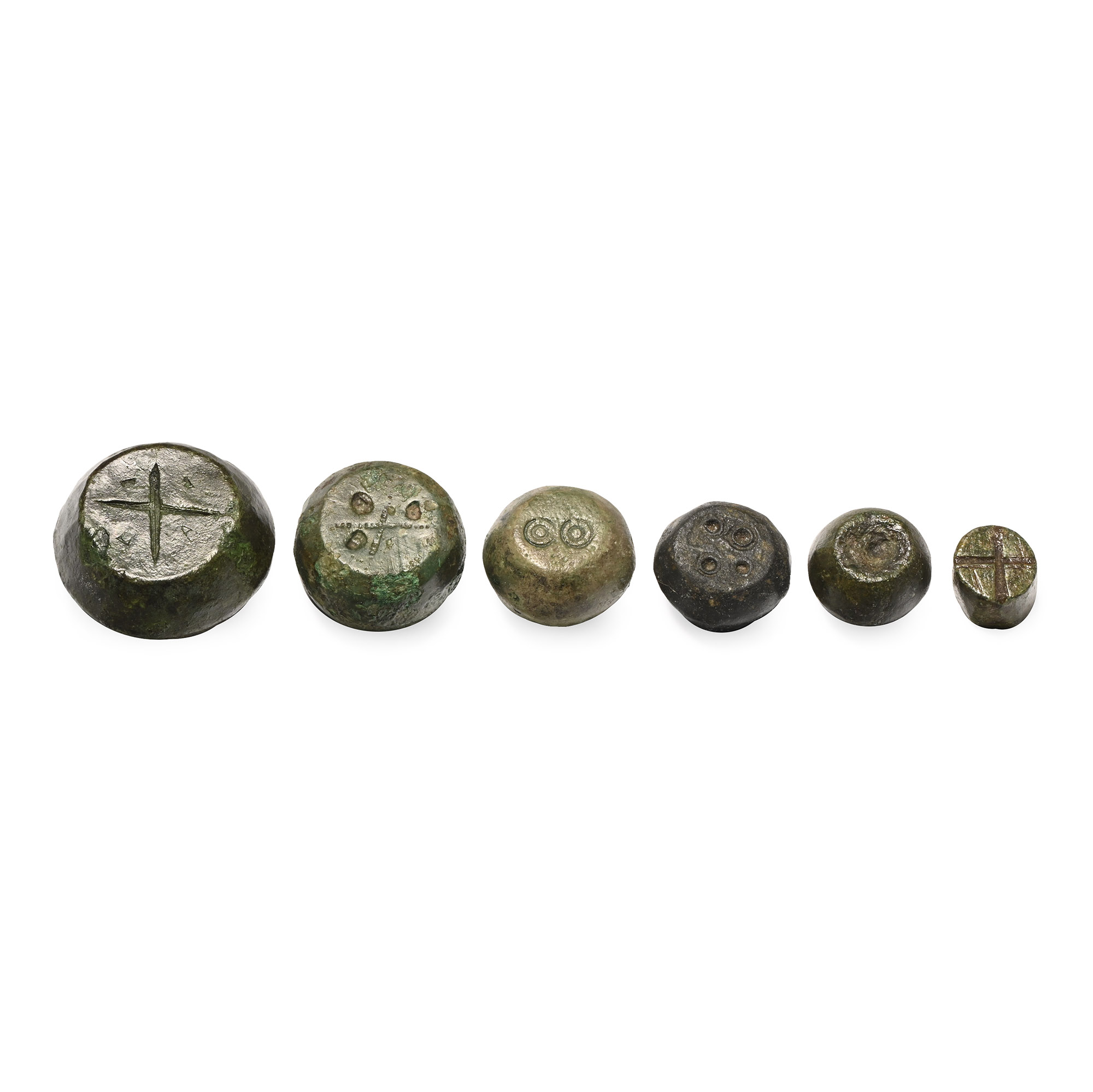
Byzantine Bronze Trade Weight Set
9TH-11TH CENTURY A.D.
3/8 - 7/8 in. (90.15 grams total, 9-23 mm).
Graduated group of barrel-shaped and columnar-type weights with impressed saltire, ring-and-dot and other motifs to the flat faces. [6, No Reserve]
ProvenanceFrom the private collection of a London gentleman, from his grandfather's collection formed before the early 1970s.
This lot is accompanied by an illustrated lot declaration signed by the Head of the Antiquities Department, Dr Raffaele D'Amato.
TimeLine Auctions follows a vetting process to ensure the authenticity and legality of all items, reinforcing our commitment to integrity and responsible trading. Each antiquity, antique, and coin lot undergoes thorough examination by a vetting committee of at least ten external specialists, professional trade association members, scientists, and archaeologists: Our Vetting Process
AUCTIONS:
TimeLine is a leading auction house specialising in antiquities, ancient art, collectables, natural history, coins, medals, and books. Our auctions offer museums, collectors, historians, and enthusiasts the opportunity to acquire unique and historically significant pieces.
-
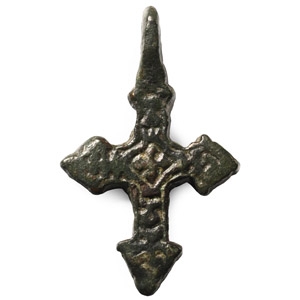
Byzantine Bronze Cross Pendant
10th-12th century A.D.Sold for (Inc. bp): £59
With low-relief floral decoration on the obverse; integral suspension loop. 5 grams, 35 mm
Ex German art market, 2000s. Acquired from an EU collector living in London. From the collection of a Surrey, UK, gentleman. This lot is accompanied by an illustrated lot declaration signed by the Head of the Antiquities Department, Dr Raffaele D'Amato. -
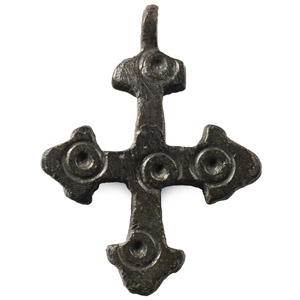
Byzantine Bronze Cross Pendant
9th-12th century A.D.Sold for (Inc. bp): £98
Cross pommée with punched ring-and-dot motifs, possibly representing the 'Five Wounds of Christ'. 3.99 grams, 32 mm
Ex German art market, 2000s. Acquired from an EU collector living in London. From the collection of a Surrey, UK, gentleman. This lot is accompanied by an illustrated lot declaration signed by the Head of the Antiquities Department, Dr Raffaele D'Amato. -
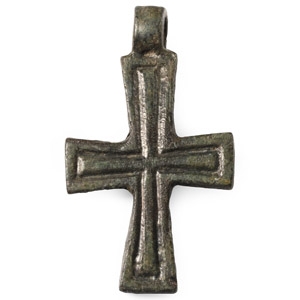
Byzantine Bronze Cross Pendant
10th-12th century A.D.Sold for (Inc. bp): £130
Gently expanding arms with raised borders, integral suspension loop above. 9.42 grams, 44 mm
Ex German art market, 2000s. Acquired from an EU collector living in London. From the collection of a Surrey, UK, gentleman. This lot is accompanied by an illustrated lot declaration signed by the Head of the Antiquities Department, Dr Raffaele D'Amato.
