
Loading, please wait...
LOT 0969
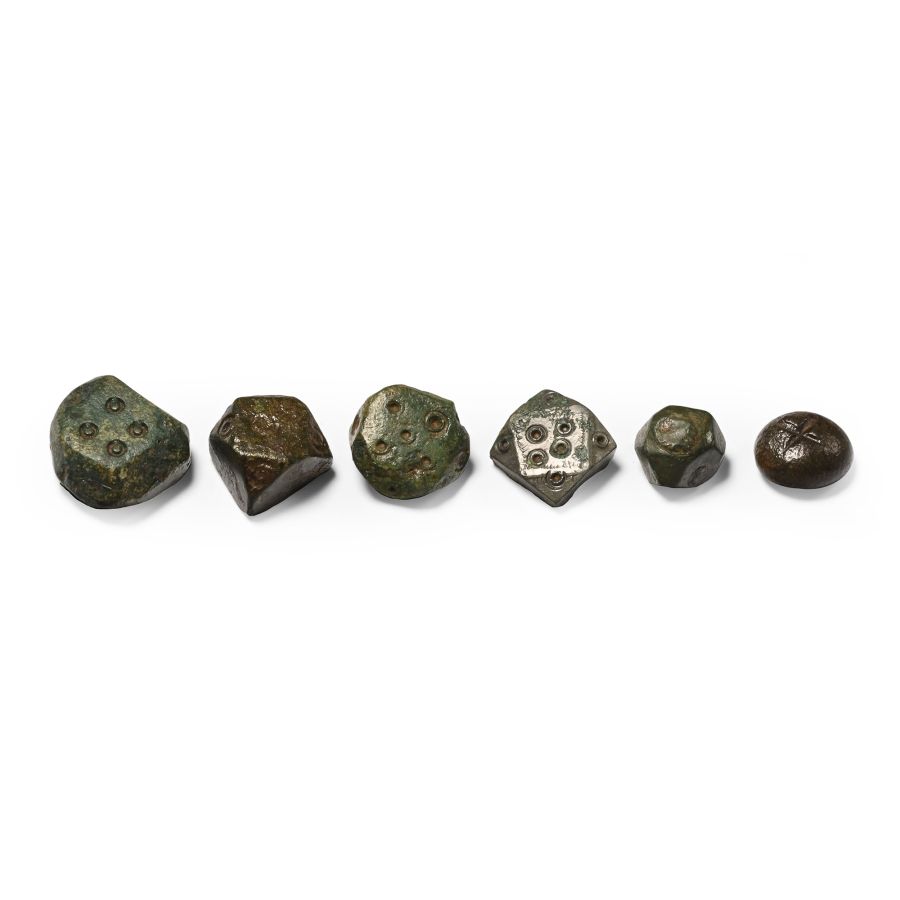
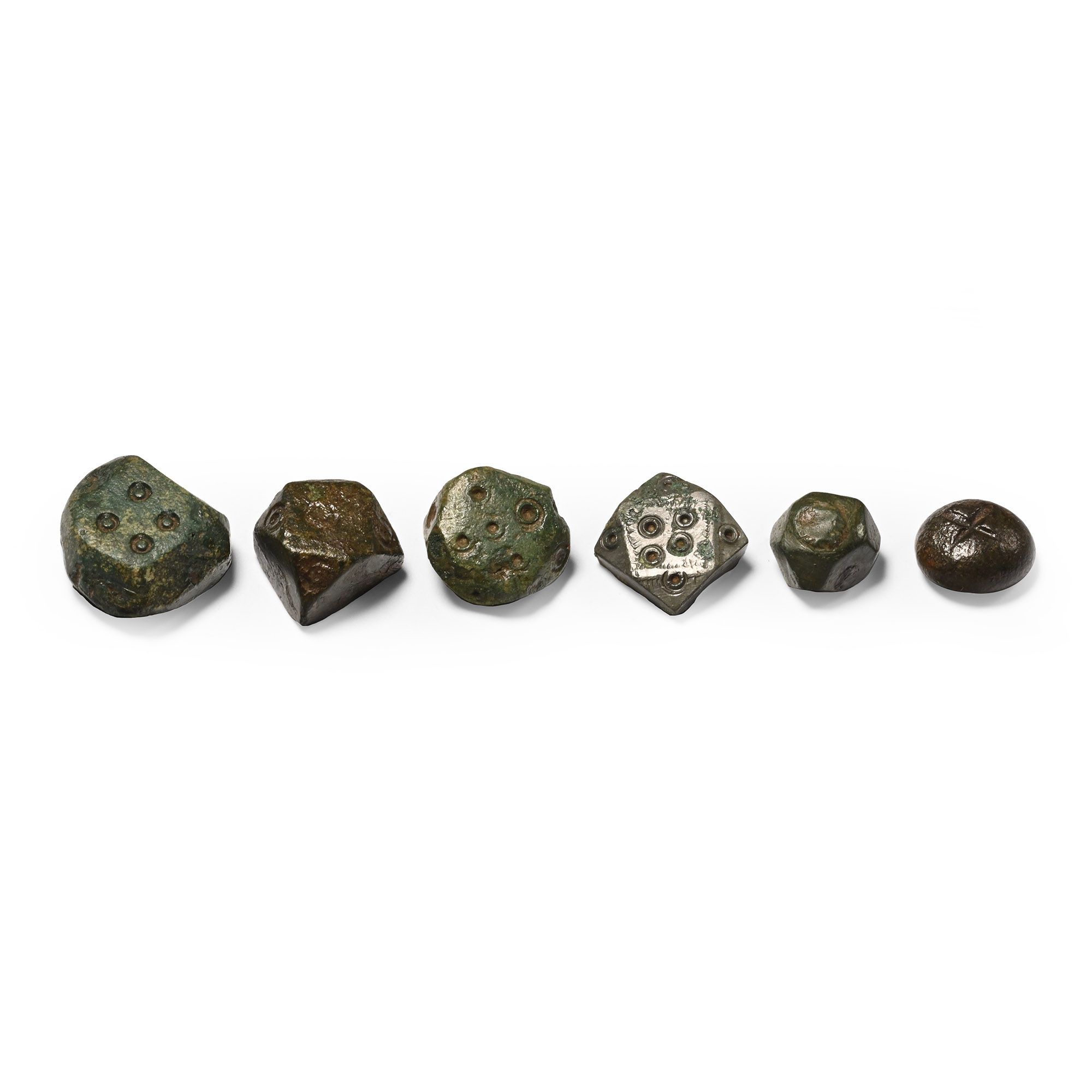
Byzantine Bronze Trade Weight Set
8TH-12TH CENTURY A.D.
3/8 - 1/2 in. (28.99 grams total, 9-15 cm).
Graduated group of polyhedral weights with punched pellet markings to the upper face. [6, No Reserve]
ProvenanceFrom the private collection of a London gentleman, from his grandfather's collection formed before the early 1970s.
This lot is accompanied by an illustrated lot declaration signed by the Head of the Antiquities Department, Dr Raffaele D'Amato.
TimeLine Auctions follows a vetting process to ensure the authenticity and legality of all items, reinforcing our commitment to integrity and responsible trading. Each antiquity, antique, and coin lot undergoes thorough examination by a vetting committee of at least ten external specialists, professional trade association members, scientists, and archaeologists: Our Vetting Process
AUCTIONS:
TimeLine is a leading auction house specialising in antiquities, ancient art, collectables, natural history, coins, medals, and books. Our auctions offer museums, collectors, historians, and enthusiasts the opportunity to acquire unique and historically significant pieces.
-
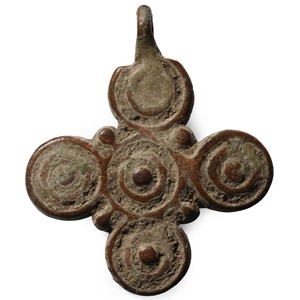
Byzantine Bronze Five Wounds of Christ Cross Pendant
Circa 12th-14th century A.D.Sold for (Inc. bp): £33
With rounded arms, each with concentric circles and a raised boss to the centre likely representing the Five Wounds of Christ. 5.21 grams, 36 mm
Ex Garcia collection, 1990s. This lot is accompanied by an illustrated lot declaration signed by the Head of the Antiquities Department, Dr Raffaele D'Amato. -
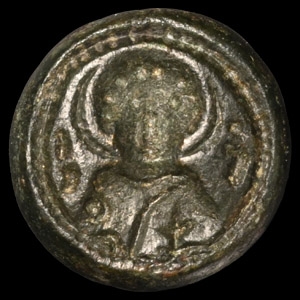
Byzantine Bronze Seal with Saint
8th-10th century A.D.Sold for (Inc. bp): £46
Collared loop above, underside with facing bust of a nimbate saint holding a cross. 6.34 grams, 18 mm
Ex German art market, 2000s. Acquired from an EU collector living in London. From the collection of a Surrey, UK, gentleman. This lot is accompanied by an illustrated lot declaration signed by the Head of the Antiquities Department, Dr Raffaele D'Amato. -
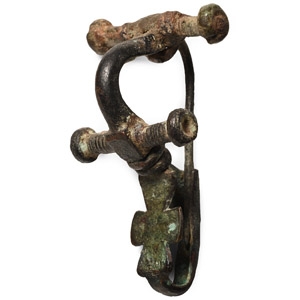
Byzantine Bronze Bow Brooch with Cross
6th-8th century A.D.Sold for (Inc. bp): £156
With deep bow flanked by two pairs of lateral disc-headed studs, cruciform foot returning to form the catch and with loop around the shank, spring and pin to reverse. 17 grams, 53 mm
Ex important German collection of brooches, 1980s. This lot is accompanied by an illustrated lot declaration signed by the Head of the Antiquities Department, Dr Raffaele D'Amato.
