
Loading, please wait...
LOT 0971
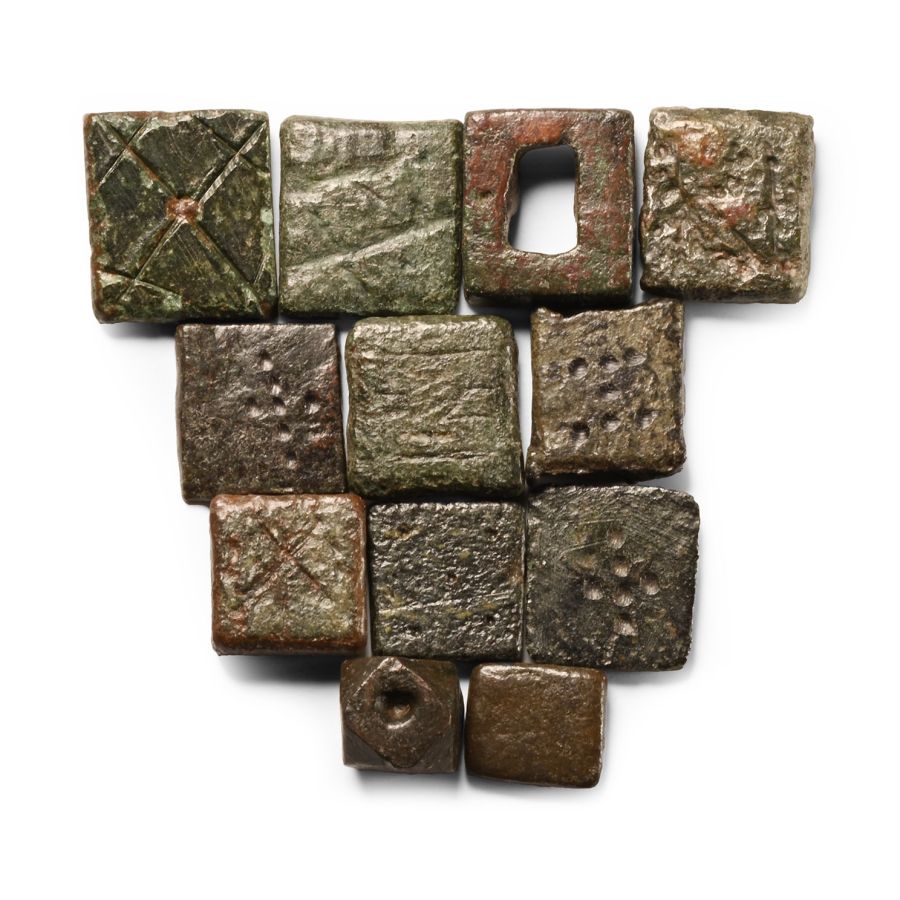
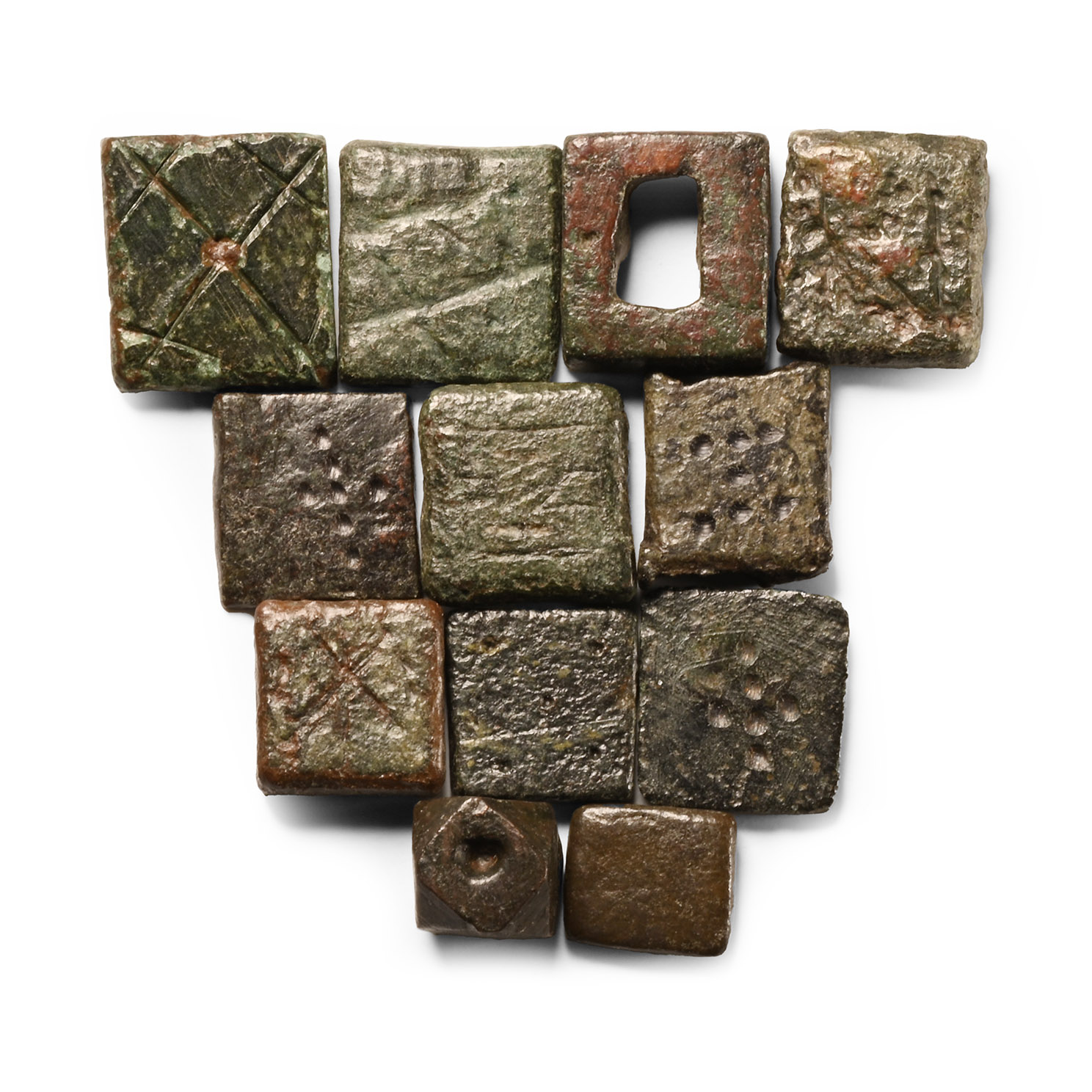
Byzantine Bronze Trade Weight Collection
CIRCA 6TH-12TH CENTURY A.D.
1/4 - 1/2 in. (36.4 grams total, 7-14 mm).
Mixed group of square trade weights with punched and incised detailing. [12, No Reserve]
ProvenanceAcquired since the 1970s.
From the private collection of a Surrey, UK, gentleman.
See Weber, K., Byzantinische Münzgewichte: Materialkorpus für 1-Nomisma-Gewichte, Schwelm, 2009.
CONDITIONTimeLine Auctions follows a vetting process to ensure the authenticity and legality of all items, reinforcing our commitment to integrity and responsible trading. Each antiquity, antique, and coin lot undergoes thorough examination by a vetting committee of at least ten external specialists, professional trade association members, scientists, and archaeologists: Our Vetting Process
AUCTIONS:
TimeLine is a leading auction house specialising in antiquities, ancient art, collectables, natural history, coins, medals, and books. Our auctions offer museums, collectors, historians, and enthusiasts the opportunity to acquire unique and historically significant pieces.
-
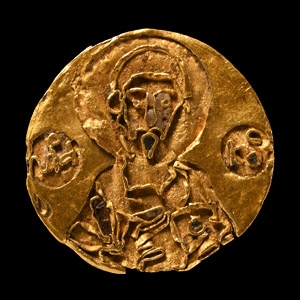
Byzantine Gold Enamel Mount of a Standing Saint and Inscription
Late 10th-early 11th century A.D.Sold for (Inc. bp): £442
Sheet gold disc with applied filigree cells; facing nimbate saint with flanking roundels bearing 'MP / IC' (Mary and Jesus). 1.01 grams, 18 mm
Ex Elie Borowski, 1988. -
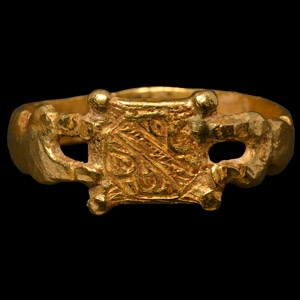
Byzantine Gold Ring with Foliate Motifs
Circa 11th-12th century A.D.Estimate: £1,500 - 2,000 (+bp*)
Opening Bid: £800
Comprising a flat-section hoop with a starburst motif to the base; openwork shoulders and a square bezel with a pellet to each corner, the bezel engraved with foliate motifs. 3.65 grams, 19.99 mm overall, 18.00 mm internal diameter (approximate size British L, USA 5 3/4, Europe 11.24, Japan 10)
Acquired from London galleries during the 1990s. From the jewellery collection of a London, UK, gentleman.
Some rings from the Balkan territories of the Eastern Empire (for example the ring from Dobrača) bear a square thickened bezel engraved with schematic representations. What sets them apart are the widened shoulders emphasised by a plastic rib and the raised and flattened head, which places them in the group of rings which dates mainly to the 11th century (from the end of the 10th to the first decades of the 12th century). -
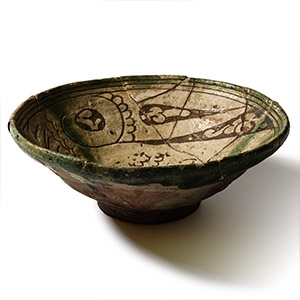
Byzantine Green Glazed Sgraffito-Ware Bowl
12th-14th century A.D.Sold for (Inc. bp): £702
With reserved image of a bird with wings folded against the body, with old label to verso '5164 / 3.200 fm'. 402 grams, 18 cm
Private collection of Mr S.A., Switzerland, 1990s, thence by descent.
