
Loading, please wait...
LOT 0963
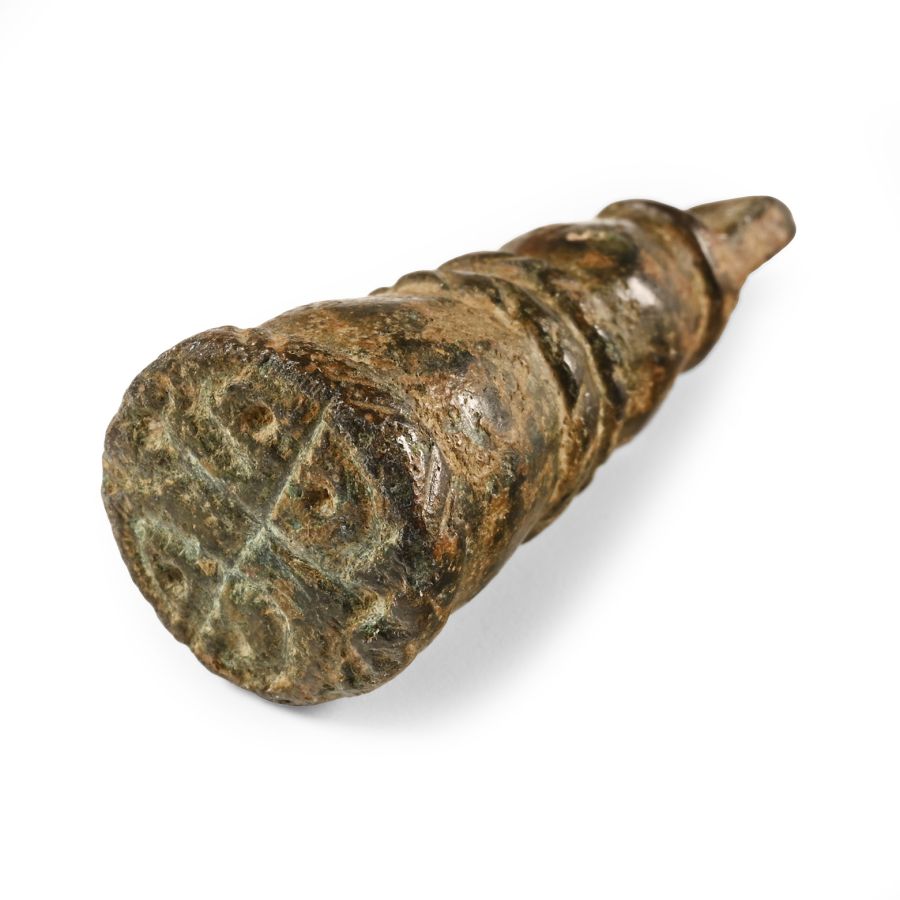
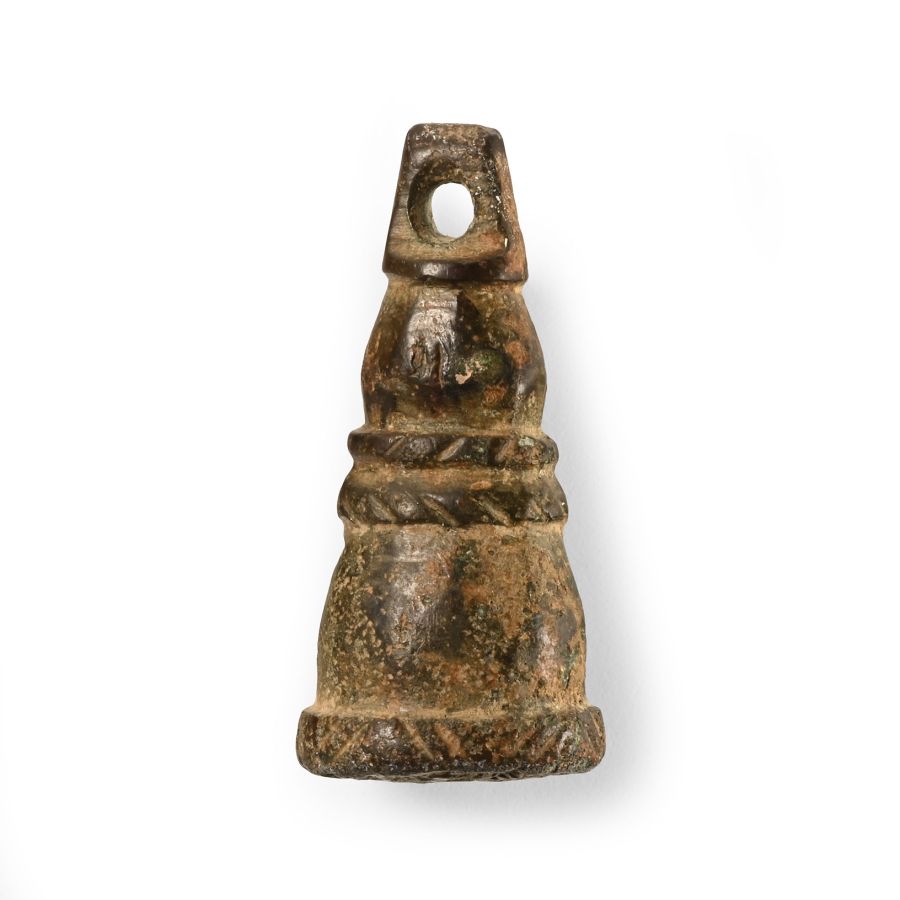
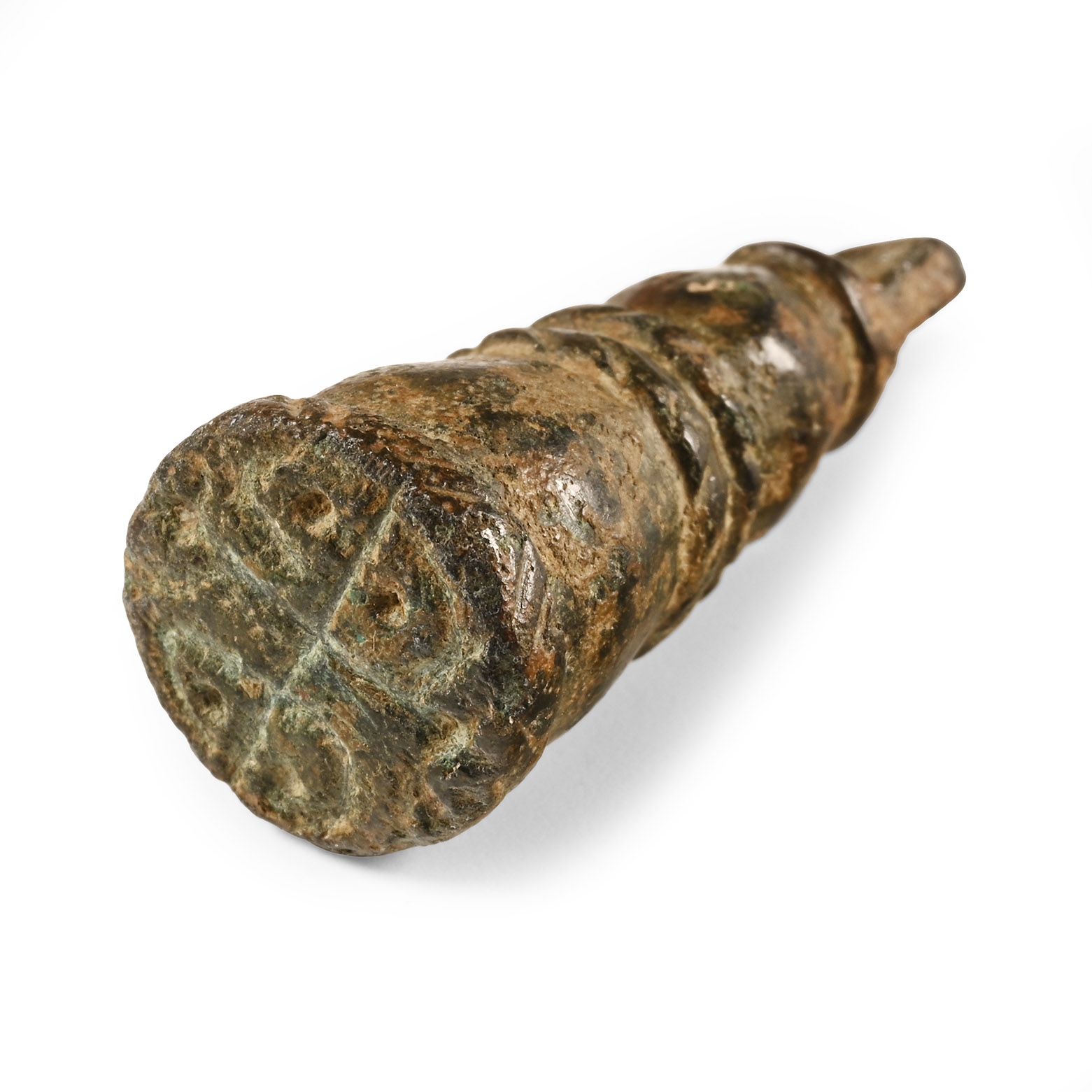
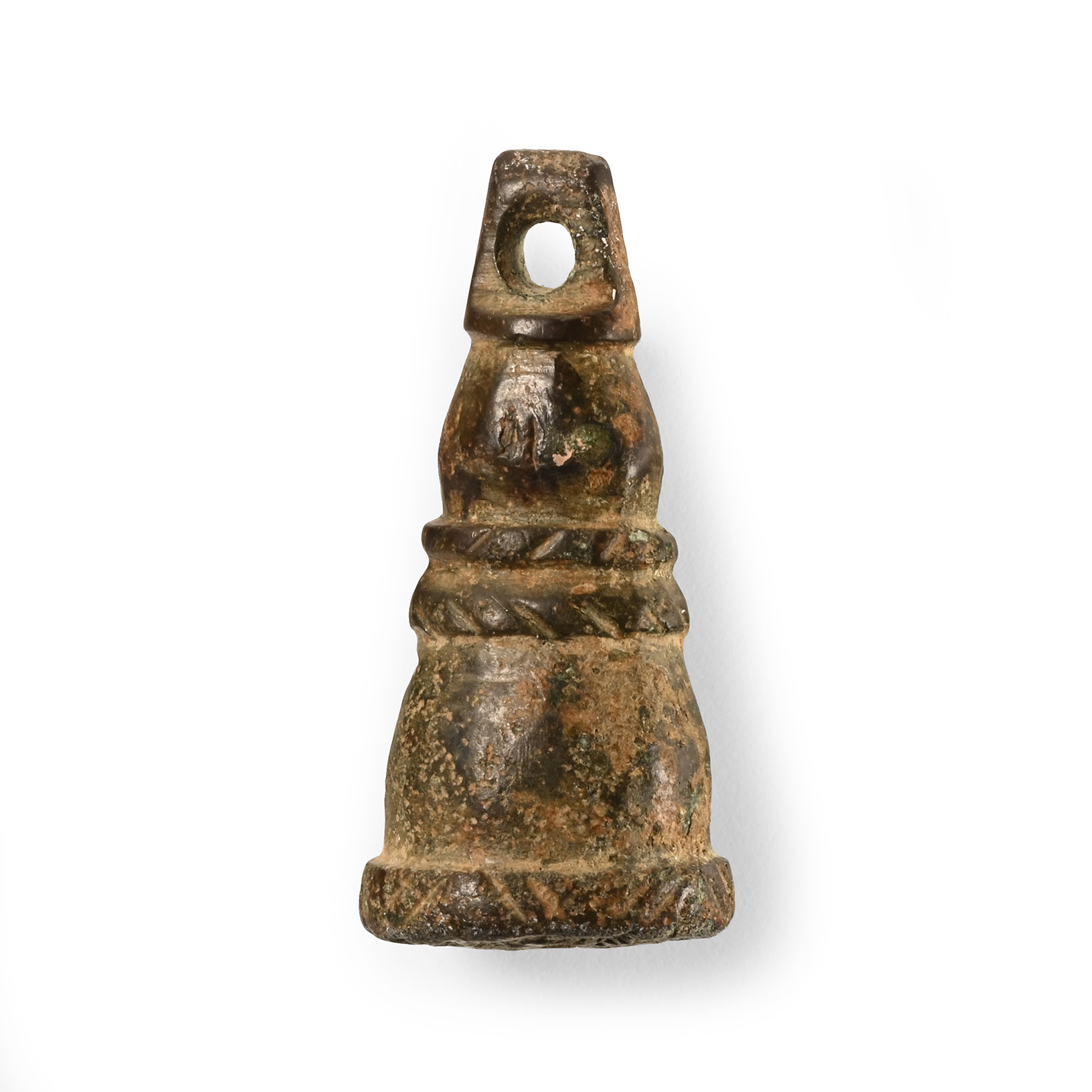
Byzantine Bronze Stamp Seal with Floriate Cross Monogram
6TH-8TH CENTURY A.D.
1 1/8 in. (18.8 grams, 30 mm).
Conical in profile with pierced tip, balustered profile with ropework collars, monogram to underside. [No Reserve]
ProvenanceAcquired on the London, UK, art market in the 1990s.
From a gentleman's private collection.
TimeLine Auctions follows a vetting process to ensure the authenticity and legality of all items, reinforcing our commitment to integrity and responsible trading. Each antiquity, antique, and coin lot undergoes thorough examination by a vetting committee of at least ten external specialists, professional trade association members, scientists, and archaeologists: Our Vetting Process
AUCTIONS:
TimeLine is a leading auction house specialising in antiquities, ancient art, collectables, natural history, coins, medals, and books. Our auctions offer museums, collectors, historians, and enthusiasts the opportunity to acquire unique and historically significant pieces.
LOT 0963
Byzantine Bronze Stamp Seal with Floriate Cross Monogram
Sold for (Inc. bp): £182
-
.jpg)
Byzantine and Post-Byzantine Bronze Cross Group
7th-19th century A.D.Sold for (Inc. bp): £46
Comprising: a cross buckle with pin; the upper plate of a small enkolpion with a praying Virgin or Saint; two orthodox pectoral crosses, both with inscription 'IC' (Iesus) 'XC' (Christos ) 'NIKA' (Christ is victorious); the smallest cross with invocation-prayer engraved on the back. 51.8 grams total, 36-73 mm
Acquired on the UK art market. Property of a Ruislip, UK, gentleman, by inheritance.
The fragment of the simpler Maltese cross mount corresponds to the type E2 of Schulze-Dörrlamm, here with straight arms with rounded corners. It resembles the cross-shaped hinge fittings of the belt buckles from Herrera de Pisuerga and tomb 9 from El Tesorillo from Visigoth Spain, two bronze fittings from Lusitania and the buckle with busts of saints and the Greek inscription 'Light and Life' from Korbous in Tunisia. These kind of buckles were also found in male warrior graves. -
Byzantine Bronze Buckle Plate
7th-8th century A.D.Sold for (Inc. bp): £234
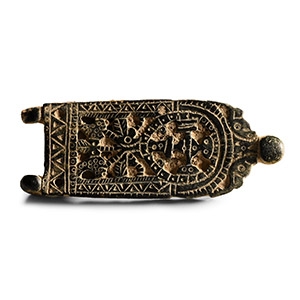
Tongue-shaped with an applied openwork panel, cross-in-wheel motif within a segmented border and zoomorphic detailing; loops to the broad end and knop finial to the rounded end. 21.2 grams, 57 mm
Acquired 1980-2015. Ex Abelita family collection.
Within the category of these buckles to which the current example belongs to, the plate was decorated with an openwork pattern which was rivetted onto a cover plate. The central decoration varied between purely vegetal depictions, mostly vines, and allegorical animal scenes, which J. Werner interpreted as a pictorial implementation of the animal symbolism of Physiologus. -
Byzantine Gold Openwork Pendant
12th-14th century A.D. or earlierSold for (Inc. bp): £546
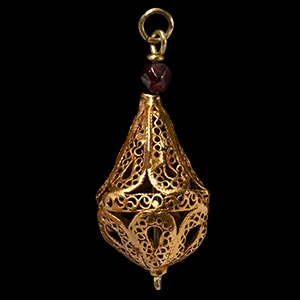
Composed of two opposing flowers forming a teardrop-shape, the panels with intricate loop design; facetted garnet bead above and a separately made suspension bar, possibly a later addition. 3.78 grams, 40 mm
Ex property of a late Japanese collector, 1970-2000s.
