
Loading, please wait...
LOT 0959
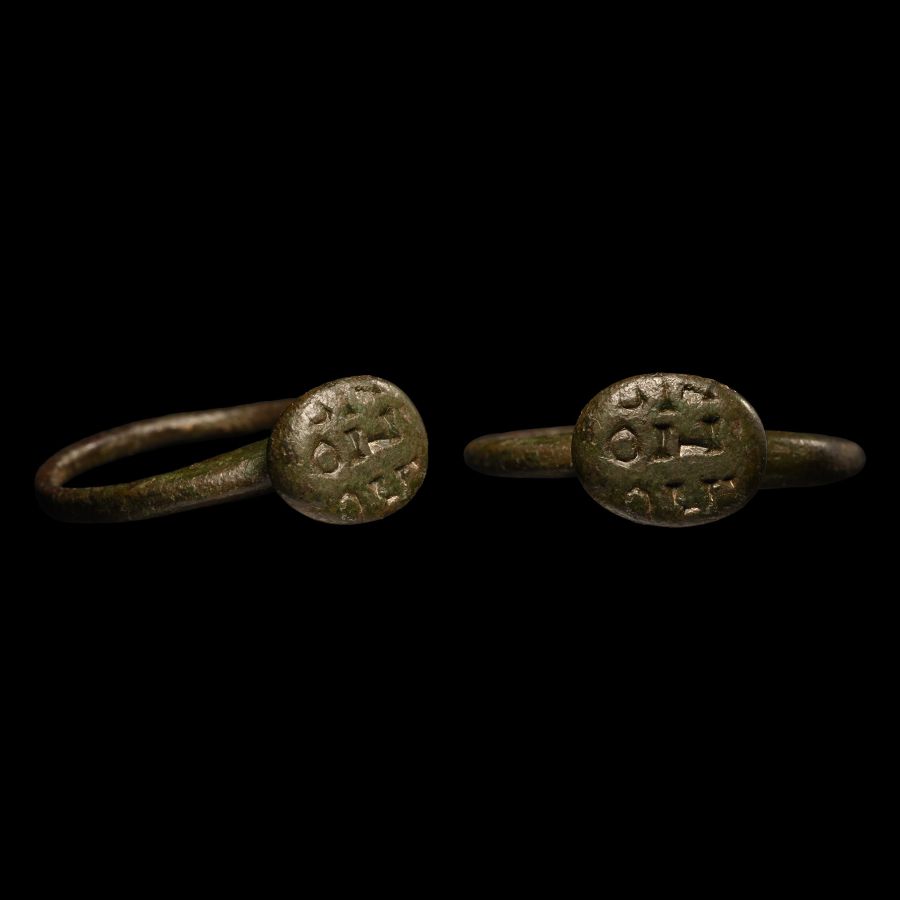
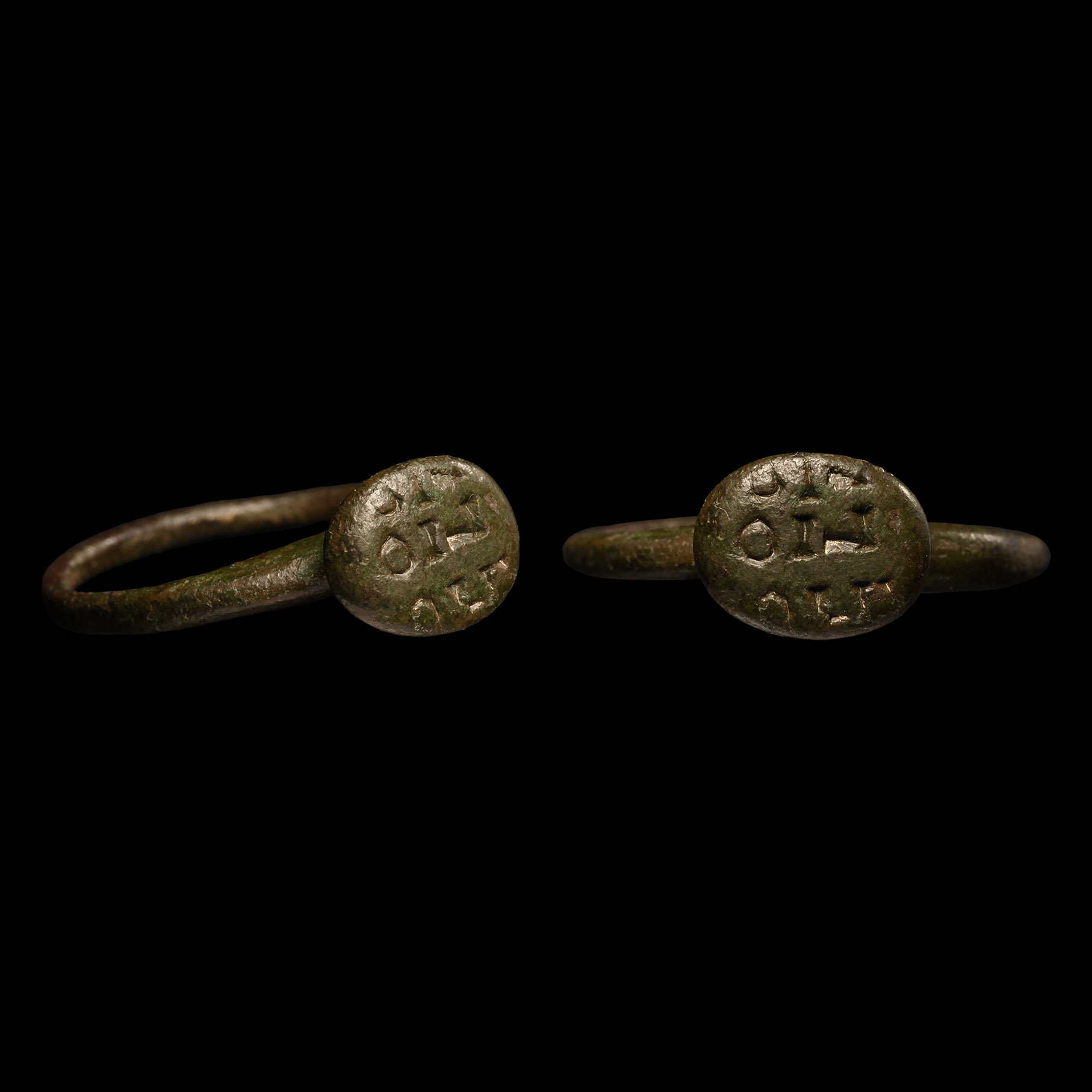
Byzantine Bronze Ring with Inscription
6TH-7TH CENTURY A.D.
1 in. (3.83 grams, 27.25 mm overall, 19.39 mm internal diameter (approximate size British Q, USA 8, Europe 17.49, Japan 16)).
Comprising a narrow hoop and raised bezel with three line inscription, remains of gilding to the lettering. [No Reserve]
ProvenanceEx German art market, 2000s.
Acquired from an EU collector living in London.
From the collection of Surrey, UK, gentleman.
TimeLine Auctions follows a vetting process to ensure the authenticity and legality of all items, reinforcing our commitment to integrity and responsible trading. Each antiquity, antique, and coin lot undergoes thorough examination by a vetting committee of at least ten external specialists, professional trade association members, scientists, and archaeologists: Our Vetting Process
AUCTIONS:
TimeLine is a leading auction house specialising in antiquities, ancient art, collectables, natural history, coins, medals, and books. Our auctions offer museums, collectors, historians, and enthusiasts the opportunity to acquire unique and historically significant pieces.
-
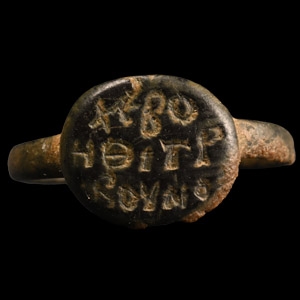
Byzantine Bronze Epigraphic Ring
6th century A.D.Sold for (Inc. bp): £111
With ellipsoid bezel, incised Greek inscription with some of the letter inversed, reading 'ΧζΒΟ ΗϽΙΤΡ βOΥΛΟ'. 1.81 grams, 19.87 mm overall, 17.93 mm internal diameter (approximate size British N 1/2, USA 6 3/4, Europe 14.35, Japan 13)
Acquired 1980-2015. Ex Abelita family collection.
The meaning of the inscription is not clear, although it may be prophylactic, with the letter Chi (Χ) linked with the rho (P) i.e. XP for ‘Christ’ and the other letters referring to the usual expression βΟYTICΗ (protect) βOΥΛIΟ (Doulo? ), therefore intended to be read ‘Christ protect your servant’. The ring was probably engraved by a foreigner with a very limited understanding of Greek. -
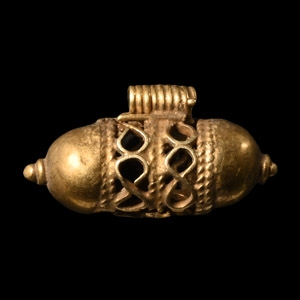
Byzantine Gold Filigree Pendant
6th-8th century A.D.Estimate: £180 - 240 (+bp*)
Opening Bid: £100
Capsule pendant with domed ends and openwork filigree bands between, ribbed suspension tube, granule finials. 0.91 grams, 15 mm
From a late Japanese specialist collector, 1970-2000s. -
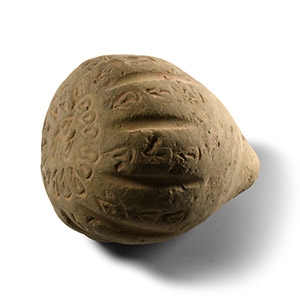
Byzantine 'Greek Fire' Ceramic Fire Bomb or Hand Grenade
9th-11th century A.D.Sold for (Inc. bp): £143
Piriform body with ribs to the shoulder and impressed ovoids to the upper face, recessed filler-hole to the shoulder, intended to be filled with explosive liquid and wick, used as a hand grenade. 520 grams, 10.7 cm
From a specialist collection of militaria, London, UK, collected 1990s onwards. Accompanied by an academic paper by military specialist Dr Raffaele D'Amato, dated 15 July 2019 and titled 'Eastern Roman Empire - Greek Fire Bomb or Hand Grenade (μεσαίον kακάβιον) 9th-11th century AD'.
Apart from the use of siphons or manual flame-throwers called cheirosiphona, special corps of Roman soldiers employed terracotta grenades, in the form of small jars, abundantly evidenced in archaeological excavations. They were called μεσαία kακαβιά or κυτροκακάβια where the former had a bulbous shape and the latter a more cylindrical form.
