
Loading, please wait...
LOT 1141
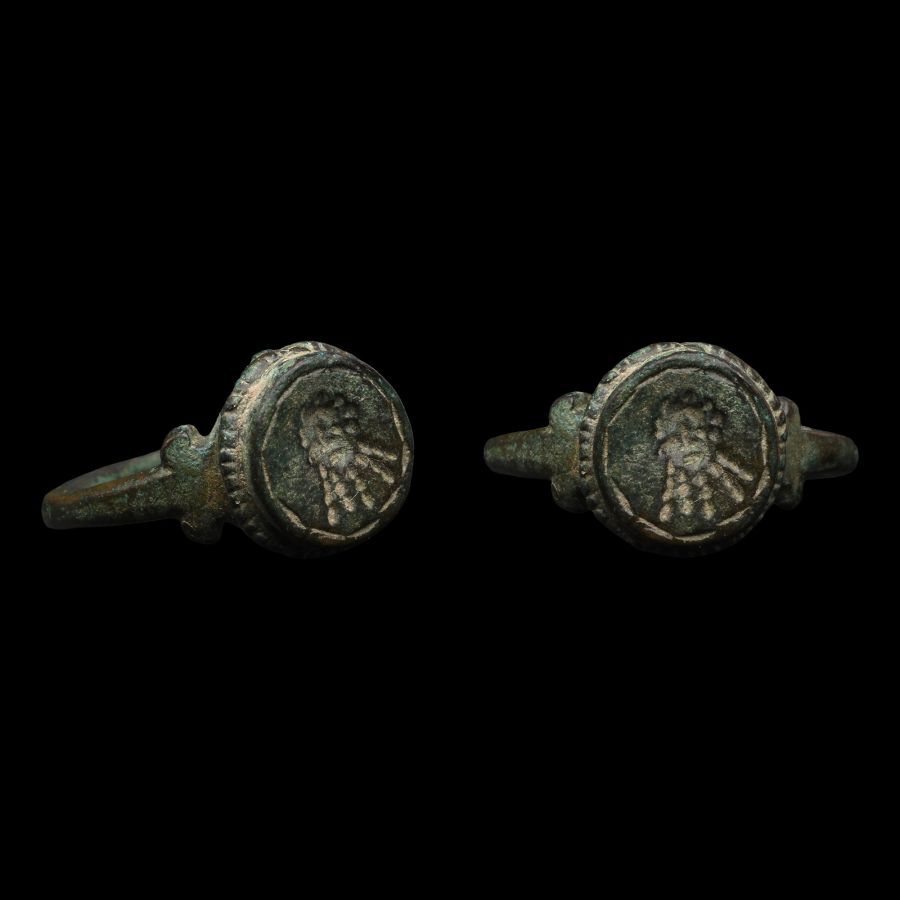
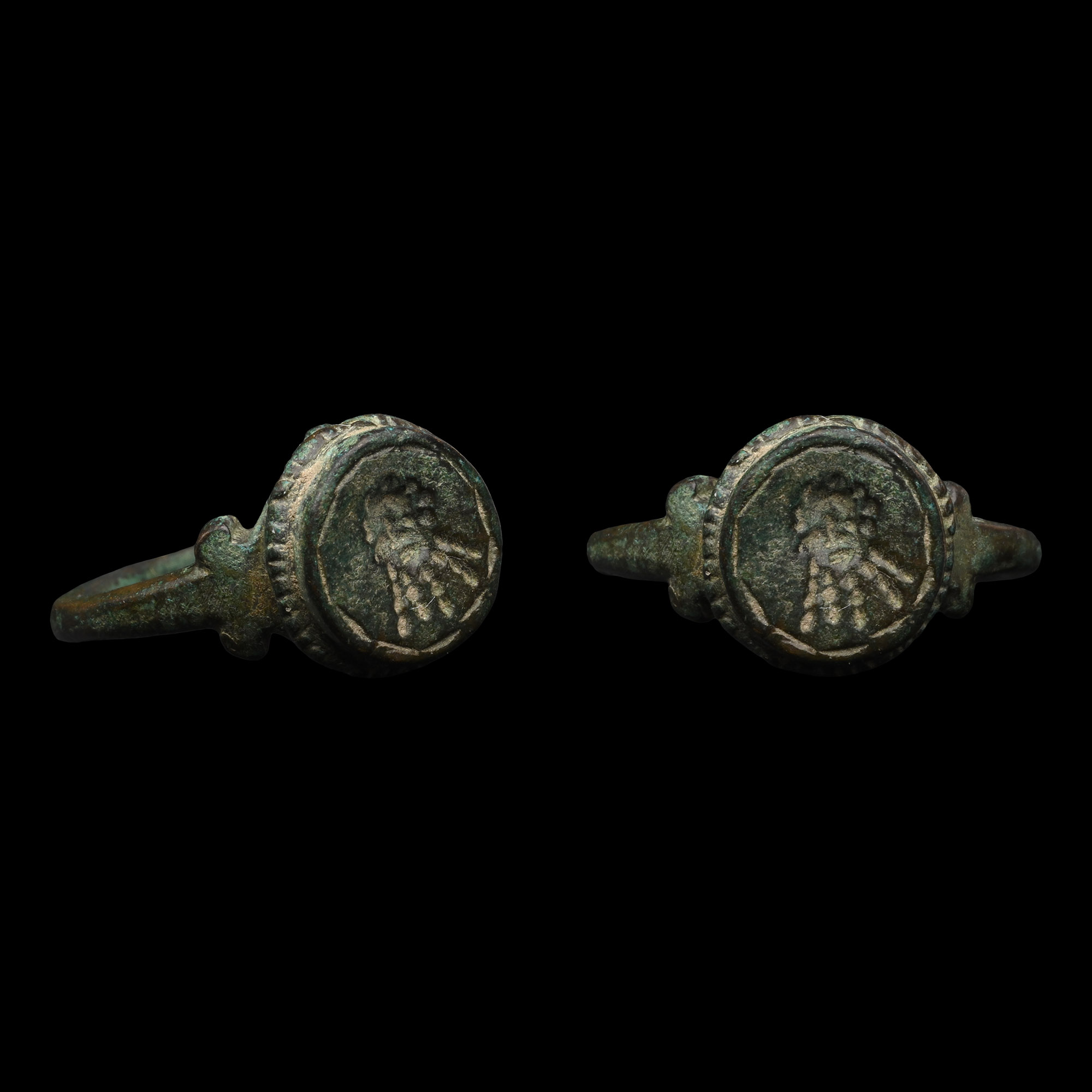
Byzantine Bronze Ring with Bust
CIRCA 5TH-6TH CENTURY A.D.
1 in. (8.28 grams, 27.08 mm overall, 19.28 mm internal diameter (approximate size British R, USA 8 1/2, Europe 18 3/4, Japan 18)).
With lateral spurs to the hoop at the shoulders, round bezel with faux beaded wire collar, intaglio facing bust. [No Reserve]
ProvenanceGerman collection before 2000.
Collection of Mr D.H. formed in UK, from the EU art market.
Ex property of a Surrey gentleman.
Cf. Chadour, A.B., Rings. The Alice and Louis Koch Collection, volume I, Leeds, 1994, item 348, for type.
CONDITIONTimeLine Auctions follows a vetting process to ensure the authenticity and legality of all items, reinforcing our commitment to integrity and responsible trading. Each antiquity, antique, and coin lot undergoes thorough examination by a vetting committee of at least ten external specialists, professional trade association members, scientists, and archaeologists: Our Vetting Process
AUCTIONS:
TimeLine is a leading auction house specialising in antiquities, ancient art, collectables, natural history, coins, medals, and books. Our auctions offer museums, collectors, historians, and enthusiasts the opportunity to acquire unique and historically significant pieces.
-
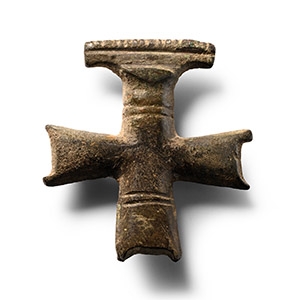
Byzantine Bronze Reliquary Cross Mount
9th-12th century A.D.Sold for (Inc. bp): £20
Cruciform in plan and D-shaped in section with incised lines across the vertical arms, one T-shaped finial remaining; attachment lugs to reverse. 12.5 grams, 34 mm
Ex Den of Antiquity, Cambridge, UK. From the private collection of a West London, UK, gentleman, formed since the early 2000s. Accompanied by a typed dealer's ticket. -
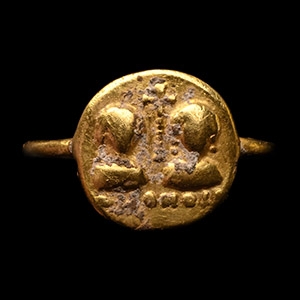
Byzantine Gold Marriage Ring
6th-7th century A.D.Sold for (Inc. bp): £546
Comprising a slender round-section hoop with an applied discoid bezel, two facing busts flanking a cross and an inscription below. 3.76 grams, 20.90 mm overall, 18.29 mm internal diameter (approximate size British P, USA 7 1/2, Europe 16.23, Japan 15)
From a UK collection since before 1990. -
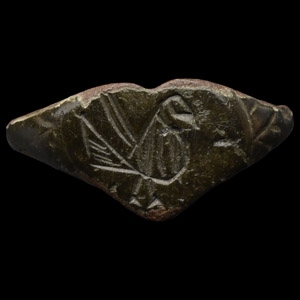
Byzantine Bronze Ring with Dove
6th-8th century A.D.Sold for (Inc. bp): £65
Slender hoop expanding to a heart-shaped bezel with a stylised dove facing right. 2.36 grams, 21.91 mm overall, 19.40 mm internal diameter (approximate size British Q, USA 8, Europe 17.49, Japan 16)
Ex P Chapman collection, 1980s-1990s.
