
Loading, please wait...
LOT 0783
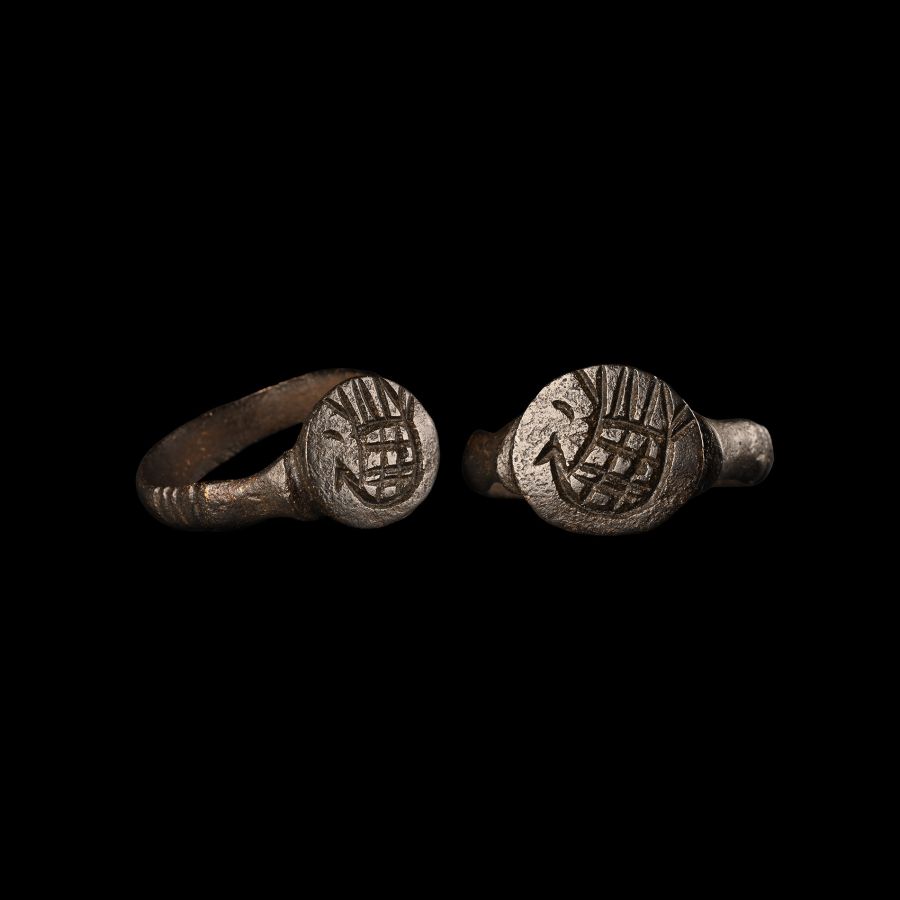
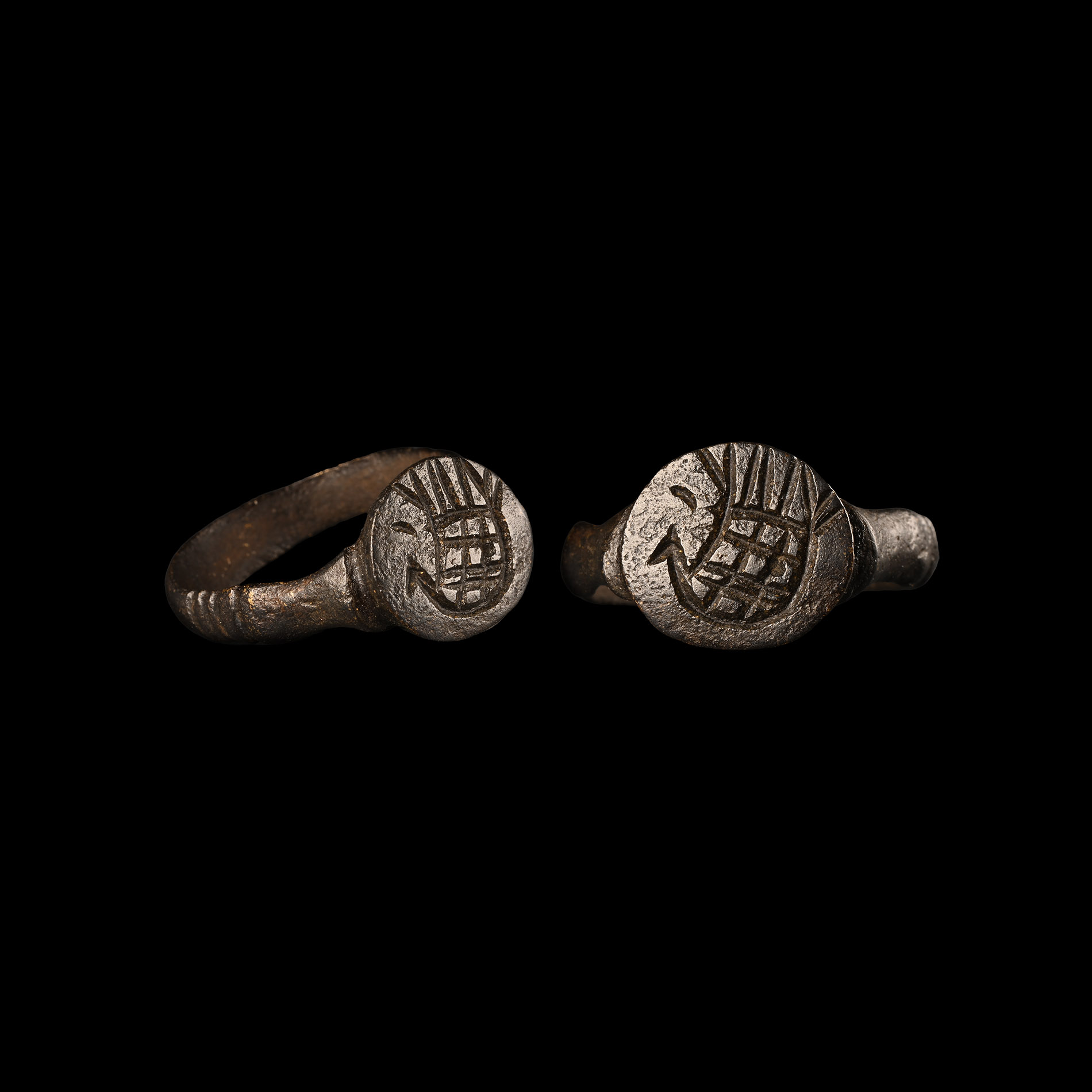
Byzantine Bronze Ring with Bird
5TH-7TH CENTURY A.D.
1 in. (4.32 grams, 25.01 mm overall, 17.84 mm internal diameter (approximate size British P 1/2, USA 7 3/4, Europe 16.86, Japan 16)).
Ribbed shoulders, raised trumpet-shaped bezel with incuse stylised peacock. [No Reserve]
ProvenancePrivate collection formed since the 1940s.
UK art market.
Property of an Essex gentleman.
Cf. Chadour, A.B., Rings. The Alice and Louis Koch Collection, volume I, Leeds, 1994, item 476, for type.
CONDITIONTimeLine Auctions follows a vetting process to ensure the authenticity and legality of all items, reinforcing our commitment to integrity and responsible trading. Each antiquity, antique, and coin lot undergoes thorough examination by a vetting committee of at least ten external specialists, professional trade association members, scientists, and archaeologists: Our Vetting Process
AUCTIONS:
TimeLine is a leading auction house specialising in antiquities, ancient art, collectables, natural history, coins, medals, and books. Our auctions offer museums, collectors, historians, and enthusiasts the opportunity to acquire unique and historically significant pieces.
-
Byzantine Redware Bread Seal
Circa 6th century A.D.Sold for (Inc. bp): £117
Bearing a central hand motif and surrounding inscription in Greek letters 'K E R A Y I O I T H I M (?)' probably the mark of the producer. 239 grams, 10.2 cm
Acquired 1990s-early 2000s. East Anglian private collection.
Museum collections hold many stamps or seals of different forms, materials and shapes, some bearing inscriptions or images. These could have been used on bread, dough or on fresh clay to stamp amphoras, bricks, lamps and other clay objects. -
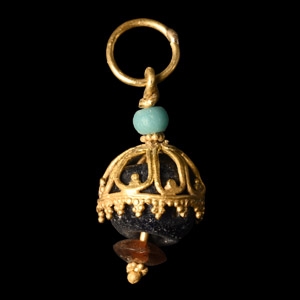
Byzantine Gold Pendant with Beads
6th-8th century A.D.Sold for (Inc. bp): £182
The openwork filigree domed cap set with a deep blue glass bead, a carinated polished garnet bead and granulated gold bead below, gold granulated bead and turquoise-coloured glass bead above, together with a free-running suspension loop. 2.06 grams, 24 mm
Acquired 1970-2010. Collection of a late Japanese gentleman. -
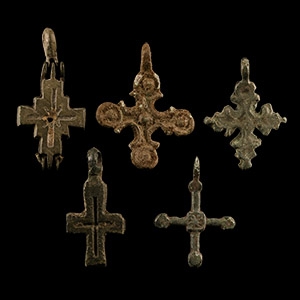
Byzantine Bronze Cross Collection
10th-15th century A.D.Sold for (Inc. bp): £156
Including one miniature enkolpion with articulated suspension loop, four of various types with integral loop. 17.2 grams total, 29-37 mm
English collection, early 2000s. Ex central London gallery.
