
Loading, please wait...
LOT 1087
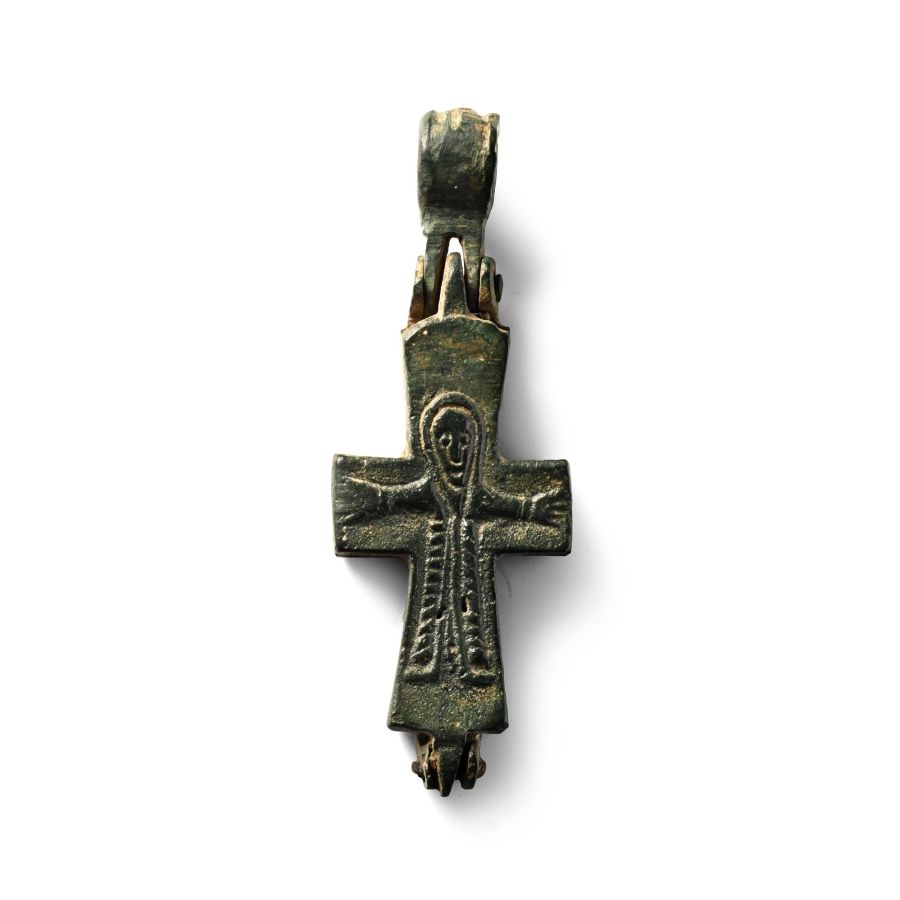
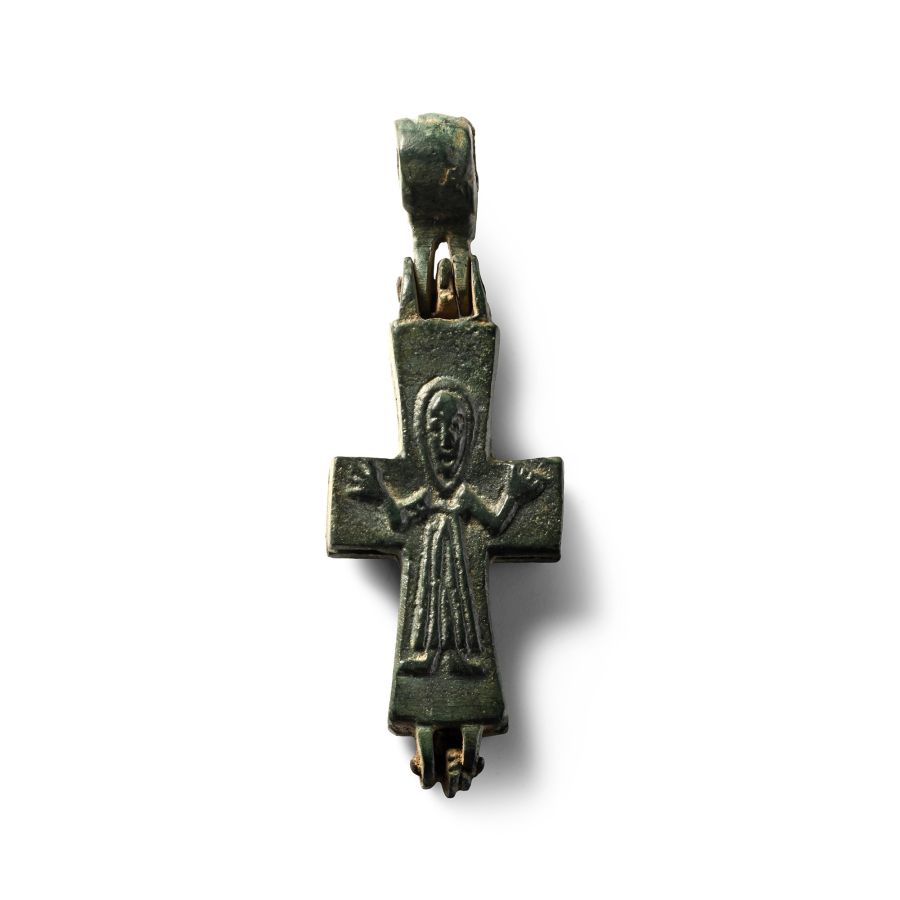
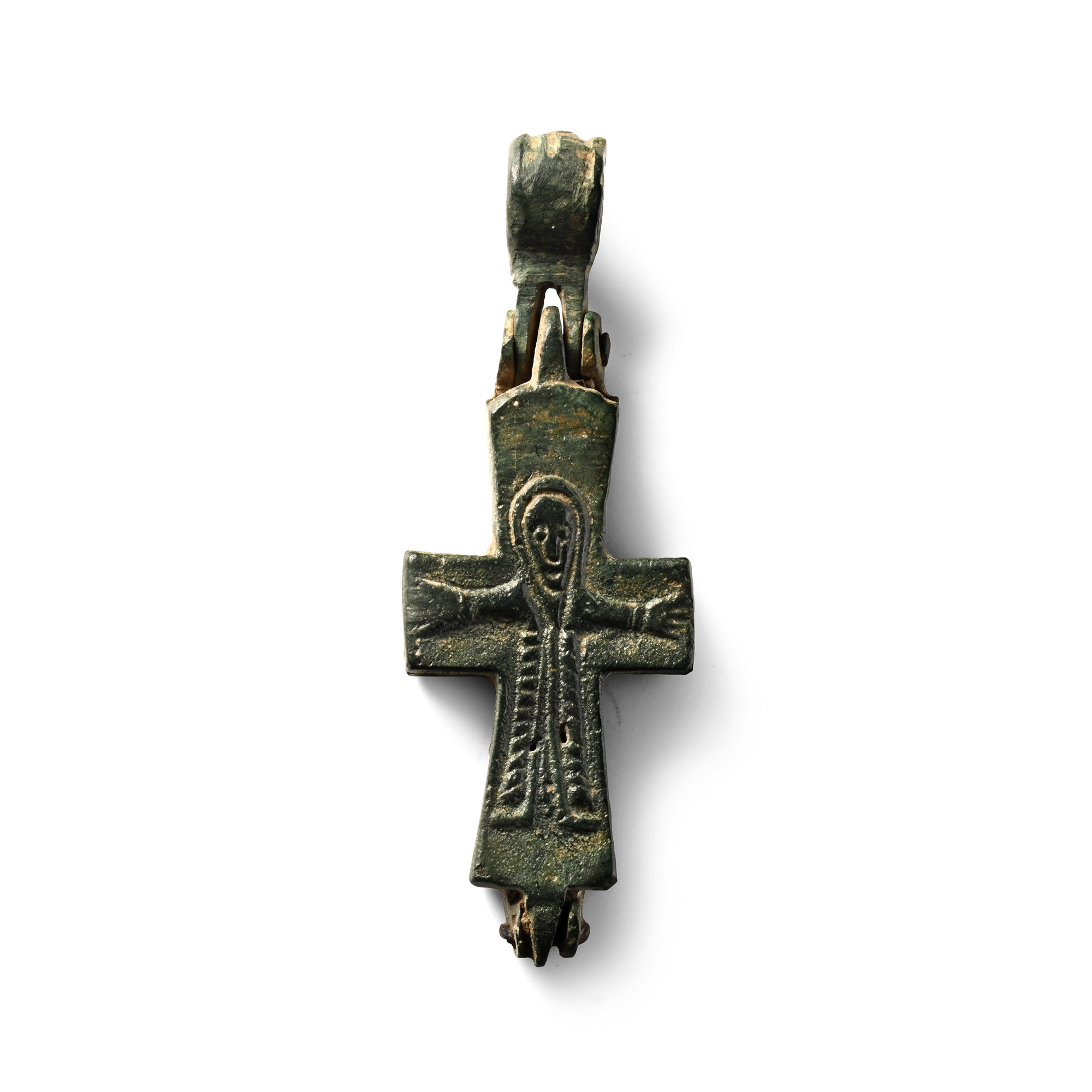
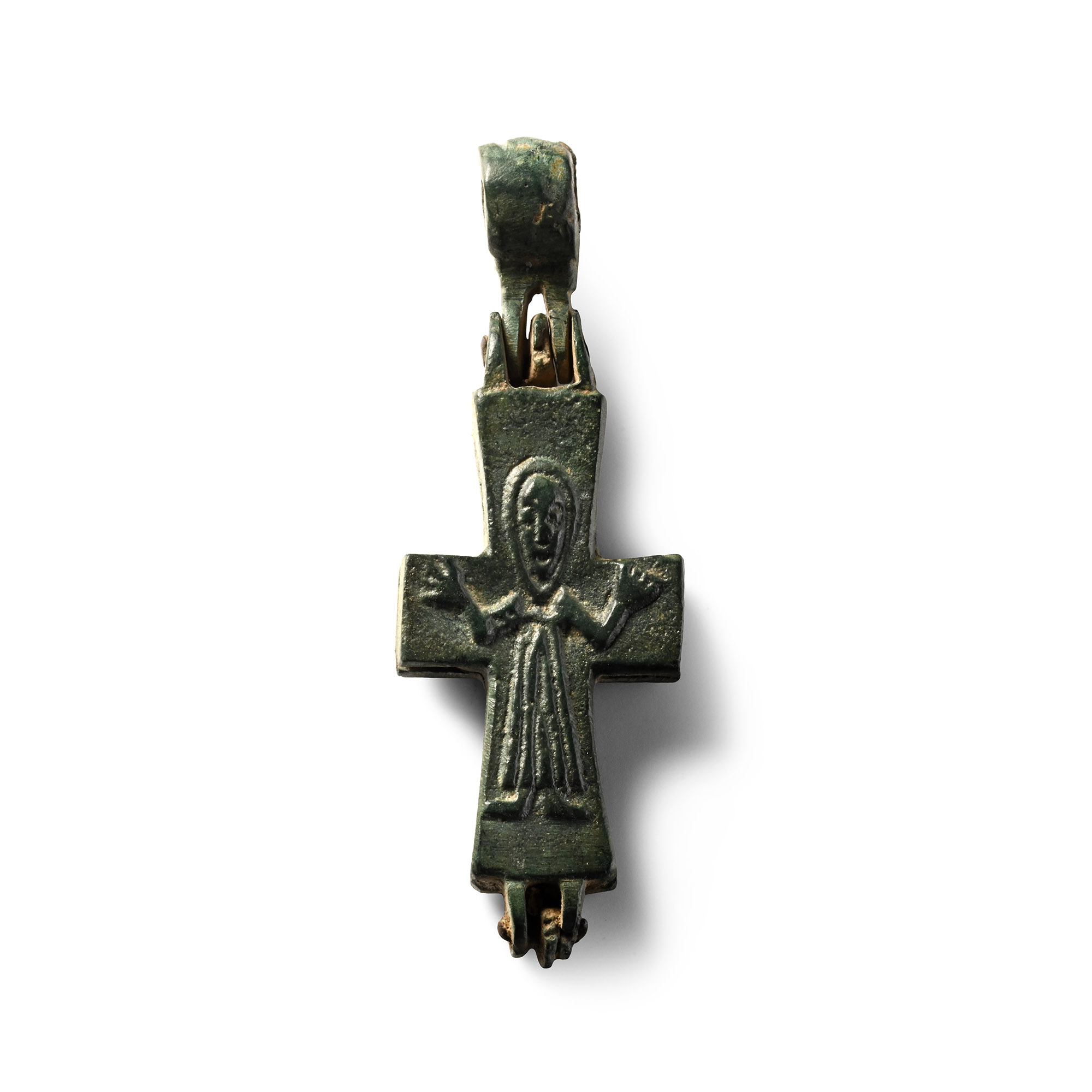
Byzantine Bronze Reliquary Cross Pendant
9TH-12TH CENTURY A.D.
2 1/4 in. (14.38 grams, 58 mm).
Enkolpion reliquary cross with hinge and loop, suspension ring above; one face with low-relief Corpus Christi in stavrosis position, the other with robed figure in orans pose.
ProvenanceEx Den of Antiquity, Cambridge, UK.
From the private collection of a West London, UK, gentleman, formed since the early 2000s.
Accompanied by a typed dealer's ticket.
Cf. Pitarakis, B., Les Croix-Reliquaires Pectorales Byzantines En Bronze, Paris, 2006, p.37, for similar.
CONDITIONTimeLine Auctions follows a vetting process to ensure the authenticity and legality of all items, reinforcing our commitment to integrity and responsible trading. Each antiquity, antique, and coin lot undergoes thorough examination by a vetting committee of at least ten external specialists, professional trade association members, scientists, and archaeologists: Our Vetting Process
AUCTIONS:
TimeLine is a leading auction house specialising in antiquities, ancient art, collectables, natural history, coins, medals, and books. Our auctions offer museums, collectors, historians, and enthusiasts the opportunity to acquire unique and historically significant pieces.
-
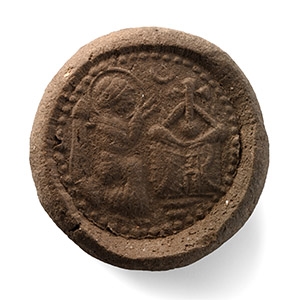
Christian 'Angel of the Sepulchre' Terracotta Pilgrim's Token
Circa 6th-8th century A.D.Sold for (Inc. bp): £598
Plano-convex in section with impressed design of a nimbate figure kneeling before a container surmounted by a cross and crescent moon, all within a pelletted border. 6.93 grams, 26 mm
Ex important Christian collection, 1970s. -
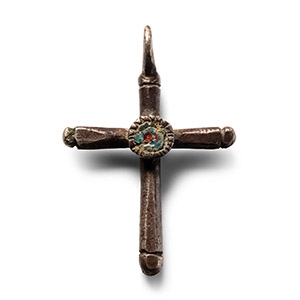
Byzantine Silver Cross Pendant with Enamel
Circa 6th-7th century A.D.Sold for (Inc. bp): £143
Slender arms radiating from a central disc with beaded rim, enamel cloisons. 1.92 grams, 27 mm
Ex Den of Antiquity, Cambridge, UK. From the private collection of a West London, UK, gentleman, formed since the early 2000s. Accompanied by a typed dealer's ticket. -
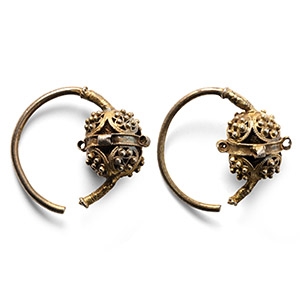
Byzantine Silver-Gilt Filigree Earrings
8th-12th century A.D.Estimate: £250 - 350 (+bp*)
Opening Bid: £125
A matching pair of hoop earrings, each adorned with intricate openwork spheres with filigree and applied pellets. 9.48 grams total, 30-31 mm
Private collection, UK.
