
Loading, please wait...
LOT 1117
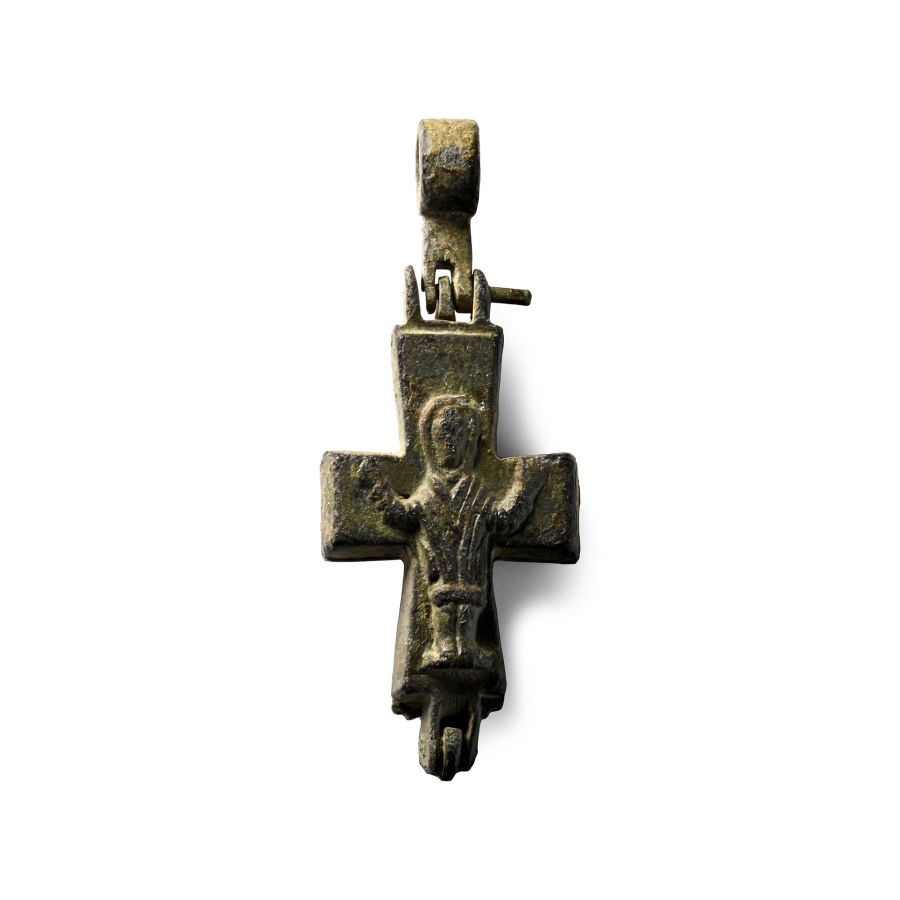
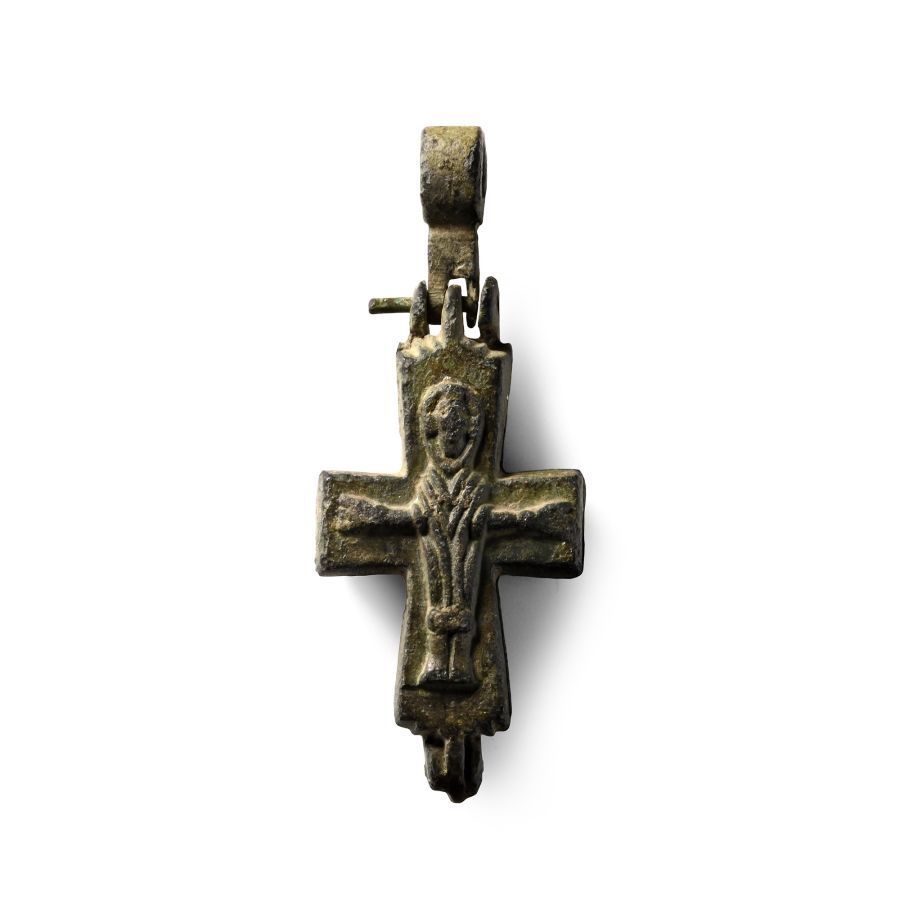
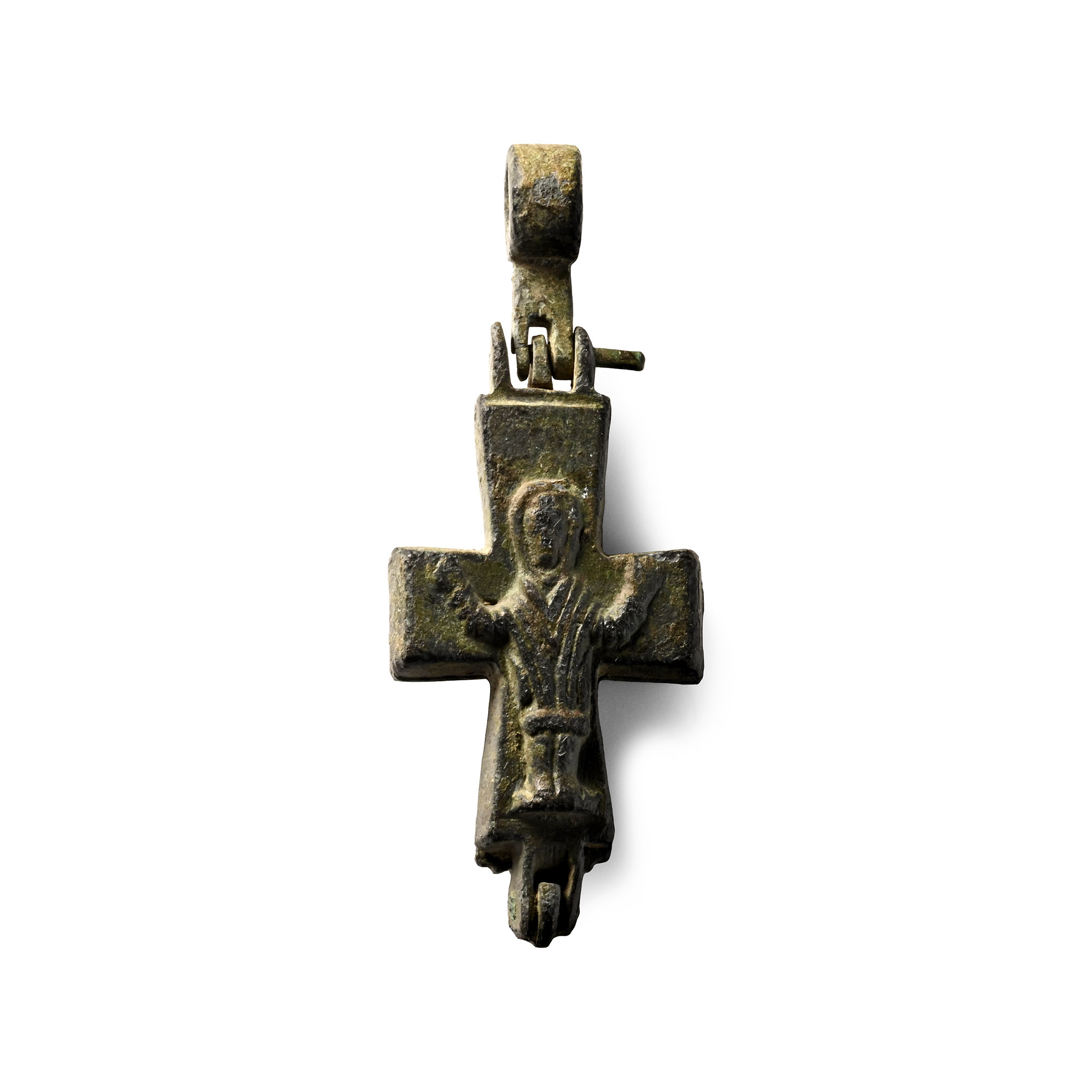
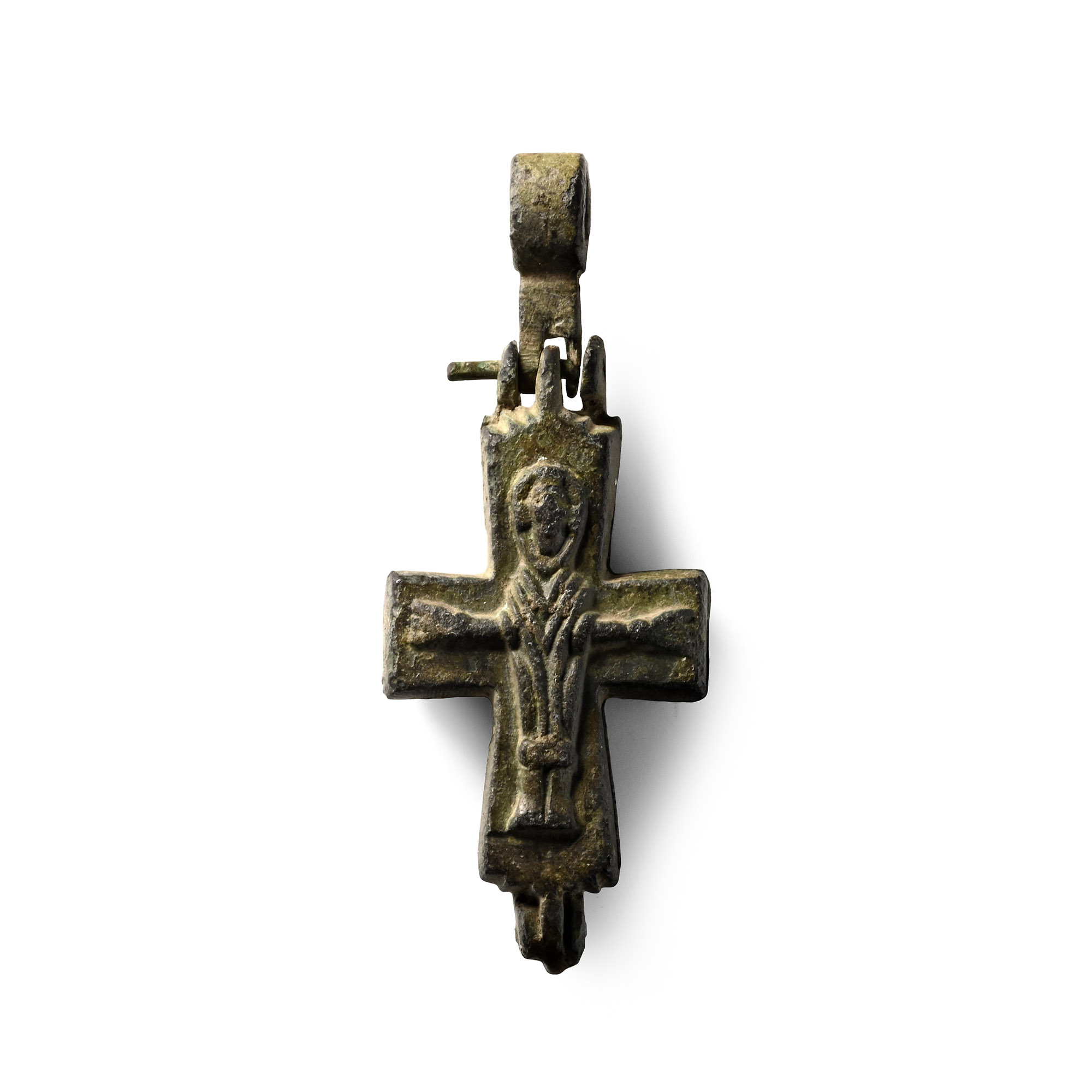
Byzantine Bronze Reliquary Cross Pendant
CIRCA 9TH-12TH CENTURY A.D.
2 3/8 in. (21.7 grams, 62 mm).
Enkolpion reliquary cross with hinge and suspension ring above; obverse with low-relief Jesus in stavrosis pose, nimbate and dressed in a robe; reverse with robed Mother of God in orans pose. [No Reserve]
ProvenanceEx Den of Antiquity, Cambridge, UK.
From the private collection of a West London, UK, gentleman, formed since the early 2000s.
Accompanied by a handwritten dealer's ticket.
Cf. Pitarakis, B., Les Croix-Reliquaires Pectorales Byzantines en Bronze, Paris, 2006, item 125.
CONDITIONTimeLine Auctions follows a vetting process to ensure the authenticity and legality of all items, reinforcing our commitment to integrity and responsible trading. Each antiquity, antique, and coin lot undergoes thorough examination by a vetting committee of at least ten external specialists, professional trade association members, scientists, and archaeologists: Our Vetting Process
AUCTIONS:
TimeLine is a leading auction house specialising in antiquities, ancient art, collectables, natural history, coins, medals, and books. Our auctions offer museums, collectors, historians, and enthusiasts the opportunity to acquire unique and historically significant pieces.
-
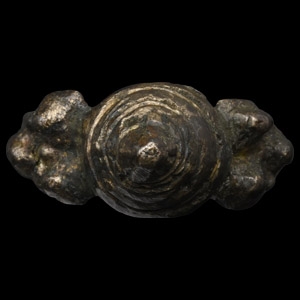
Byzantine Bronze Architectural Ring
Circa 6th-8th century A.D.Sold for (Inc. bp): £46
Grooved hoop with raised rosettes on the shoulders, tall conical bezel with incised concentric circles. 9.31 grams, 30.06 mm overall, 18.90 mm internal diameter (approximate size British R 1/2, USA 8 3/4, Europe 19.38, Japan 18)
Ex German art market, 2000s. Acquired from an EU collector living in London. From the collection of a Surrey, UK, gentleman. -
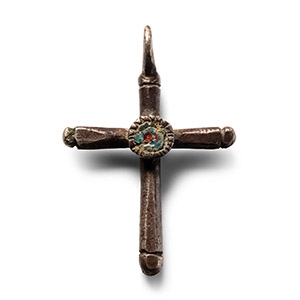
Byzantine Silver Cross Pendant with Enamel
Circa 6th-7th century A.D.Sold for (Inc. bp): £143
Slender arms radiating from a central disc with beaded rim, enamel cloisons. 1.92 grams, 27 mm
Ex Den of Antiquity, Cambridge, UK. From the private collection of a West London, UK, gentleman, formed since the early 2000s. Accompanied by a typed dealer's ticket. -
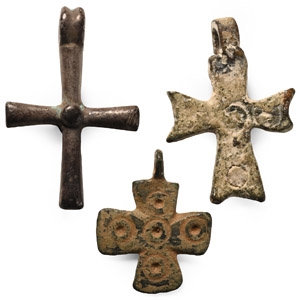
Byzantine Bronze and Silver Cross Pendant Group
7th-12th century A.D.Sold for (Inc. bp): £156
Comprising three expanding-arm cross pendants with integral suspension loops, two with ring-and-dot decoration, likely representing the five wounds of Christ. 9.65 grams total, 22-31 mm
From the collection of a gentleman, acquired on the London art market in the 1990s.
