
Loading, please wait...
LOT 0978
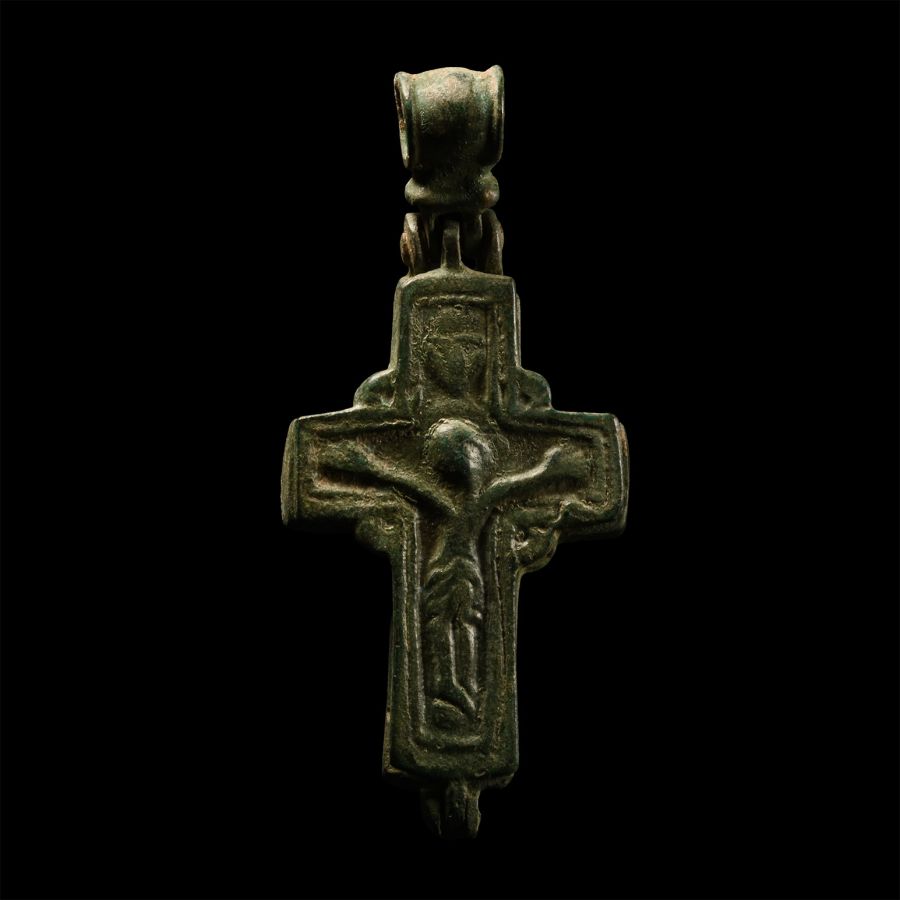
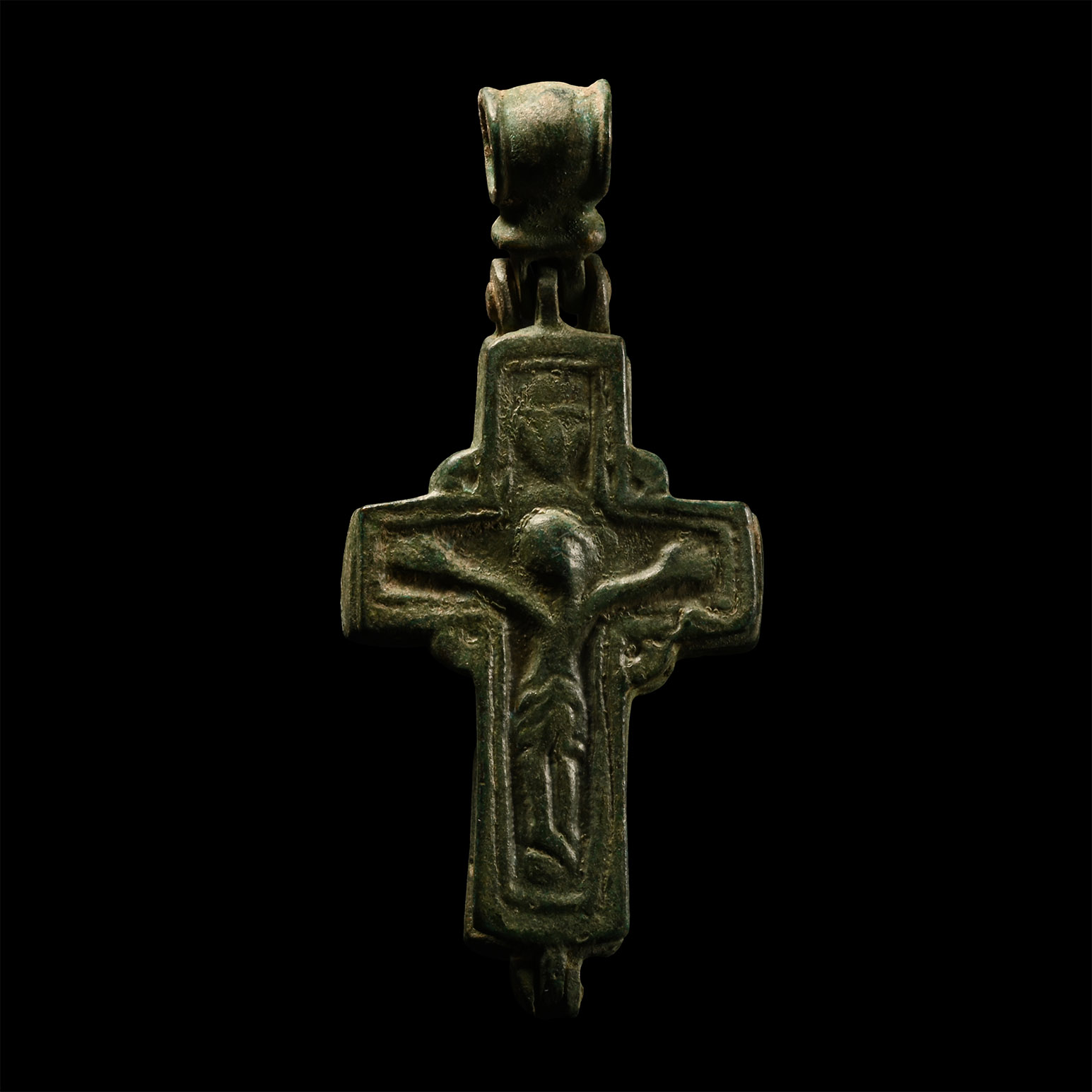
Byzantine Bronze Reliquary Cross Pendant
CIRCA 12TH CENTURY A.D.
2 3/8 in. (29.7 grams, 62 mm).
Two-piece enkolpion with hinged suspension loop, to each face a low-relief Corpus Christi with facing mask above.
ProvenanceAcquired on the London art market in the late 1980s-1990s.
From the family collection of an East London, UK, gentleman.
Cf. Pitarakis, B., Les Croix-Reliquaires Pectorales Byzantines en Bronze, Paris, 2006, item 146, for type.
CONDITIONTimeLine Auctions follows a vetting process to ensure the authenticity and legality of all items, reinforcing our commitment to integrity and responsible trading. Each antiquity, antique, and coin lot undergoes thorough examination by a vetting committee of at least ten external specialists, professional trade association members, scientists, and archaeologists: Our Vetting Process
AUCTIONS:
TimeLine is a leading auction house specialising in antiquities, ancient art, collectables, natural history, coins, medals, and books. Our auctions offer museums, collectors, historians, and enthusiasts the opportunity to acquire unique and historically significant pieces.
-
.jpg)
Byzantine Silver-Gilt Ring with Saint
Circa 6th-8th century A.D.Estimate: £400 - 600 (+bp*)
Opening Bid: £200
With round-section hoop and integral discoid plaque, tondo with intaglio of a robed nimbate figure with one arm raised facing a similar figure, all between fronds. 3.13 grams, 24.45 mm overall, 20.03 mm internal diameter (approximate size British T, USA 9 1/2, Europe 21.26, Japan 20)
Ex M.N. London collection, 2000s. -
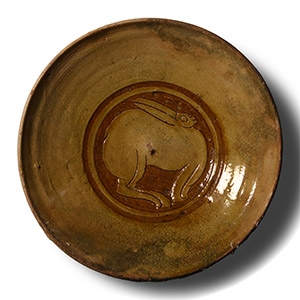
Byzantine Glazed Sgraffito-Ware Shipwreck Bowl
12th-13th century A.D.Sold for (Inc. bp): £2,340
With glazed upper face and basal ring; central reserved motif of a hare within concentric rings, with signs of sea encrustations. 544 grams, 22 cm
Private collection of Mr S.A., Switzerland, 1990s, thence by descent. This lot has been checked against the Interpol Database of stolen works of art and is accompanied by search certificate no.12046-211891. -
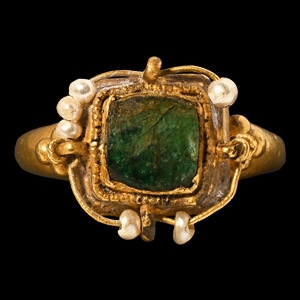
Byzantine or Merovingian Gold Ring with Emerald and Pearls
7th-9th century A.D.Sold for (Inc. bp): £2,080
With a heavy hollow-formed hoop, three pellets to each shoulder; raised square bezel set with emerald framed with pelletted border, four applied loops to the outer edge holding decorative gold wire with seed pearls. 6.70 grams, 27.95 mm overall, 16.94 mm internal diameter (approximate size British I, USA 4 1/4, Europe 7.44, Japan 7)
Ex New York, USA, private collection in the early 1990s. This lot has been checked against the Interpol Database of stolen works of art and is accompanied by search certificate no.12105-214336.
