
Loading, please wait...
LOT 0973
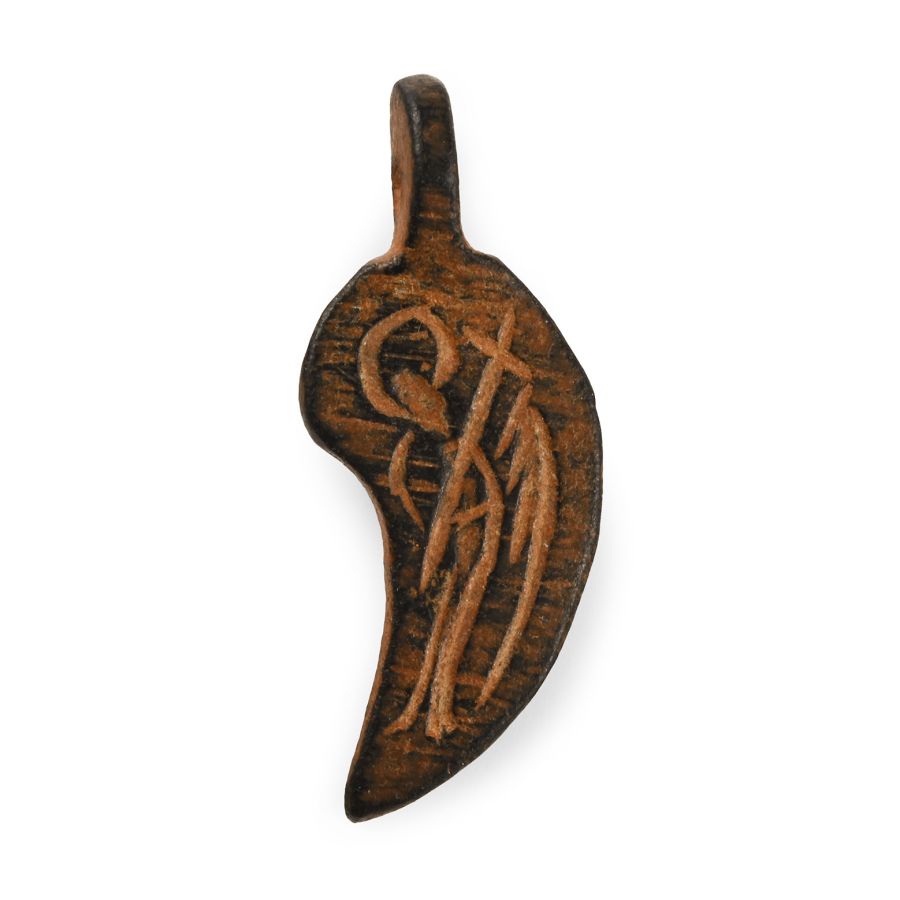
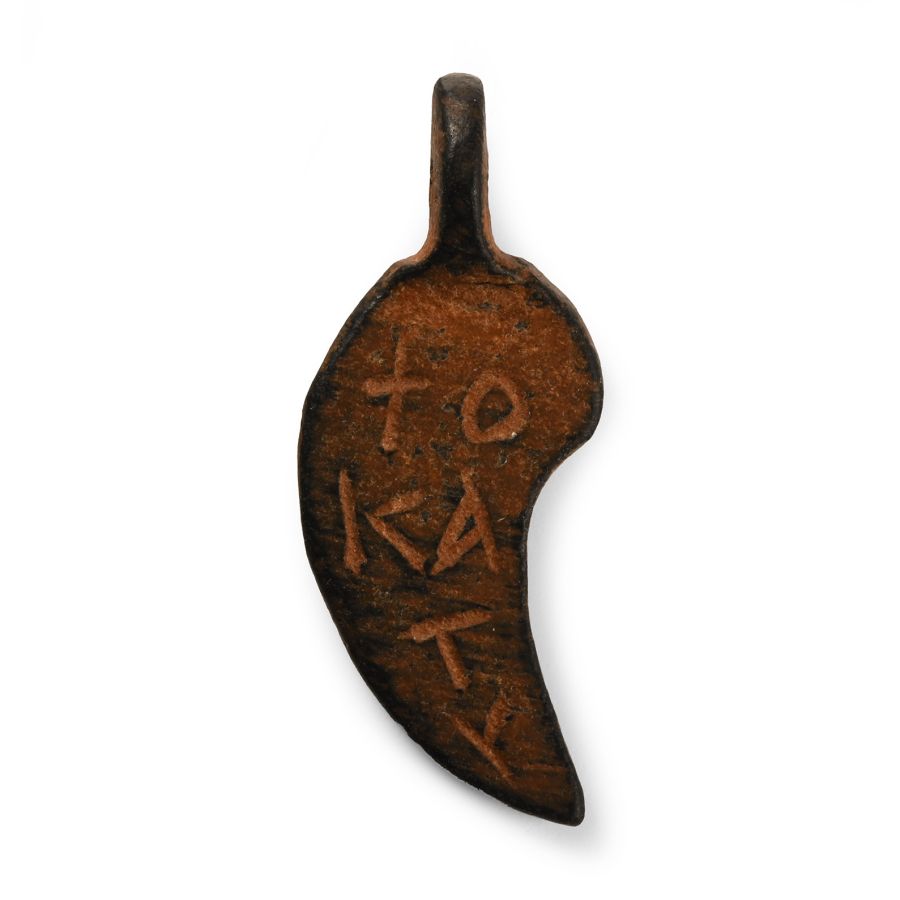
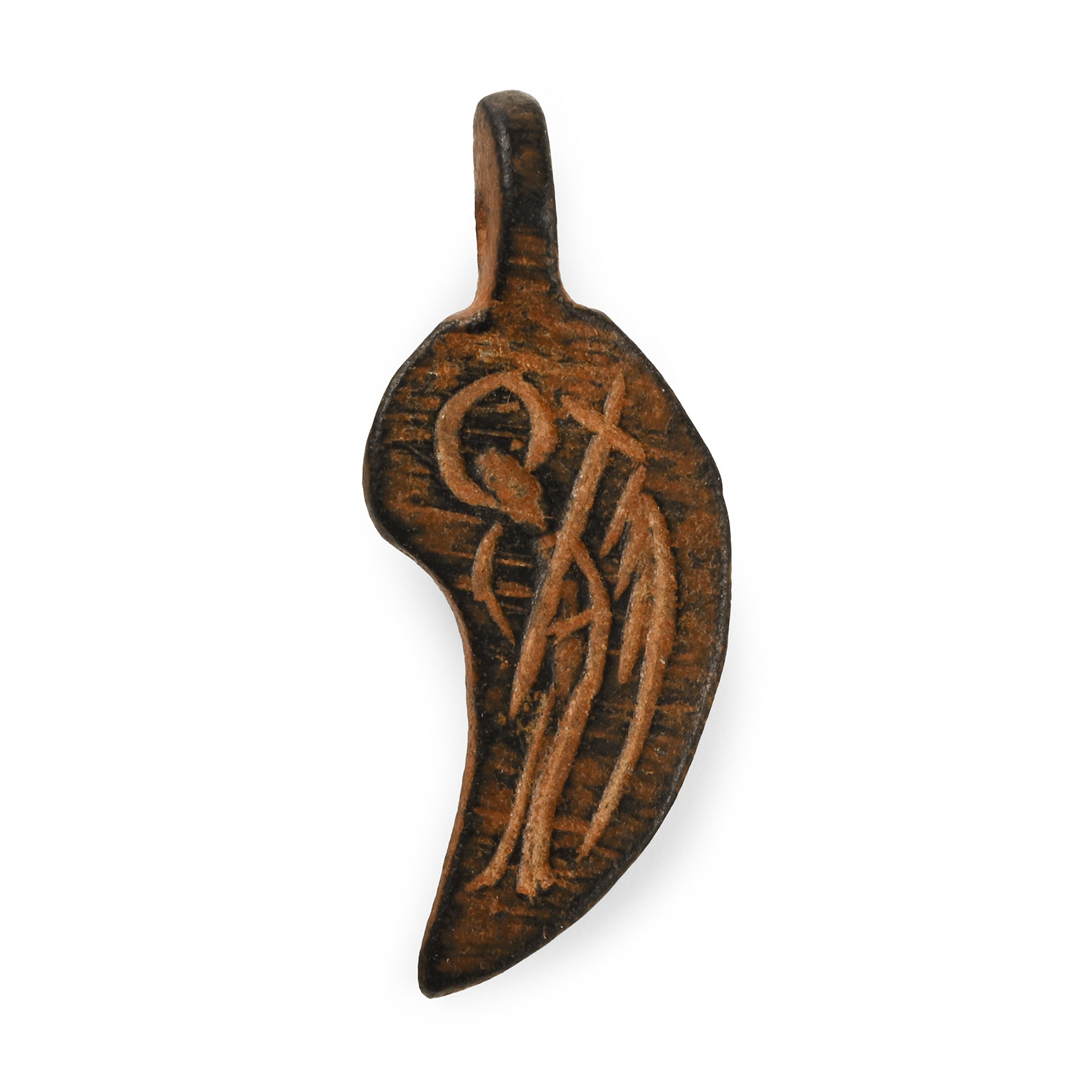
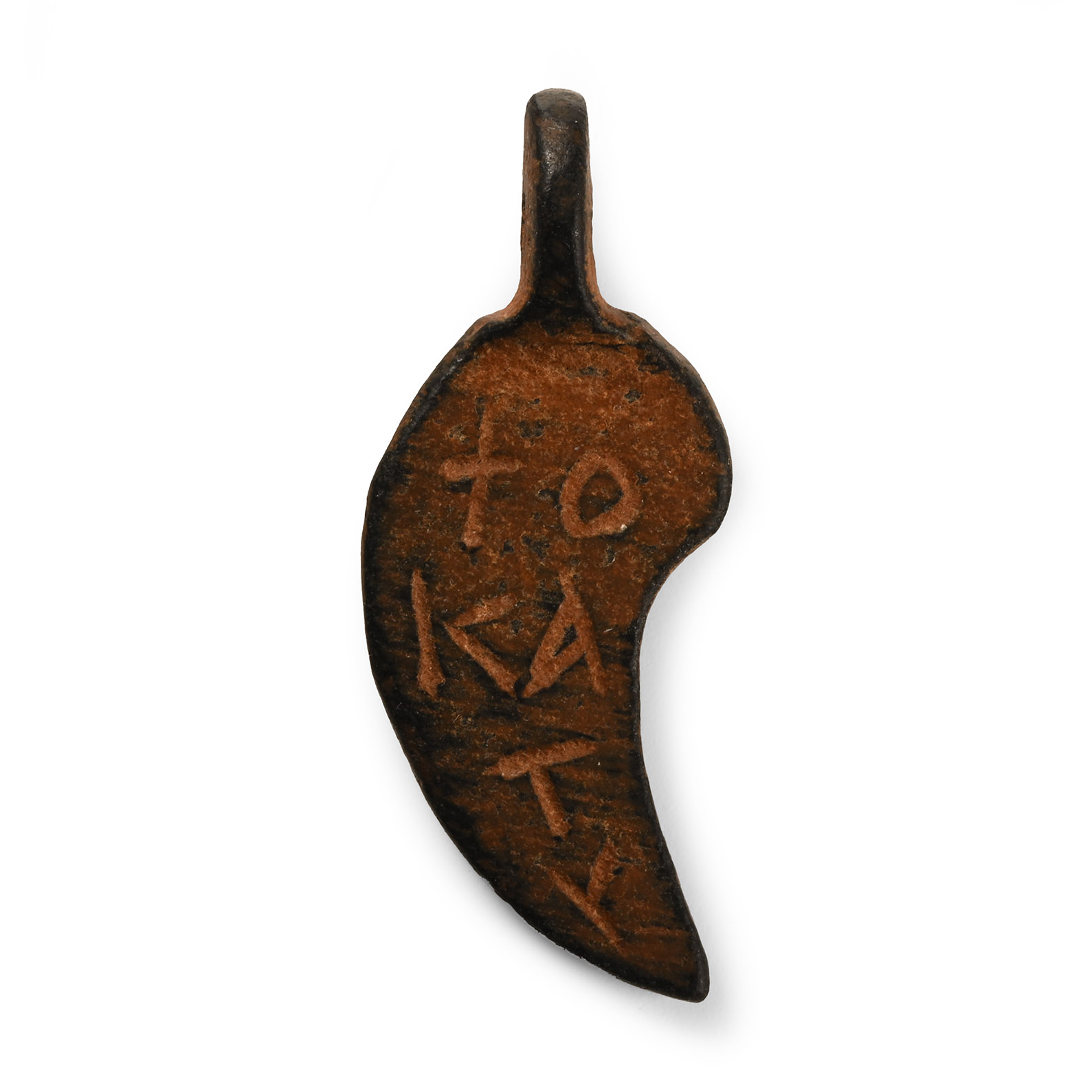
Byzantine Bronze Pendant with Angel and Inscription
6TH-7TH CENTURY A.D.
1 1/2 in. (7.9 grams, 39 mm).
Claw-shaped with cross and angel motif to the obverse; an inscription reading '+O KAT...Y' to the reverse.
ProvenanceAcquired on the London, UK, art market in the 1990s.
From a gentleman's private collection.
Cf. Wamser, L., Die Welt von Byzanz - Europas Östliches Erbe, München, 2004, item 585, for identical object.
FootnotesWhile one side is engraved with an angel with a cross-staff, the other side is engraved with the beginning of Psalm 91 (90): + Ο ΚΑΤΟΙΚΟΝ ΕΝ ΒΟΗΘΙΑ ΤΟΥ ΥΨΙϹΤΟΙ…(He who dwells in the shadow of the Most High…).
CONDITIONTimeLine Auctions follows a vetting process to ensure the authenticity and legality of all items, reinforcing our commitment to integrity and responsible trading. Each antiquity, antique, and coin lot undergoes thorough examination by a vetting committee of at least ten external specialists, professional trade association members, scientists, and archaeologists: Our Vetting Process
AUCTIONS:
TimeLine is a leading auction house specialising in antiquities, ancient art, collectables, natural history, coins, medals, and books. Our auctions offer museums, collectors, historians, and enthusiasts the opportunity to acquire unique and historically significant pieces.
-
Byzantine Bifacial Gemstone with Religious Scenes
6th-8th century A.D.Sold for (Inc. bp): £338
To one face an incuse cross above an agnus dei, to the other Christ enthroned in majesty with worshipper. 2.96 grams, 21 mm
Acquired on the London, UK, art market in the 1990s. From a gentleman's private collection. -
Byzantine Gold Ring with Foliate Motifs
Circa 11th-12th century A.D.Estimate: £1,200 - 1,700 (+bp*)
Opening Bid: £667
Comprising a flat-section hoop with a starburst motif to the base; openwork shoulders and a square bezel with a pellet to each corner, the bezel engraved with foliate motifs. 3.65 grams, 19.99 mm overall, 18.00 mm internal diameter (approximate size British L, USA 5 3/4, Europe 11.24, Japan 10)
Acquired from London galleries during the 1990s. From the jewellery collection of a London, UK, gentleman.
Some rings from the Balkan territories of the Eastern Empire (for example the ring from Dobrača) bear a square thickened bezel engraved with schematic representations. What sets them apart are the widened shoulders emphasised by a plastic rib and the raised and flattened head, which places them in the group of rings which dates mainly to the 11th century (from the end of the 10th to the first decades of the 12th century). -
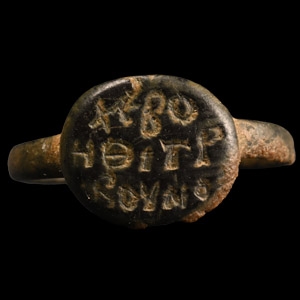
Byzantine Bronze Epigraphic Ring
6th century A.D.Sold for (Inc. bp): £111
With ellipsoid bezel, incised Greek inscription with some of the letter inversed, reading 'ΧζΒΟ ΗϽΙΤΡ βOΥΛΟ'. 1.81 grams, 19.87 mm overall, 17.93 mm internal diameter (approximate size British N 1/2, USA 6 3/4, Europe 14.35, Japan 13)
Acquired 1980-2015. Ex Abelita family collection.
The meaning of the inscription is not clear, although it may be prophylactic, with the letter Chi (Χ) linked with the rho (P) i.e. XP for ‘Christ’ and the other letters referring to the usual expression βΟYTICΗ (protect) βOΥΛIΟ (Doulo? ), therefore intended to be read ‘Christ protect your servant’. The ring was probably engraved by a foreigner with a very limited understanding of Greek.
