
Loading, please wait...
LOT 0164
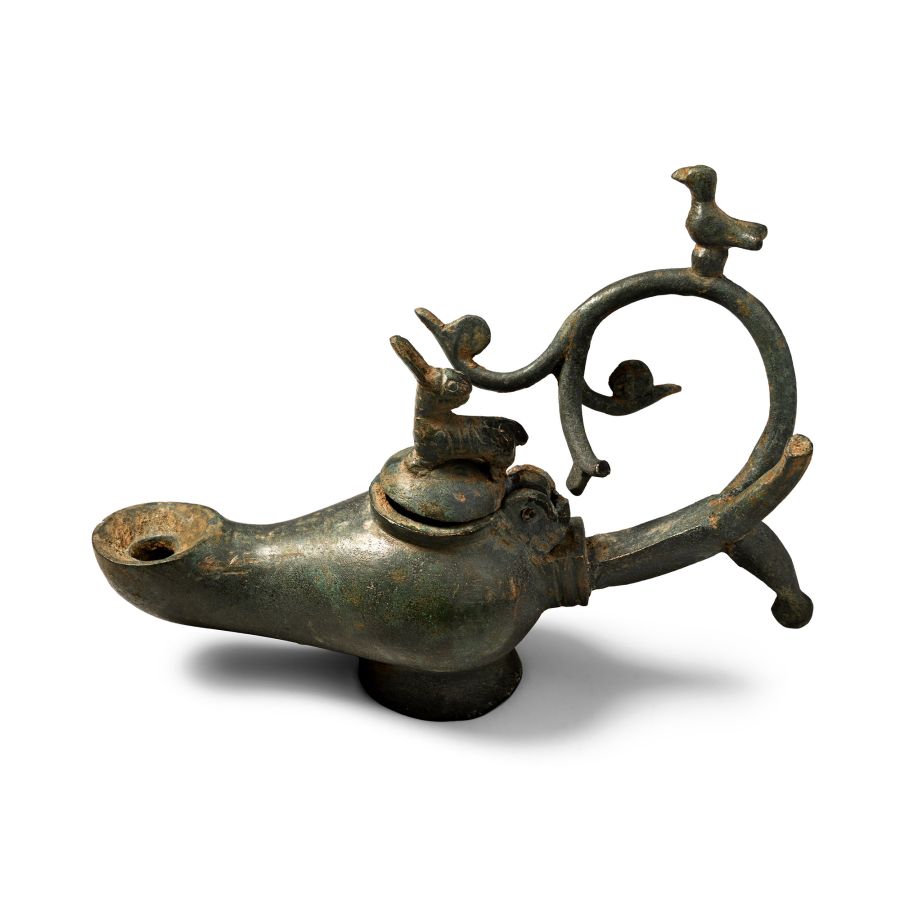
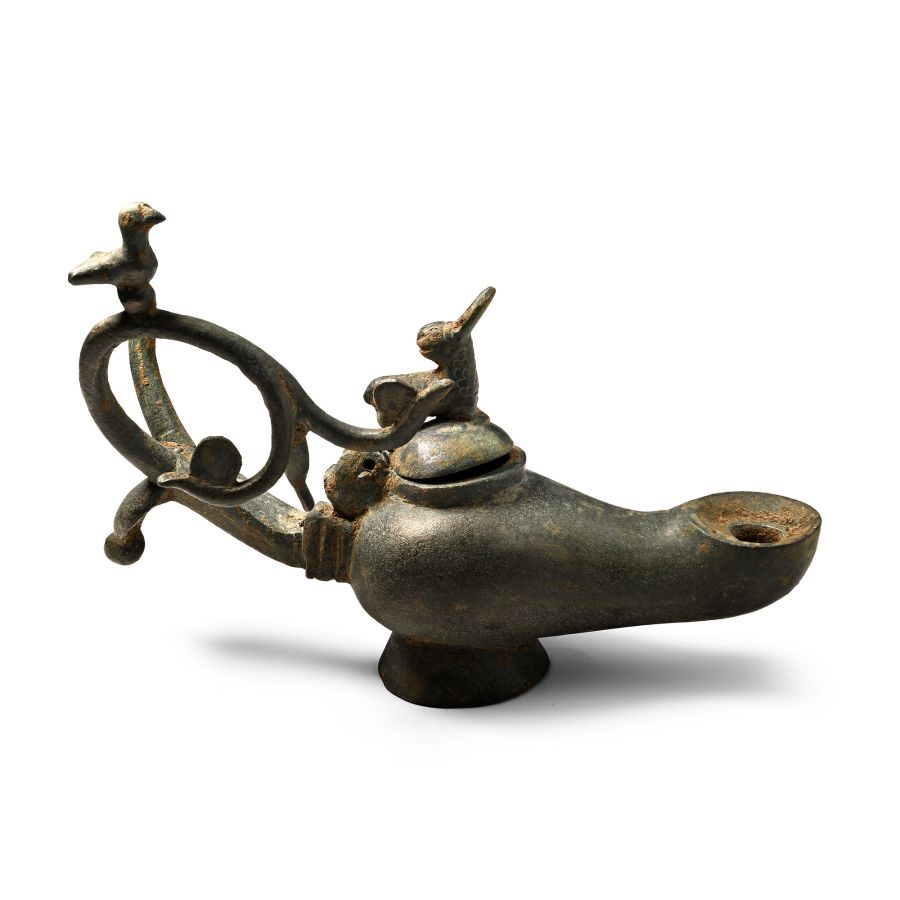
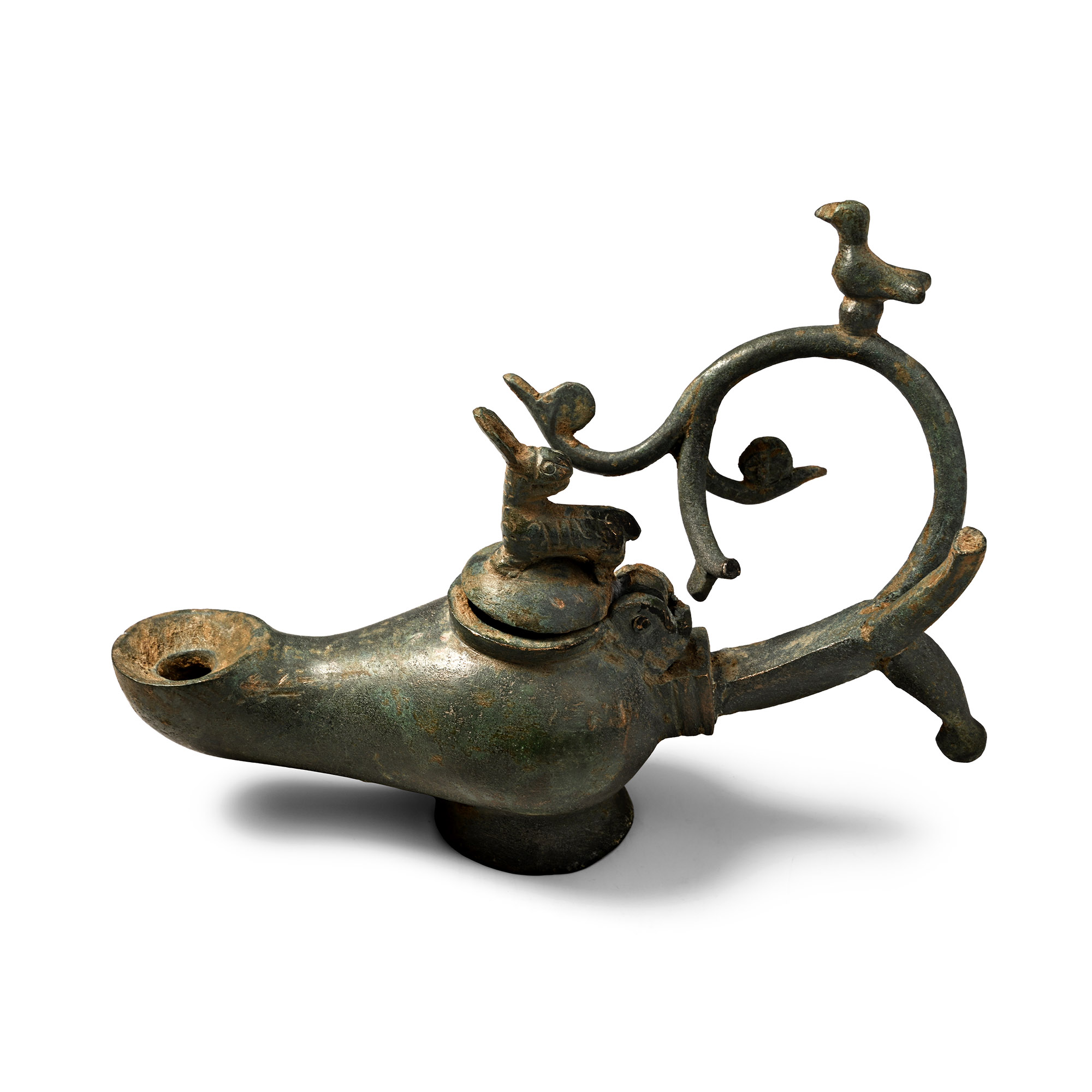
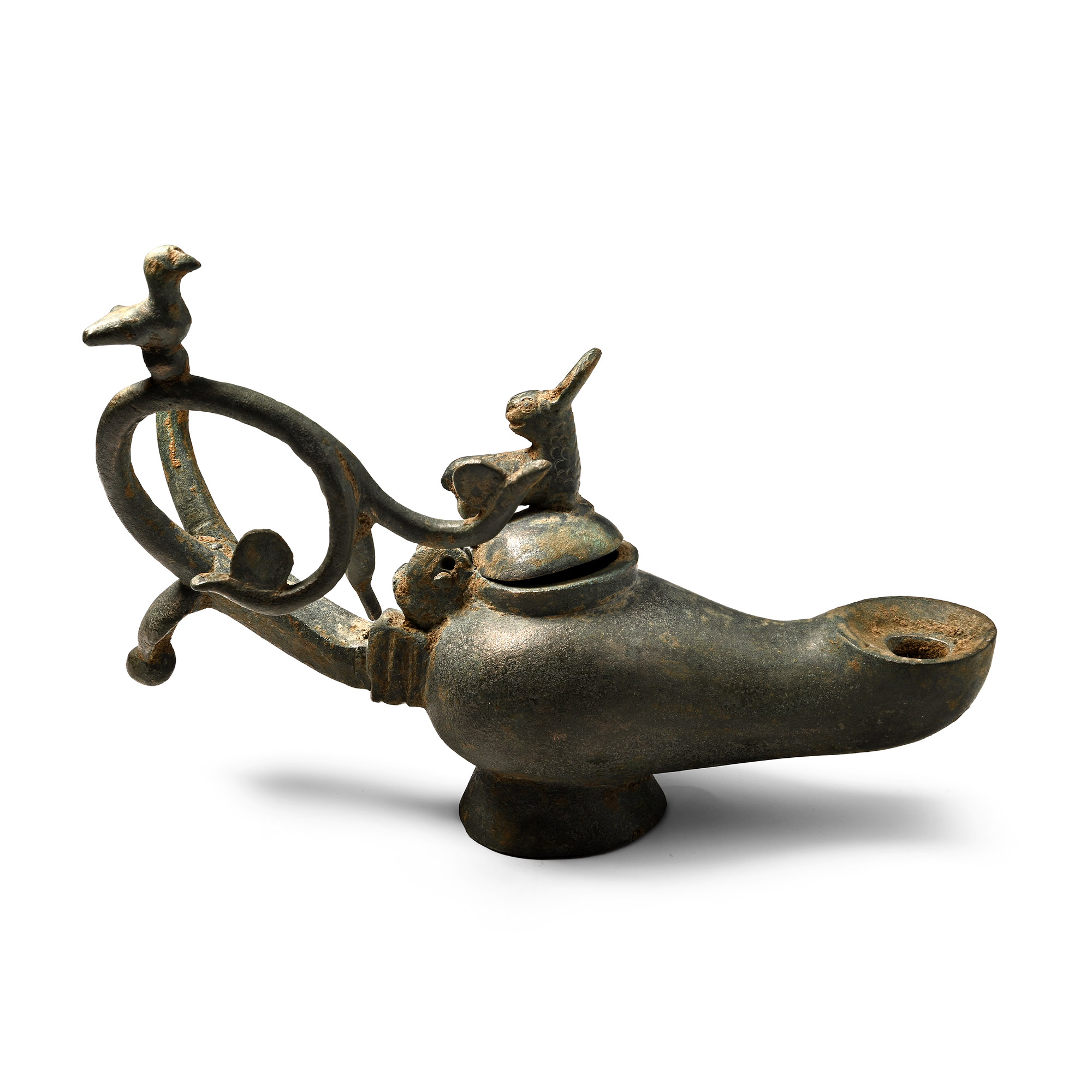
Byzantine Bronze Oil Lamp
5TH-7TH CENTURY A.D.
7 1/2 in. (693 grams, 19 cm).
Comprising: a squat body, large circular nozzle with shallow socket, hinged domed lid with regardant hare, the handle formed from his pricked ears, two long tendril handles with perching bird detailing, splayed foot; square-section socket to base for mounting on a lamp stand.
ProvenanceUK private collection before 2000.
Acquired on the UK art market.
Private collection, London, UK.
Cf. Gökalp, Z.D., ‘Some examples of Byzantine bronze lamps in Turkish Museums’ in Actes du 1er Congres International d’etudes sur le Luminaire Antique, (Nyon-Geneve, 29.IX-4.X.2003), Monographies Instrumentum 31, (2005), pp.69-71, fig.7, pl.30.
CONDITIONTimeLine Auctions follows a vetting process to ensure the authenticity and legality of all items, reinforcing our commitment to integrity and responsible trading. Each antiquity, antique, and coin lot undergoes thorough examination by a vetting committee of at least ten external specialists, professional trade association members, scientists, and archaeologists: Our Vetting Process
AUCTIONS:
TimeLine is a leading auction house specialising in antiquities, ancient art, collectables, natural history, coins, medals, and books. Our auctions offer museums, collectors, historians, and enthusiasts the opportunity to acquire unique and historically significant pieces.
-
Byzantine Bronze Reliquary Cross Pendant
Circa 9th-12th century A.D.Sold for (Inc. bp): £195
Enkolpion with spurs to the angles of the four arms, central low-relief ring to each face; hinged suspension loop with ribbing. 11.69 grams, 51 mm
Ex Den of Antiquity, Cambridge, UK. From the private collection of a West London, UK, gentleman, formed since the early 2000s. Accompanied by a typed dealer's ticket. -
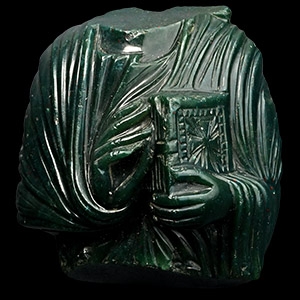
Byzantine Nephrite Icon Fragment with Christ Blessing
11th century A.D.Estimate: £12,000 - 17,000 (+bp*)
Opening Bid: £6,000
Fragment of a figure carved in the half-round, with pleated garment, holding a book with a cross in the left hand and touching its edge with the right hand; to the reverse, a low-relief cross with knops to the angles, abbreviated legends 'IC / XC / NI / KA' for 'Jesus Christ is Victorious' in seriffed capitals in the spandrels of the cross, each with a superscript macron. 38 grams, 40 mm
New Forest, UK, collection, 1950s. Alexander Cotton collection, UK, 1970-1980s. London gallery 1990s, latterly a London gentleman's collection, 2000s. Accompanied by an academic report by Dr Raffaele D’Amato. This lot has been checked against the Interpol Database of stolen works of art and is accompanied by a search certificate number no.12912-244440.
This magnificent, if fragmentary, icon belongs to the most florid period of Byzantium’s renaissance, when, under the aegis of the Macedonian Dynasty, the political, military, cultural and economic power of the Roman Empire reached the last apex of its glory. The figure detailed in bloodstone here represents Christ, as is clear not only from the cross engraved on the back, but also from the garments he is wearing. It is likely that it is Christ as Pantocrator who is represented, maybe originally forming part of a more complex icon representing the Deesis. While this subject in Eastern Roman art is usually reserved for monumental decoration, it is sometimes found on smaller-scale objects as well, such as cameos and steatite icons. -
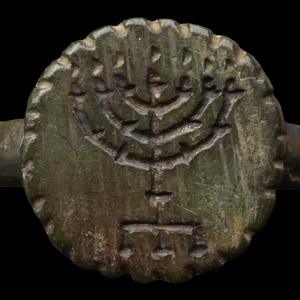
Judaic Bronze Ring with Menorah
Circa 3rd-4th century A.D.Sold for (Inc. bp): £325
With D-section hoop supporting a discoid bezel with decoratively notched circumference; possibly later engraved with a menorah. 2.34 grams, 18.62 mm overall, 17.24 x 15.16 mm internal diameter (approximate size British J 1/2, USA 5, Europe 9.32, Japan 9)
North American collection, 1990s-2000s. Ex property of a Surrey gentleman.
