
Loading, please wait...
LOT 0955
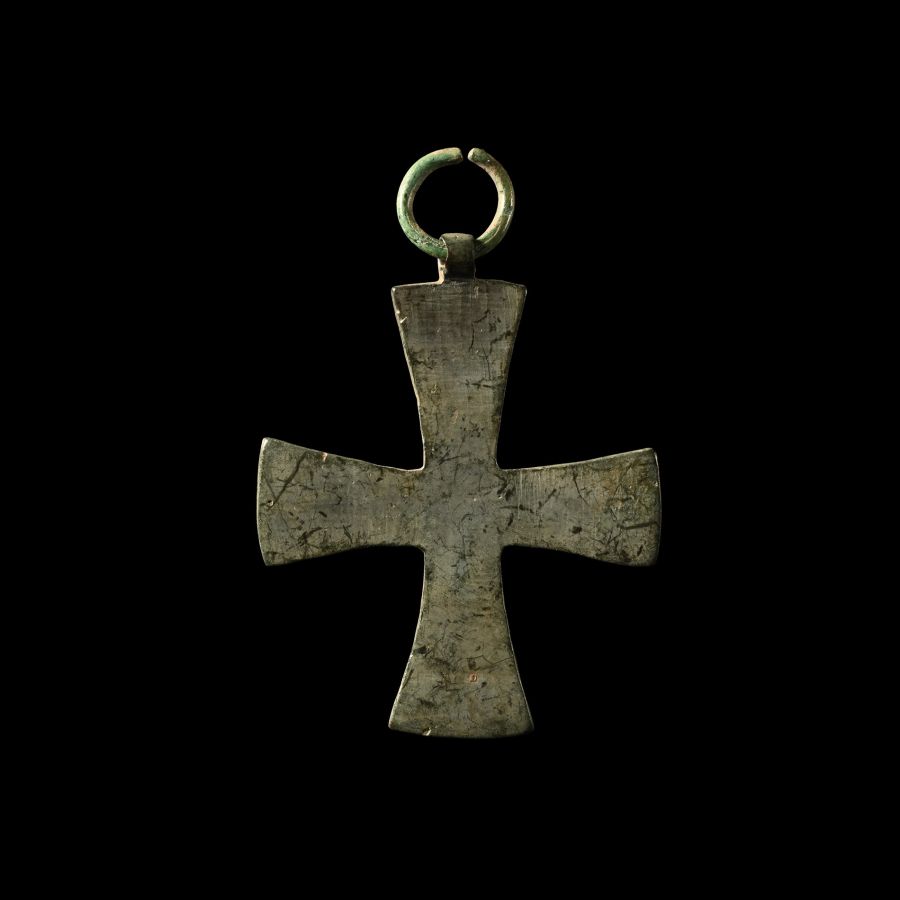
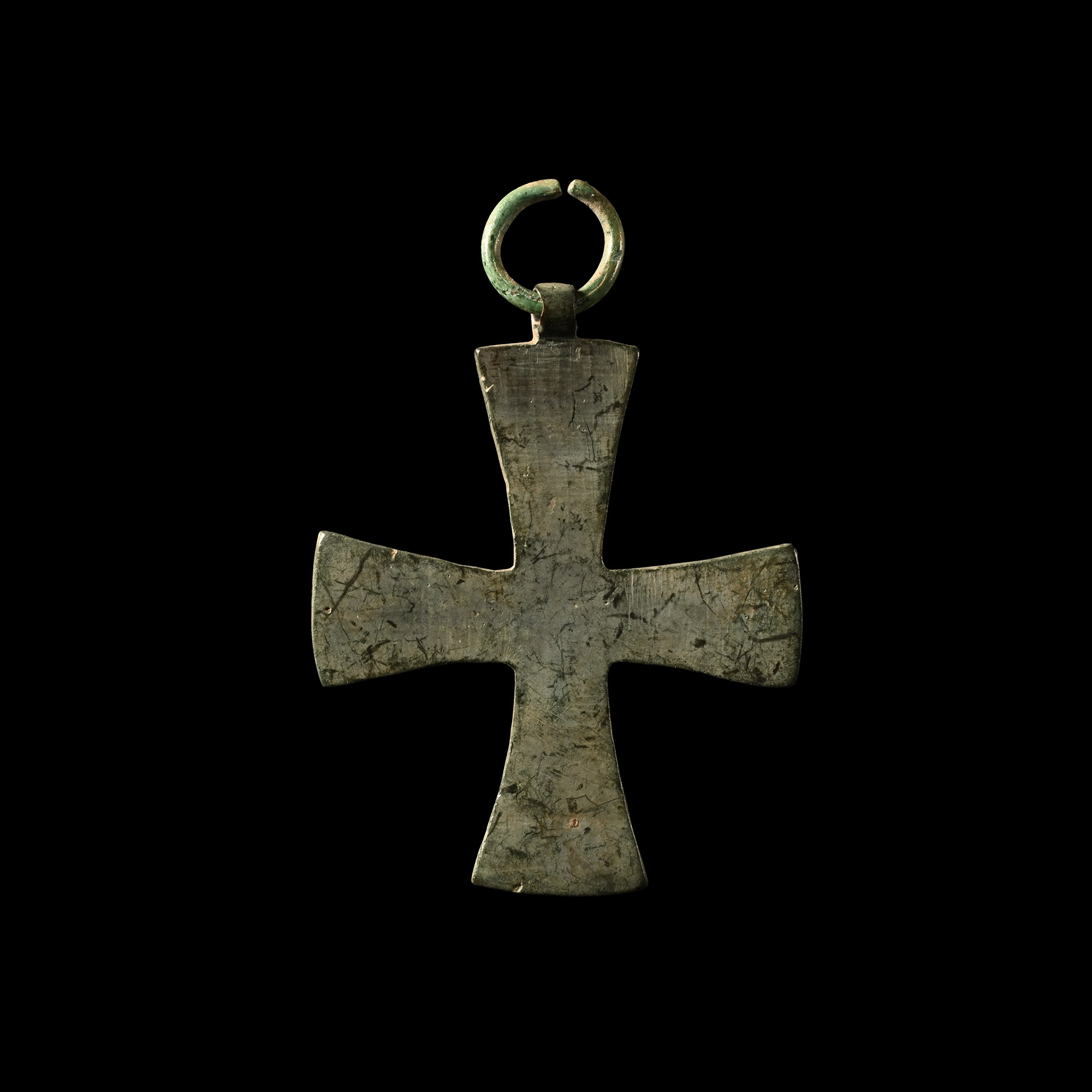
Byzantine Bronze Inscribed Cross Pendant
7TH CENTURY A.D.
2 1/4 in. (10.3 grams, 56 mm).
Flat in section with pierced lug and suspension ring, lightly inscribed to the ends of the arms 'NI / KA / HC / ΛC'.
ProvenanceAcquired in Munich, Germany, in 2001.
European private collection.
TimeLine Auctions follows a vetting process to ensure the authenticity and legality of all items, reinforcing our commitment to integrity and responsible trading. Each antiquity, antique, and coin lot undergoes thorough examination by a vetting committee of at least ten external specialists, professional trade association members, scientists, and archaeologists: Our Vetting Process
AUCTIONS:
TimeLine is a leading auction house specialising in antiquities, ancient art, collectables, natural history, coins, medals, and books. Our auctions offer museums, collectors, historians, and enthusiasts the opportunity to acquire unique and historically significant pieces.
-
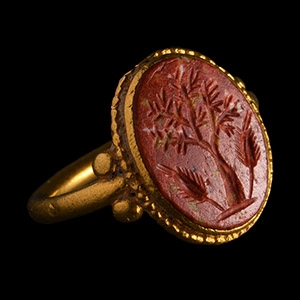
Byzantine Gold Ring with Red Gemstone
4th-6th century A.D.Sold for (Inc. bp): £1,820
With slender hoop and ellipsoid bezel flanked at each shoulder by two granules, beaded wire collar, inset intaglio olive tree flanked by bullrushes. 3.79 grams, 17.74 mm overall, 14.14 mm internal diameter
Private collection of Mr S.A., Switzerland, 1990s, thence by descent. -
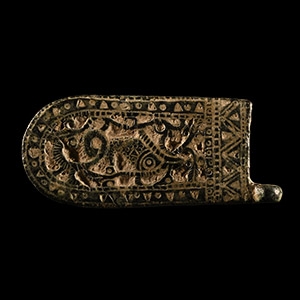
Byzantine Belt Mount with Animal
Circa 6th-7th century A.D.Sold for (Inc. bp): £111
Tongue-shaped with attachment lug to the reverse and hinge knuckles to the edge; reserved design of a bull amid tendrils; geometric border. 13.8 grams, 40 mm
Acquired on the Europen art market. From the collection of an London antiquarian. -
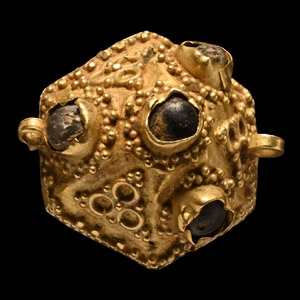
Byzantine Garnet Set Gold Pendant
6th-8th century A.D.Estimate: £300 - 400 (+bp*)
Opening Bid: £150
Domed sheet-gold pendant with filigree hoops and granulation, four cells each with a gemstone cabochon, lateral loops. 2.68 grams, 19 mm
From a late Japanese specialist collector, 1970-2000s.
