
Loading, please wait...
LOT 0967
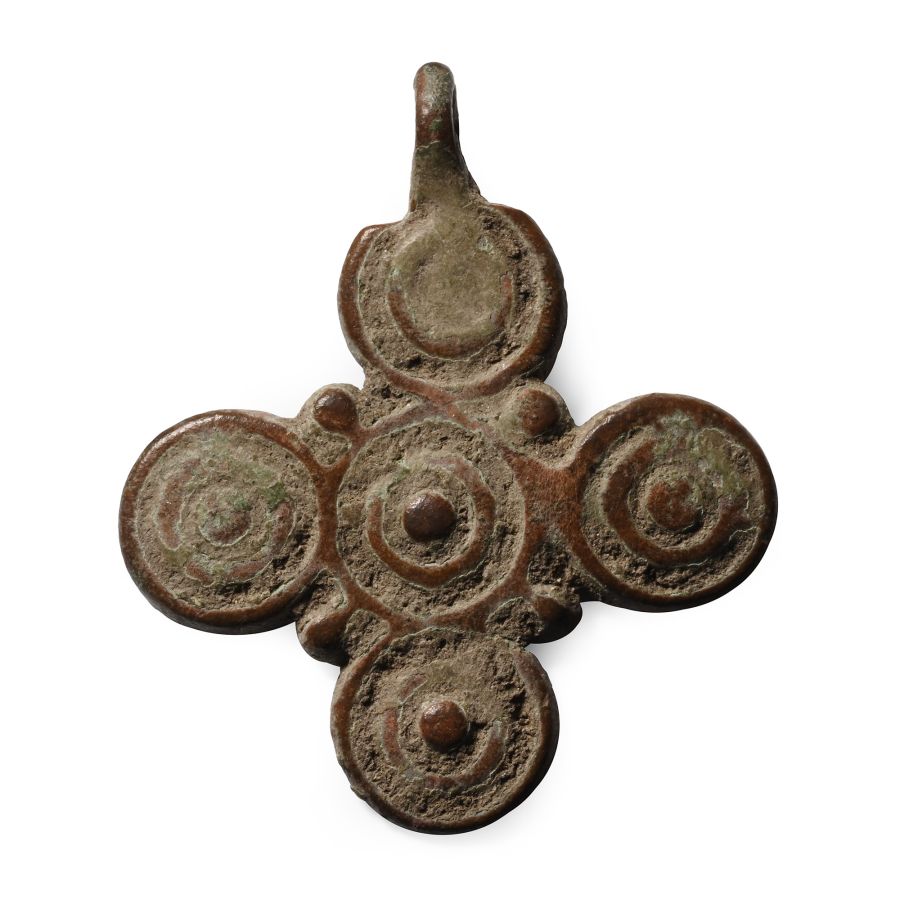
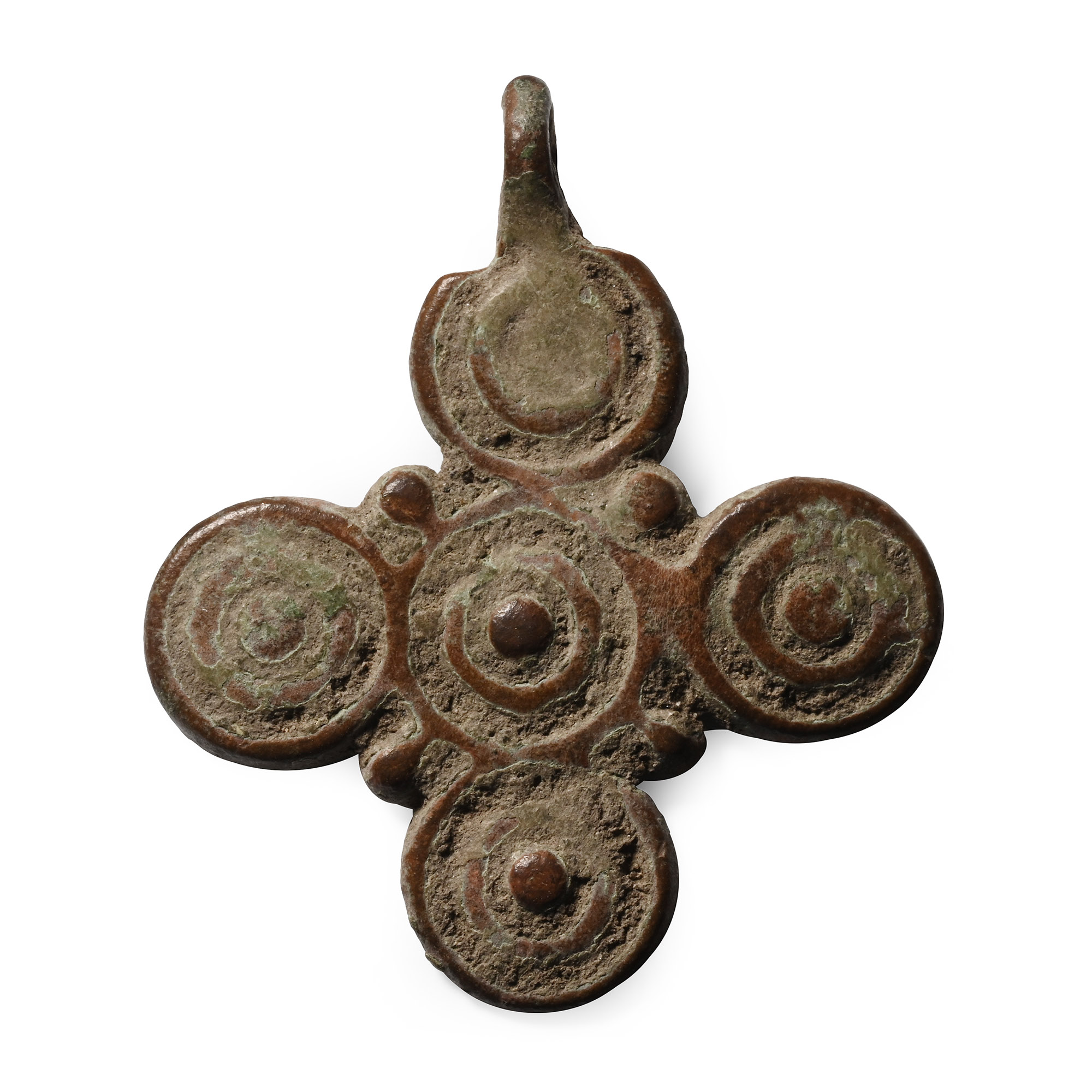
Byzantine Bronze Five Wounds of Christ Cross Pendant
CIRCA 12TH-14TH CENTURY A.D.
1 3/8 in. (5.21 grams, 36 mm).
With rounded arms, each with concentric circles and a raised boss to the centre likely representing the Five Wounds of Christ. [No Reserve]
ProvenanceEx Garcia collection, 1990s.
This lot is accompanied by an illustrated lot declaration signed by the Head of the Antiquities Department, Dr Raffaele D'Amato.
TimeLine Auctions follows a vetting process to ensure the authenticity and legality of all items, reinforcing our commitment to integrity and responsible trading. Each antiquity, antique, and coin lot undergoes thorough examination by a vetting committee of at least ten external specialists, professional trade association members, scientists, and archaeologists: Our Vetting Process
AUCTIONS:
TimeLine is a leading auction house specialising in antiquities, ancient art, collectables, natural history, coins, medals, and books. Our auctions offer museums, collectors, historians, and enthusiasts the opportunity to acquire unique and historically significant pieces.
-
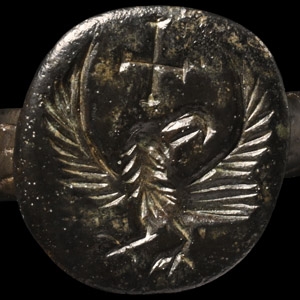
Byzantine Bronze Ring with Bird and Cross
6th-7th century A.D.Sold for (Inc. bp): £247
Comprising a flat-section hoop and large discoid bezel with an eagle with open wings and cross above. 5.06 grams, 22.70 mm overall, 19.74 mm internal diameter (approximate size British S, USA 9, Europe 20, Japan 19)
Ex German art market, 2000s. Acquired from an EU collector living in London. From the collection of a Surrey, UK, gentleman. This lot is accompanied by an illustrated lot declaration signed by the Head of the Antiquities Department, Dr Raffaele D'Amato. -
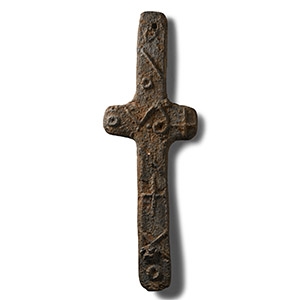
Byzantine Lead Cross
5th-7th century A.D.Estimate: £400 - 600 (‡+bp*)
Opening Bid: £200
Flat-section cruciform mount with stub arms and attachment point at one end; high-relief saltires, hoops and other detailing. 357 grams, 21.5 cm
Acquired in the mid 1980s-1990s. From the family collection of Mr S.A., Switzerland, thence by descent. Private collection since the late 1990s. This lot is accompanied by an illustrated lot declaration signed by the Head of the Antiquities Department, Dr Raffaele D'Amato. -
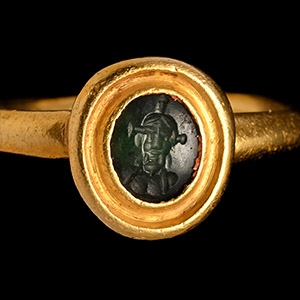
Large Byzantine Gold Ring with Christ Engraved on a Green Chalcedony Gemstone
Circa 5th-7th century A.D.Estimate: £5,000 - 7,000 (+bp*)
Opening Bid: £2,500
With round-section hoop and discoid stepped bezel, inset chalcedony cloison with nimbate bust of Christ. 10.07 grams, 26.22 mm overall, 20.52 mm internal diameter (approximate size British S 1/2, USA 9 1/4, Europe 20.63, Japan 19)
UK collection, acquired 1971. with Christie's, London, 5 July 2023, no.61. Accompanied by a positive scientific statement from Striptwist Limited, a London-based company run by historical precious metal specialist Dr Jack Ogden, reference number 220507. This lot has been checked against the Interpol Database of stolen works of art and is accompanied by a search certificate number no.12691-235717. This lot has been cleared against the Art Loss Register database, and is accompanied by an illustrated lot declaration signed by the Head of the Antiquities Department, Dr Raffaele D'Amato.
