
Loading, please wait...
LOT 0952
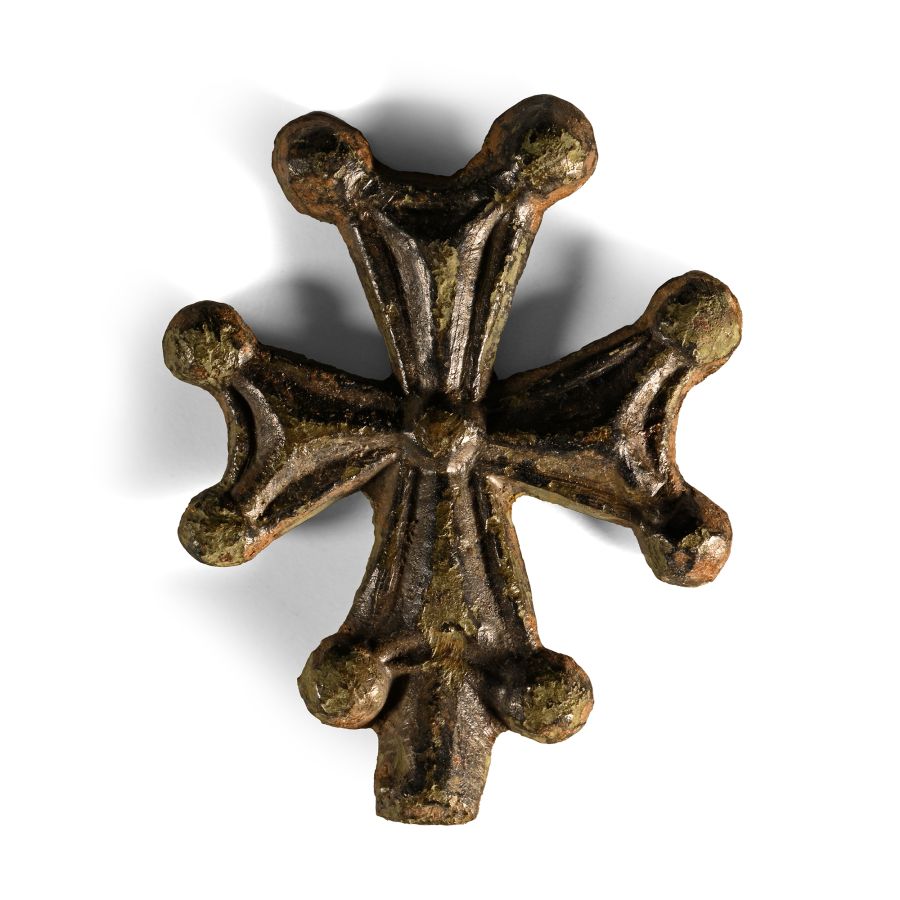
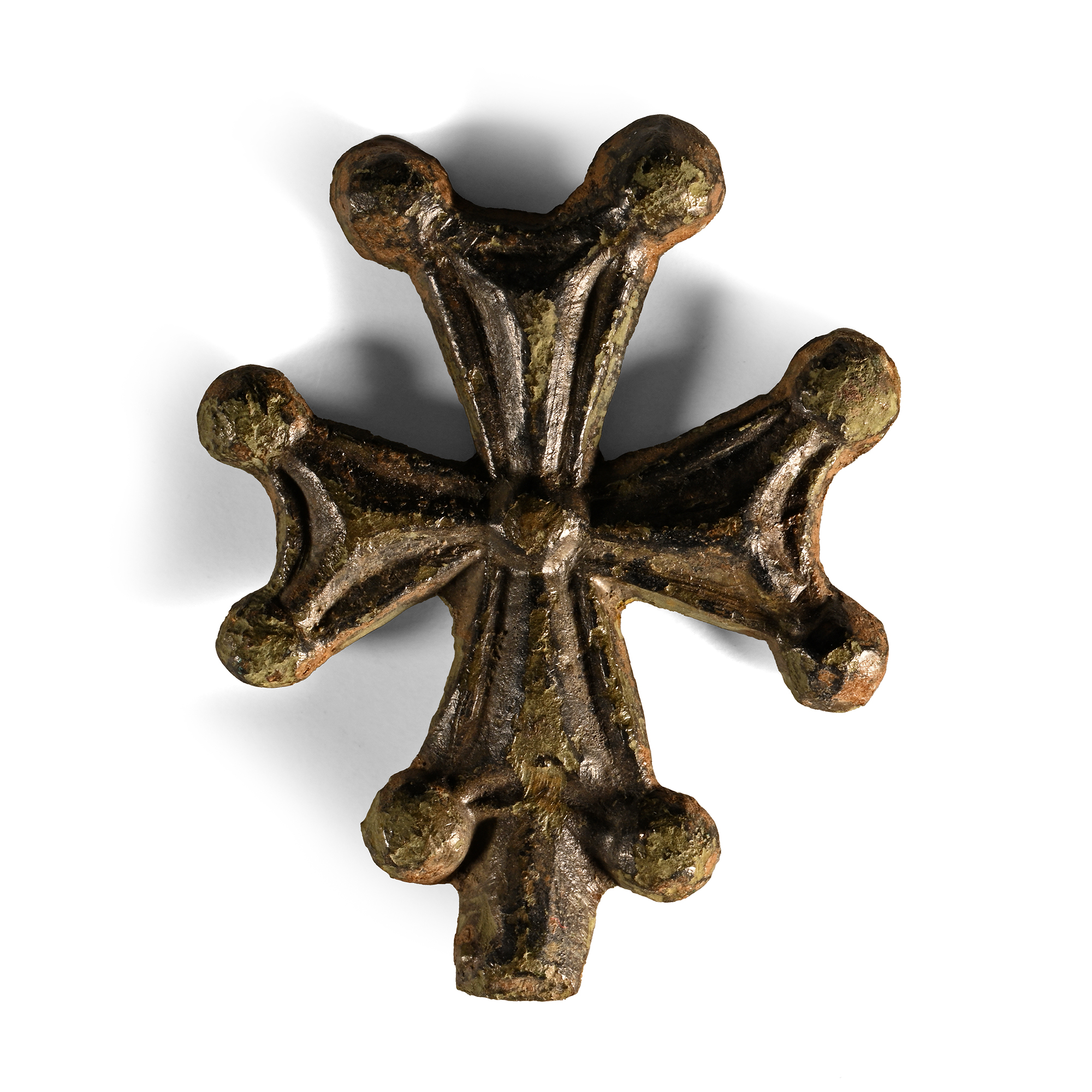
Byzantine Bronze Expanding-Arm Cross
6TH-7TH CENTURY A.D.
2 in. (20.2 grams, 51 mm).
Each arm with raised Y-shaped median panels and two bulb finials; shank below broken. [No Reserve]
ProvenanceBelgium collection, 1980s.
From the collection of an London antiquarian.
Cf. Wamser, L., Die Welt von Byzanz - Europas Östliches Erbe, München, 2004, item 543, for type.
CONDITIONTimeLine Auctions follows a vetting process to ensure the authenticity and legality of all items, reinforcing our commitment to integrity and responsible trading. Each antiquity, antique, and coin lot undergoes thorough examination by a vetting committee of at least ten external specialists, professional trade association members, scientists, and archaeologists: Our Vetting Process
AUCTIONS:
TimeLine is a leading auction house specialising in antiquities, ancient art, collectables, natural history, coins, medals, and books. Our auctions offer museums, collectors, historians, and enthusiasts the opportunity to acquire unique and historically significant pieces.
-
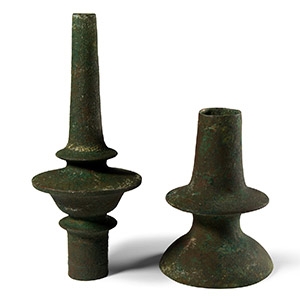
Byzantine Bronze Oil Lamp Stands
6th-7th century A.D.Sold for (Inc. bp): £65
A pair of copper-alloy oil lamp stands with ornamental stems. 1.7 kg total, 16-25.2 cm
UK private collection before 2000. UK art market. Property of a London gentleman.
This kind of stand was destined to support lamp with oval bodies, at the base of which there was a slot that allowed it to be inserted into the lamp stand. The latter was composed of a turned stem and a single, double or even triple curvilinear base, which had the shape of an inverted chalice and carried one, two or three supports which ended with horse hoof ornaments, and feet in the shape of lion's paws. -
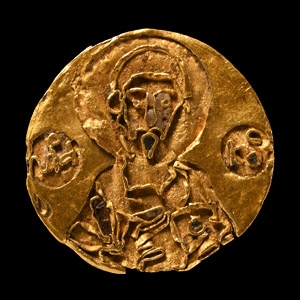
Byzantine Gold Enamel Mount of a Standing Saint and Inscription
Late 10th-early 11th century A.D.Sold for (Inc. bp): £442
Sheet gold disc with applied filigree cells; facing nimbate saint with flanking roundels bearing 'MP / IC' (Mary and Jesus). 1.01 grams, 18 mm
Ex Elie Borowski, 1988. -
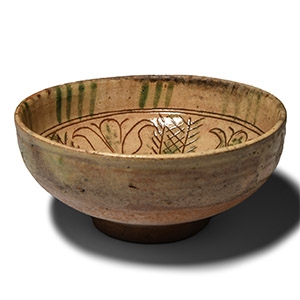
Byzantine Green-Glazed Sgraffito Bowl
Circa 12th-15th century A.D.Sold for (Inc. bp): £585
Broad with basal disc, cream-glazed inner face with green detailing, sgraffito design of tulip flowers and hatched bands. 322 grams, 15.2 cm
From a collection acquired on the UK art market from various auction houses and collections mostly before 2000. From an important Cambridgeshire estate; thence by descent.
