
Loading, please wait...

LOT 1005
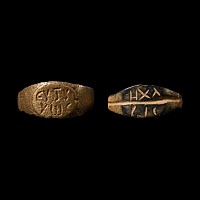
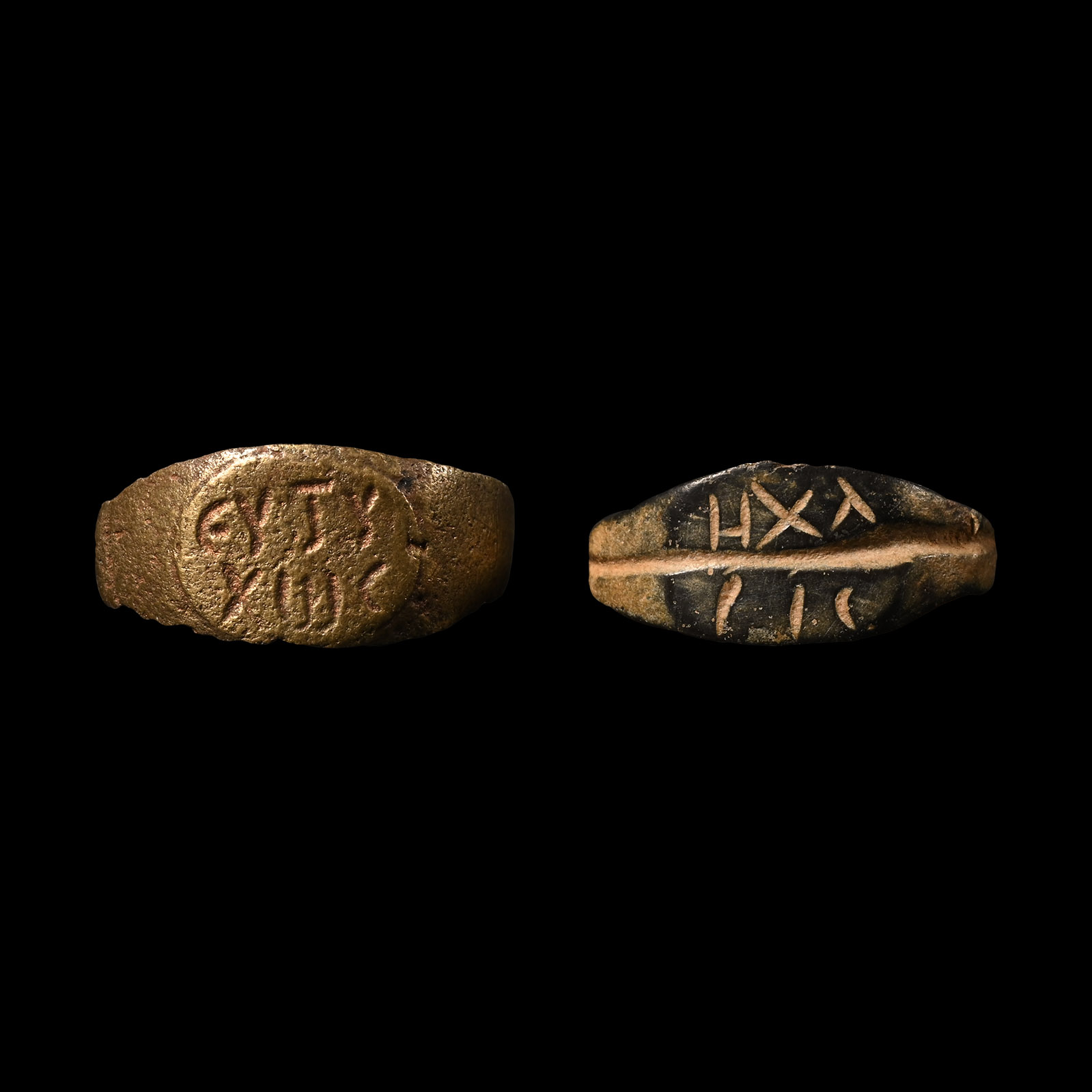
Byzantine Bronze Epigraphic Rings
6TH-12TH CENTURY A.D.
3/4 in. (2.03 grams total, 18 mm each).
Comprising: one with segmented bezel, incised legend 'HXA / IIC'; one with ellipsoid plaque, incised legend 'EYTY / XWC', shank partly absent. [2, No Reserve]
ProvenanceAcquired 1980-2015.
Ex Abelita family collection.
TimeLine Auctions follows a vetting process to ensure the authenticity and legality of all items, reinforcing our commitment to integrity and responsible trading. Each antiquity, antique, and coin lot undergoes thorough examination by a vetting committee of at least ten external specialists, professional trade association members, scientists, and archaeologists: Our Vetting Process
AUCTIONS:
TimeLine is a leading auction house specialising in antiquities, ancient art, collectables, natural history, coins, medals, and books. Our auctions offer museums, collectors, historians, and enthusiasts the opportunity to acquire unique and historically significant pieces.
-
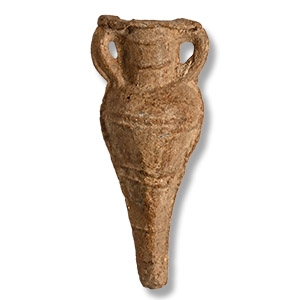
Byzantine Lead Pilgrim's Ampulla
6th-8th century A.D.Sold for (Inc. bp): £20
Modelled as a two-handled amphora with decorative bands to the body. 25.3 grams, 54 mm
Ex German art market, 2000s. Acquired from an EU collector living in London. From the collection of Surrey, UK, gentleman. -
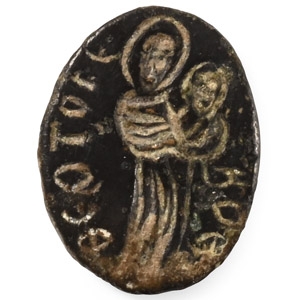
Byzantine Bronze 'Mother of God, help!' Bezel Inlay
Circa 6th-12th century A.D.Sold for (Inc. bp): £130
With inscription 'ΘΕΟΤΟΚΕ ΒΟΘ' for 'ΘΕΟΤΟΚΕ ΒΟΘEI' (Mother of God, help!). 0.84 grams, 14 mm
From an important collection formed before 1988, London and Geneva. -
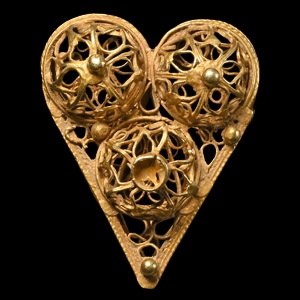
Byzantine Gold Filigree Heart-Shaped Pendant
5th-7th century A.D.Sold for (Inc. bp): £598
Hollow with three filigree circles to the underside each with scrolled filigree fill, pierced sidewall, three openwork filigree domes to the obverse with granules and a tubular cell to the apex of the lower one. 2.92 grams, 24 mm
Ex property of a late Japanese collector, 1970s-2000s.
