
Loading, please wait...
LOT 1113
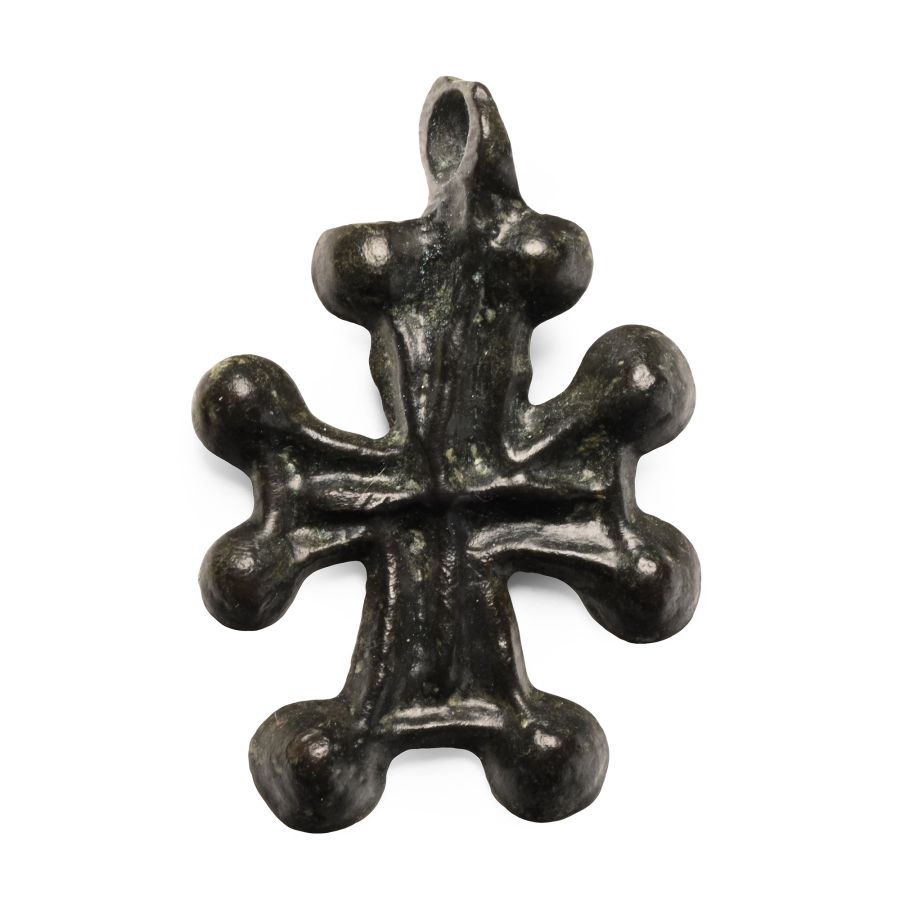
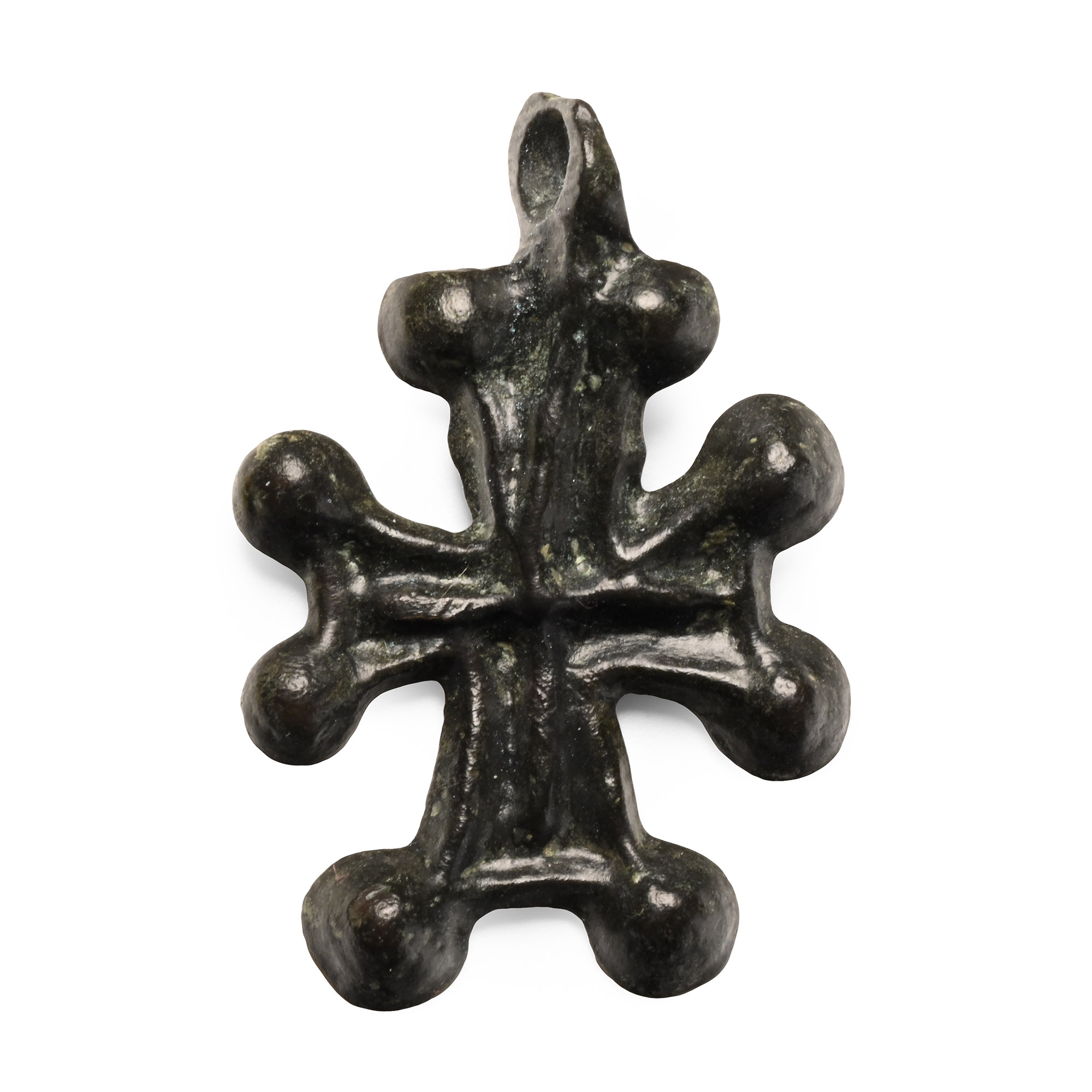
Byzantine Bronze Cross Pendant
10TH-14TH CENTURY A.D.
1 1/4 in. (4.54 grams, 32 mm).
Expanding arms with a pellet to each corner, raised cross motif at the centre. [No Reserve]
ProvenanceEx German art market, 2000s.
Acquired from an EU collector living in London.
From the collection of a Surrey, UK, gentleman.
TimeLine Auctions follows a vetting process to ensure the authenticity and legality of all items, reinforcing our commitment to integrity and responsible trading. Each antiquity, antique, and coin lot undergoes thorough examination by a vetting committee of at least ten external specialists, professional trade association members, scientists, and archaeologists: Our Vetting Process
AUCTIONS:
TimeLine is a leading auction house specialising in antiquities, ancient art, collectables, natural history, coins, medals, and books. Our auctions offer museums, collectors, historians, and enthusiasts the opportunity to acquire unique and historically significant pieces.
-
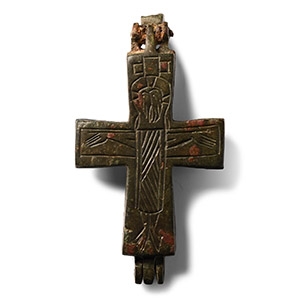
Byzantine Bronze Reliquary Cross Pendant
Circa 9th-12th century A.D.Sold for (Inc. bp): £338
Enkolpion reliquary cross with hinge and suspension ring above; obverse with incised nimbate Jesus in stavrosis position, dressed in hatched garment; reverse with Mother of God in orans pose flanked by fronds. 32.5 grams, 70 mm
Ex Den of Antiquity, Cambridge, UK. From the private collection of a West London, UK, gentleman, formed since the early 2000s. -
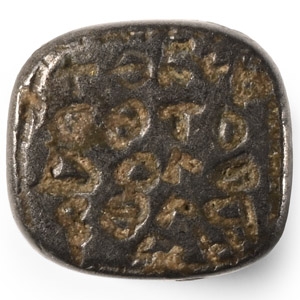
Byzantine Seal Matrix with Inscription
Circa 11th-12th century A.D.Estimate: £150 - 200 (+bp*)
Opening Bid: £80
With inscription '+ΘKEB / OΘTO / ΔΟΛΟ / ΤΘΛΑ' for 'ΘΕΟΤΟΚΕ ΒΟΗΘΕI ΤΩ ΔΟΥΛΩ ΤΟΥ ΘΕΟΥ ΛΑΔΕ' (Mother of God, help Lades, the servant of God). 13.1 grams, 18 mm
From an important collection formed before 1988, London and Geneva. This lot is accompanied by an illustrated lot declaration signed by the Head of the Antiquities Department, Dr Raffaele D’Amato. This lot is accompanied by an illustrated lot declaration signed by the Head of the Antiquities Department, Dr Raffaele D'Amato.
The stamp seals that have survived in large numbers from Byzantium are objects a few centimeters high and conical in shape, featuring a sealing surface at the lower end and a pendant at the upper end. They served the same function as signet rings and were used to seal everyday objects, primarily in private areas, using wax and other soft materials. -
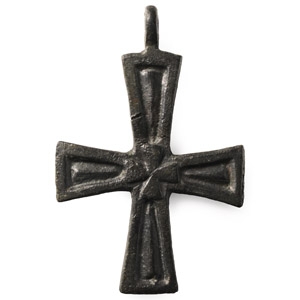
Byzantine Bronze Cross Pendant
10th-12th century A.D.Sold for (Inc. bp): £104
Expanding arm cross with a low-relief Maltese cross at the centre. 8.27 grams, 52 mm
Ex German art market, 2000s. Acquired from an EU collector living in London. From the collection of a Surrey, UK, gentleman.
