
Loading, please wait...
LOT 0952
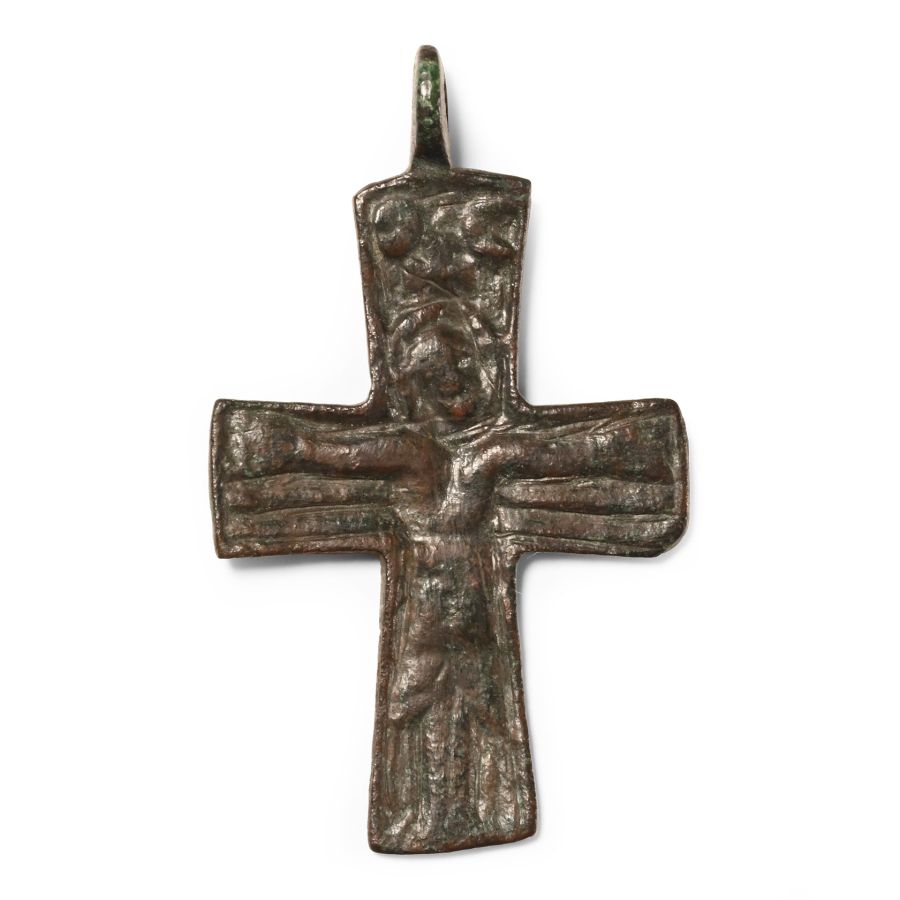
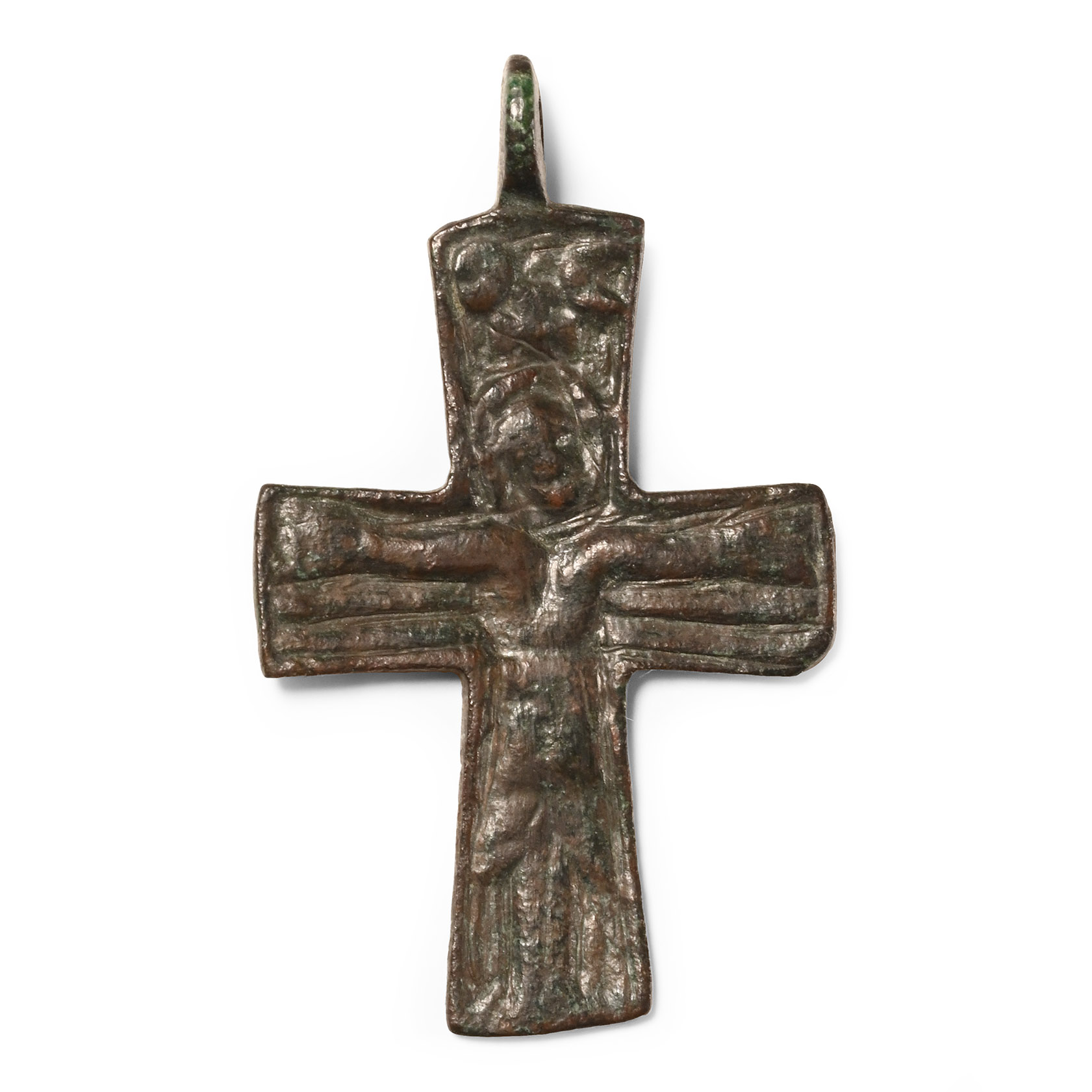
Byzantine Bronze Cross Pendant
12TH-14TH CENTURY A.D.
1 3/4 in. (5.4 grams, 44 mm).
Cruciform with low-relief image of the crucifixion to one face. [No Reserve]
ProvenanceEx German art market, 2000s.
Acquired from an EU collector living in London.
From the collection of Surrey, UK, gentleman.
TimeLine Auctions follows a vetting process to ensure the authenticity and legality of all items, reinforcing our commitment to integrity and responsible trading. Each antiquity, antique, and coin lot undergoes thorough examination by a vetting committee of at least ten external specialists, professional trade association members, scientists, and archaeologists: Our Vetting Process
AUCTIONS:
TimeLine is a leading auction house specialising in antiquities, ancient art, collectables, natural history, coins, medals, and books. Our auctions offer museums, collectors, historians, and enthusiasts the opportunity to acquire unique and historically significant pieces.
-
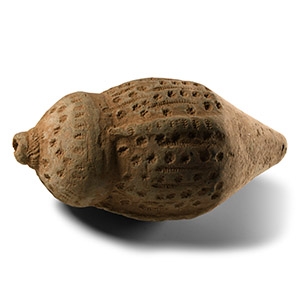
Turco-Mongol 'Greek Fire' Ceramic Fire Bomb or Hand Grenade
14th century A.D.Sold for (Inc. bp): £130
Piriform body with impressed hatched bands to the shoulder and upper body, domed filler-hole, intended to be filled with explosive liquid and wick, used as a hand grenade. 802 grams, 18 cm
From a specialist collection of militaria, London, UK, collected 1990s onwards.
; the shape finds correspondence with a fire grenade in the Kars Museum, no.14.09.2009. Apart from the use of siphons or manual flame-throwers called cheirosiphona, special corps of Roman soldiers employed terracotta grenades, in the form of small jars, abundantly evidenced in archaeological excavations. They were called μεσαία kακαβιά or κυτροκακάβια where the former had a bulbous shape and the latter a more cylindrical form. -
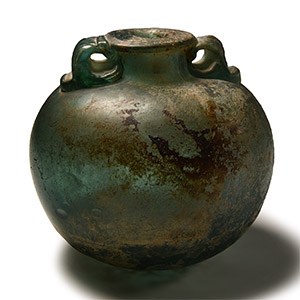
Late Byzantine Green Glass Aryballos
6th-8th century A.D.Sold for (Inc. bp): £1,105
Substantial jar with dimple base, trumpet-shaped mouth with brad rim and flanked by two loop handles. 329 grams, 94 mm wide
From the early 19th century collection of General Sir George Cockburn (1763-1847), Shanganagh Castle, Co Wicklow, Ireland, sold at auction between 1935-1939. From the collection of the late Dr J.D.H. Widdness, Dublin, Ireland. Accompanied by a handwritten letter by Dr Widdness explaining the bottle's history and provenance, plus a typed transcription. Accompanied by a copy of an old black and white photograph of Dr Widdness holding and admiring the bottle while sitting in his study. -
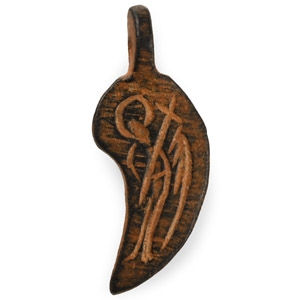
Byzantine Bronze Pendant with Angel and Inscription
6th-7th century A.D.Sold for (Inc. bp): £143
Claw-shaped with cross and angel motif to the obverse; an inscription reading '+O KAT...Y' to the reverse. 7.9 grams, 39 mm
Acquired on the London, UK, art market in the 1990s. From a gentleman's private collection.
While one side is engraved with an angel with a cross-staff, the other side is engraved with the beginning of Psalm 91 (90): + Ο ΚΑΤΟΙΚΟΝ ΕΝ ΒΟΗΘΙΑ ΤΟΥ ΥΨΙϹΤΟΙ…(He who dwells in the shadow of the Most High…).
