
Loading, please wait...
LOT 0797
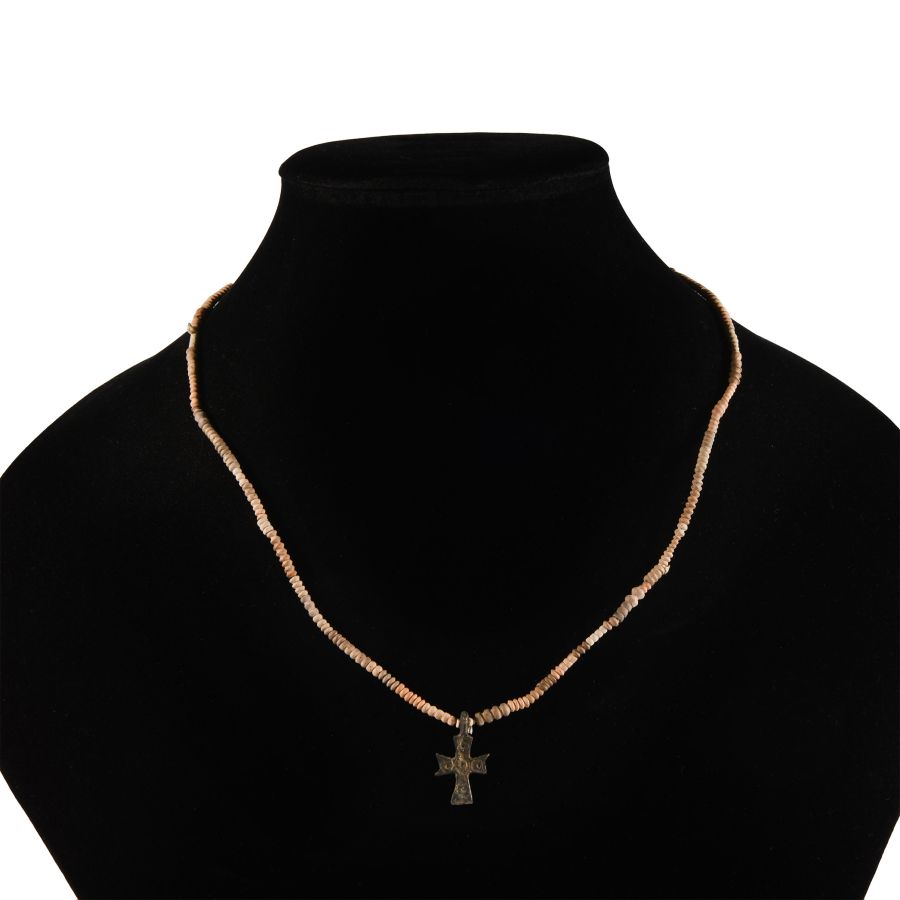
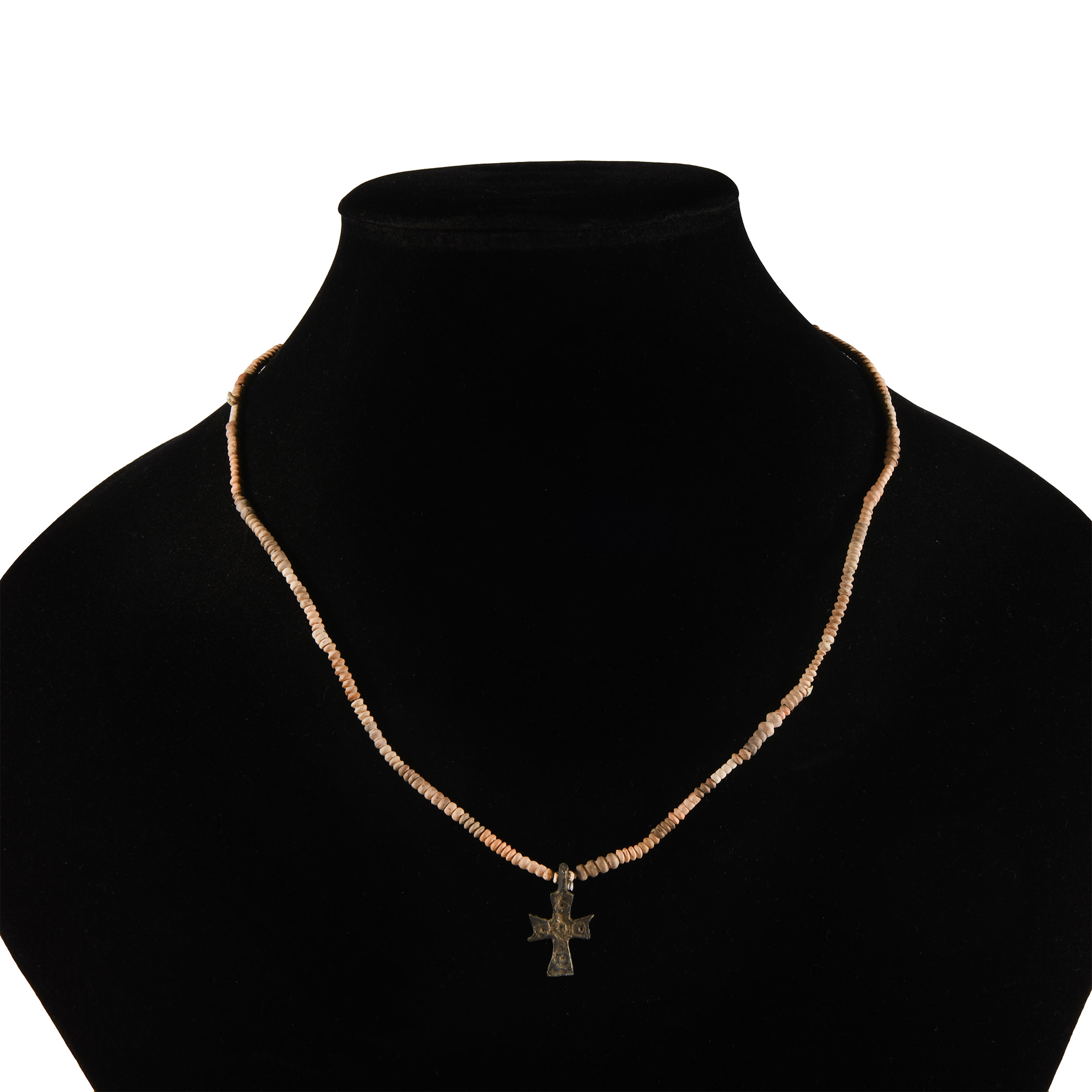
Byzantine Bronze Cross Pendant with Bead Necklace
CIRCA 10TH CENTURY A.D. AND LATER
19 5/8 in. (6.1 grams, 50 cm long).
Composed of later restrung ceramic beads together with a central cruciform pendant displaying punched ring-and-dot motifs to one face, possibly representing the Five Wounds of Christ. [No Reserve]
ProvenanceAcquired 1980-2015.
Ex Abelita family collection.
TimeLine Auctions follows a vetting process to ensure the authenticity and legality of all items, reinforcing our commitment to integrity and responsible trading. Each antiquity, antique, and coin lot undergoes thorough examination by a vetting committee of at least ten external specialists, professional trade association members, scientists, and archaeologists: Our Vetting Process
AUCTIONS:
TimeLine is a leading auction house specialising in antiquities, ancient art, collectables, natural history, coins, medals, and books. Our auctions offer museums, collectors, historians, and enthusiasts the opportunity to acquire unique and historically significant pieces.
-
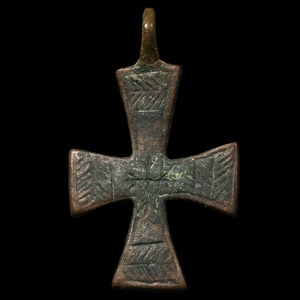
Byzantine Bronze Pectoral Cross Pendant
6th-10th century A.D.Sold for (Inc. bp): £111
A flat-section expanding-arm cross pendant with integral loop; incised cross flory to the centre with a band of herringbone ornament to the end of each arm. 6.08 grams, 39 mm
From a UK collection, formed 1970s. The Kusmirek Collection, UK. -
.jpg)
Byzantine Gold Coin Bead Necklace
Coin dated 565-578 A.D.Sold for (Inc. bp): £286
Composed of assorted small round banded agate and carnelian beads with small cylinders between, featuring a gold solidus coin pendant of Emperor Justin II; modern screw clasp. 17.6 grams, 41 cm long
From an important North London collection formed before 1980. -
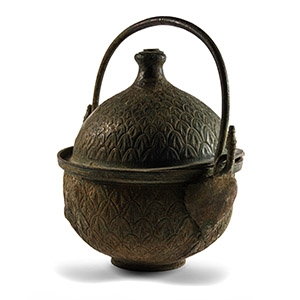
Byzantine Bronze Cooking Cauldron with Lidded Container for Steaming
5th-6th century A.D.Sold for (Inc. bp): £780
Composed of a hemispherical body and piriform lid with flange to the equator, hollow-formed lid and base with foot and removeable balustered finial with discoid cap to apex; body with two leaf-shaped plaques with loops to support the articulate round-section handle; body and lid decorated with dense feather or leaf detailing; very rare to find as complete. 406 grams, 16 cm high
cracked
Acquired 1969-1999. From the private collection of the late Mr S.M., London, UK, thence by descent.
