
Loading, please wait...

LOT 0994
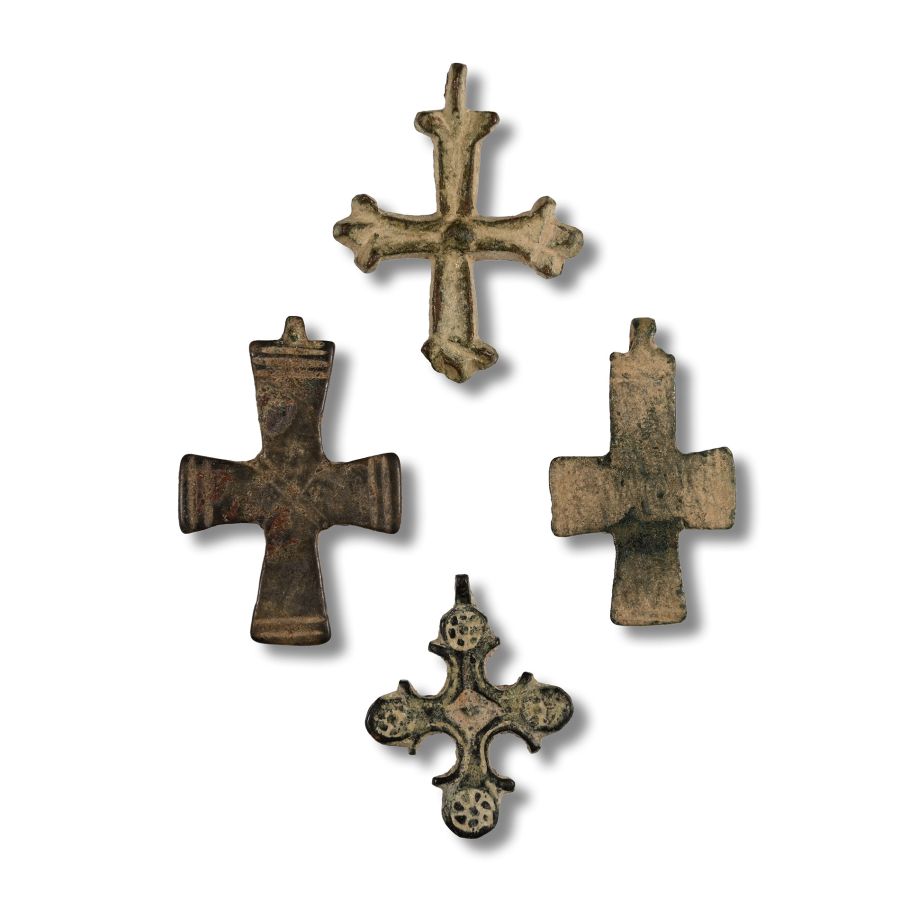
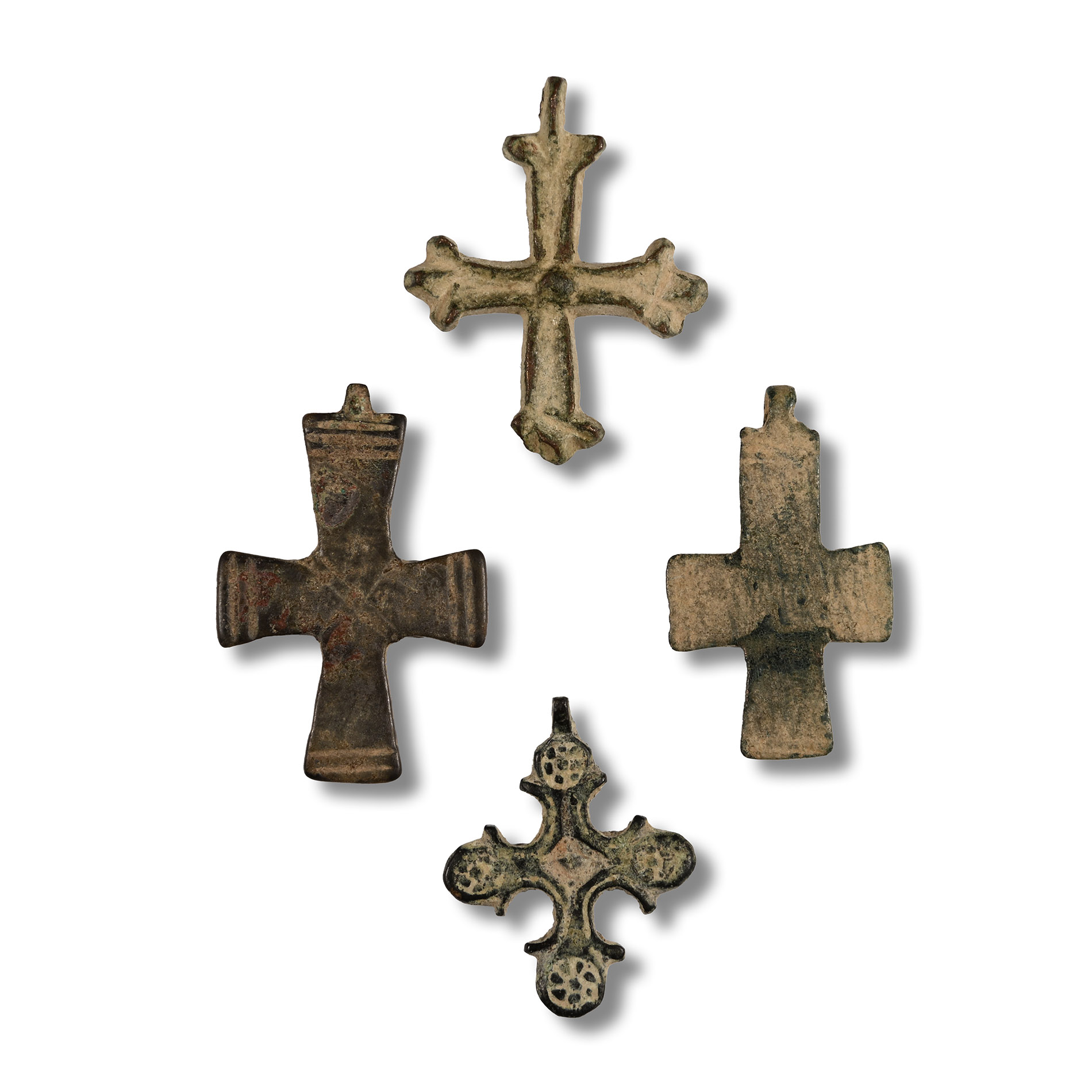
Byzantine Bronze Cross Group
10TH-14TH CENTURY A.D.
1 1/8 - 1 1/2 in. (15.88 grams total, 29-37 mm).
Comprising: a cross bottony with integral loop; a plain flat-section cross with curved loop; a flat-section cross with incised lines to each arm and a central x-motif; a cross with bud finial to each arm with rosette motif. [4]
ProvenanceEx German art market, 2000s.
Acquired from an EU collector living in London.
From the collection of Surrey, UK, gentleman.
TimeLine Auctions follows a vetting process to ensure the authenticity and legality of all items, reinforcing our commitment to integrity and responsible trading. Each antiquity, antique, and coin lot undergoes thorough examination by a vetting committee of at least ten external specialists, professional trade association members, scientists, and archaeologists: Our Vetting Process
AUCTIONS:
TimeLine is a leading auction house specialising in antiquities, ancient art, collectables, natural history, coins, medals, and books. Our auctions offer museums, collectors, historians, and enthusiasts the opportunity to acquire unique and historically significant pieces.
-
.jpg)
Byzantine Bronze Segmented Strap
10th-15th century A.D.Sold for (Inc. bp): £104
Comprising five hinged sections, each with three central bosses with pelletted collars, further pellets to the field; possibly from a belt. 61.7 grams, 15 cm
UK private collection. Acquired from York Antiques Centre, in 2001. Property of a Nottinghamshire gentleman. -
Byzantine Intaglio Gemstone
Circa 6th-12th century A.D.Sold for (Inc. bp): £117
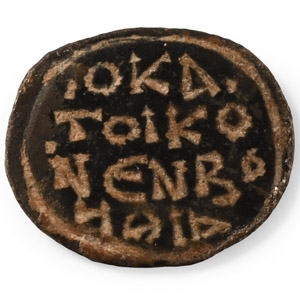
With incised legend '+OKA / TOIKO / NENBO / HΘIA' (for 'O KATOIKΩN EN BOHΩEIA' "Whoever dwells in the shelter (of the most high)' from Psalm 90. 1.3 grams, 17 mm
From an important collection formed before 1988, London and Geneva. -
.jpg)
Byzantine Porphyry Relief with Cross Surrounded by Two Birds
Southern Italy or Constantinople, 11th century A.D.Sold for (Inc. bp): £28,600
An imposing panel divided to four sections by a central cross on a stepped pedestal, the lower and upper arm with branch-like extensions; the upper quadrants with a circlet surrounding a palm tree-shaped motif; each lower quadrant with a bird in profile facing back; mounted on a custom-made display stand. 16 kg total, 44.5 cm including stand
Private collection, London, UK. Accompanied by an academic report by Dr Raffaele D’Amato. This lot has been checked against the Interpol Database of stolen works of art and is accompanied by search certificate number no.12179-221676.
The cross, symbol of resurrection and salvation, carried the meaning of Paradise, and a cross on a stepped base derived from that on Golgotha. The birds represented here are probably a symbol of joy of the afterlife, of paradise conceived as the locus refrigerii or refrigerium of the soul. The panel could have been part of a marble iconostasis of a Church of the Eastern Roman Empire, in Southern Italy, although the use of porphyry can suggest a Constantinopolitan provenance.
