
Loading, please wait...

LOT 1019
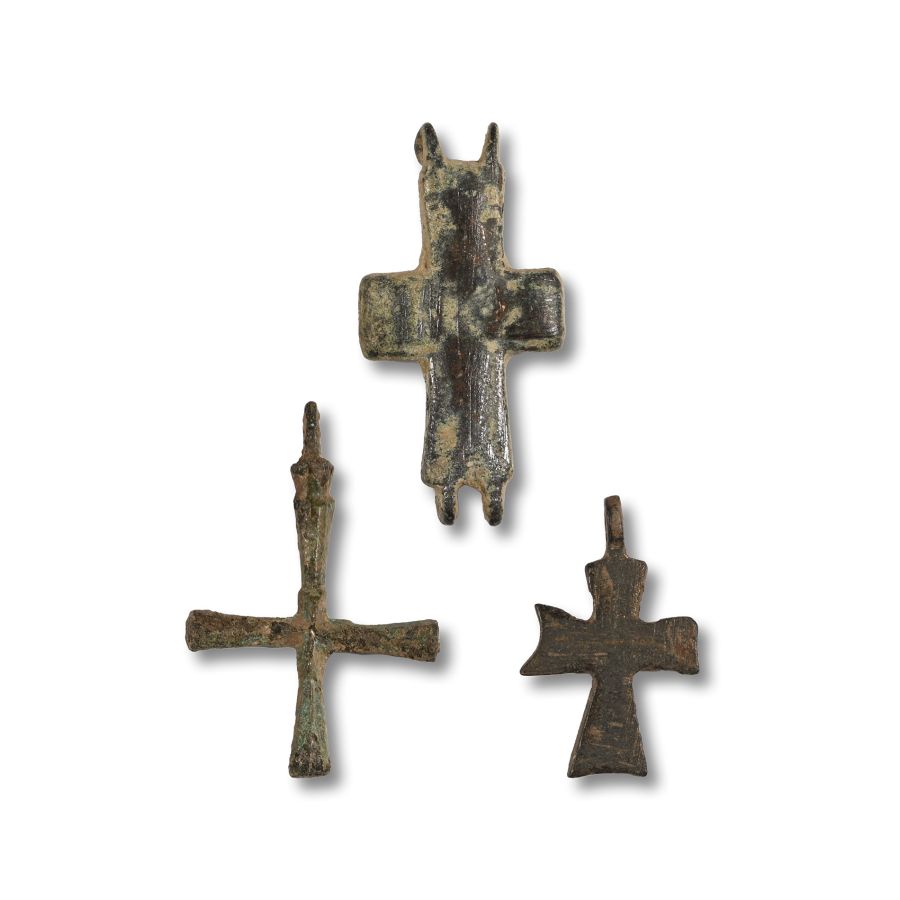
Byzantine Bronze Cross Group
10TH-14TH CENTURY A.D.
1 - 1 1/2 in. (12.1 grams total, 27-38 mm).
Comprising: a flat-section cross with annulets; an enkolpion plate; a cross with conical arms, raised cross to the centre. [3]
ProvenanceEx German art market, 2000s.
Acquired from an EU collector living in London.
From the collection of Surrey, UK, gentleman.
TimeLine Auctions follows a vetting process to ensure the authenticity and legality of all items, reinforcing our commitment to integrity and responsible trading. Each antiquity, antique, and coin lot undergoes thorough examination by a vetting committee of at least ten external specialists, professional trade association members, scientists, and archaeologists: Our Vetting Process
AUCTIONS:
TimeLine is a leading auction house specialising in antiquities, ancient art, collectables, natural history, coins, medals, and books. Our auctions offer museums, collectors, historians, and enthusiasts the opportunity to acquire unique and historically significant pieces.
-
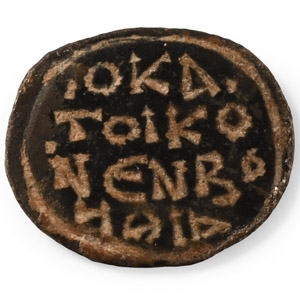
Byzantine Intaglio Gemstone
Circa 6th-12th century A.D.Sold for (Inc. bp): £117
With incised legend '+OKA / TOIKO / NENBO / HΘIA' (for 'O KATOIKΩN EN BOHΩEIA' "Whoever dwells in the shelter (of the most high)' from Psalm 90. 1.3 grams, 17 mm
From an important collection formed before 1988, London and Geneva. -
.jpg)
Byzantine Gold Garnet Set Pendant
Circa 6th-8th century A.D.Sold for (Inc. bp): £182
D-shaped cabochon garnet set in a gold cell with wire dangle beneath. 1.05 grams, 24 mm
From a late Japanese specialist collector, 1970-2000s. -
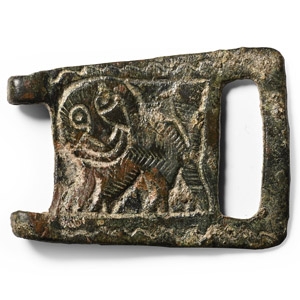
Bronze Plaque with Lion
6th-8th century A.D.Sold for (Inc. bp): £72
Rectangular belt-buckle plaque with hinge knuckles and slotted rear; low-relief panel with advancing lion motif. 11.7 grams, 40 mm
Ex German art market, 2000s. Acquired from an EU collector living in London. From the collection of Surrey, UK, gentleman.
