
Loading, please wait...
LOT 0813
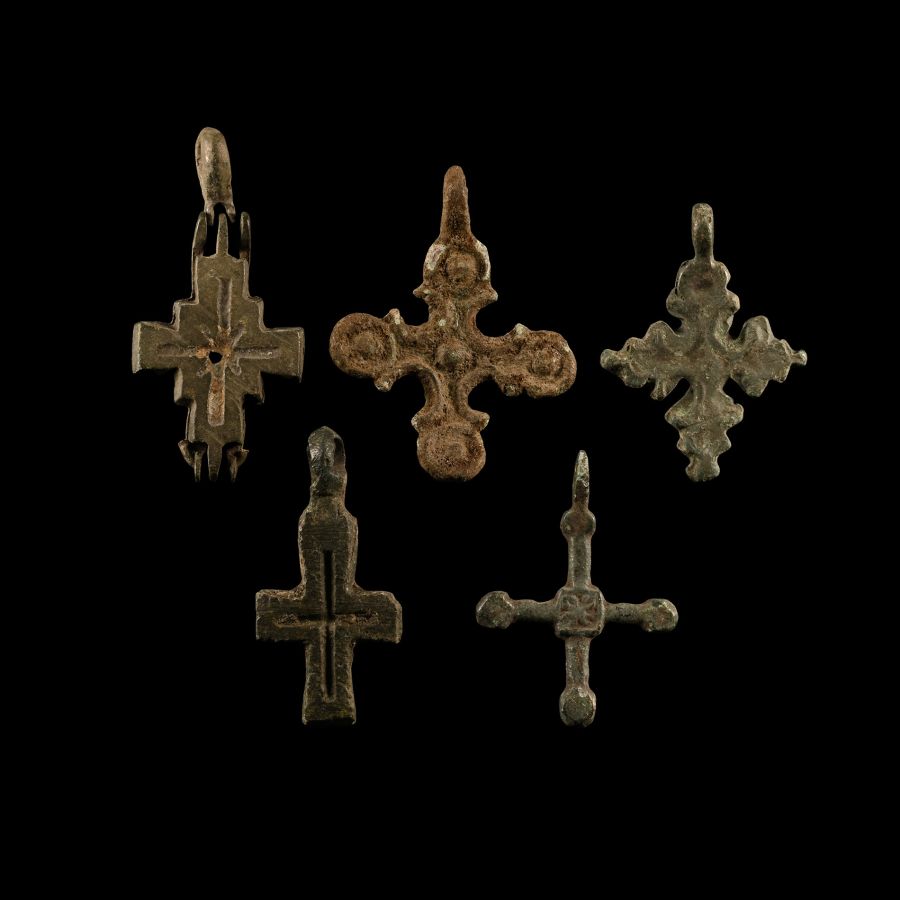
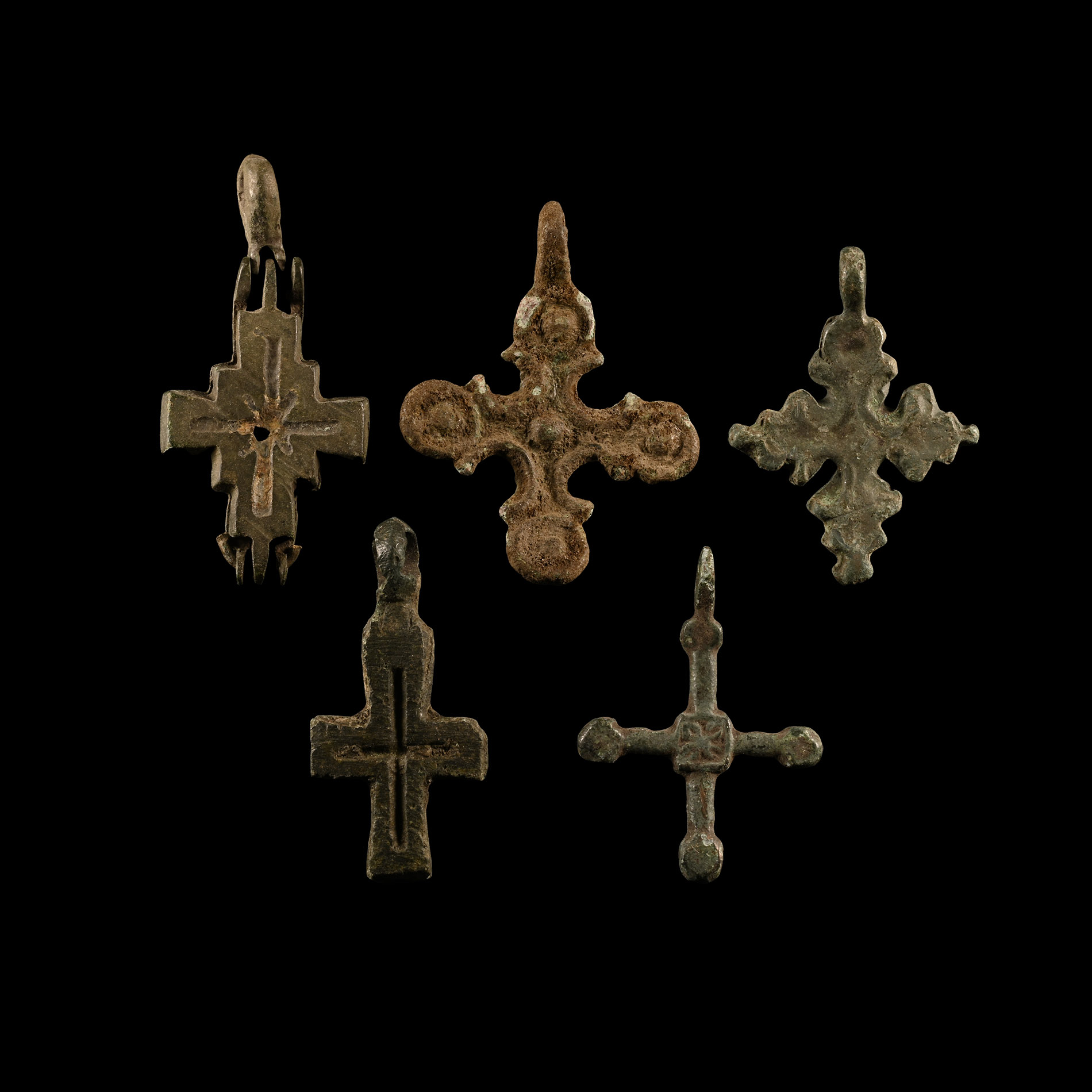
Byzantine Bronze Cross Collection
10TH-15TH CENTURY A.D.
1 1/8 - 1 1/2 in. (17.2 grams total, 29-37 mm).
Including one miniature enkolpion with articulated suspension loop, four of various types with integral loop. [5]
ProvenanceEnglish collection, early 2000s.
Ex central London gallery.
Cf. Pitarakis, B., Les Croix-Reliquaires Pectorales Byzantines en Bronze, Paris, 2006, item 277, for type.
CONDITIONTimeLine Auctions follows a vetting process to ensure the authenticity and legality of all items, reinforcing our commitment to integrity and responsible trading. Each antiquity, antique, and coin lot undergoes thorough examination by a vetting committee of at least ten external specialists, professional trade association members, scientists, and archaeologists: Our Vetting Process
AUCTIONS:
TimeLine is a leading auction house specialising in antiquities, ancient art, collectables, natural history, coins, medals, and books. Our auctions offer museums, collectors, historians, and enthusiasts the opportunity to acquire unique and historically significant pieces.
-
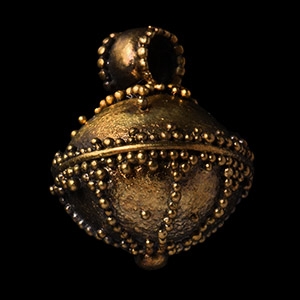
Byzantine Gold Filigree Pendant
10th-15th century A.D.Sold for (Inc. bp): £169
The suspension loop with beaded border; finely granulated star pattern; raised rib highlighted with beads of gold to the centre; the lower body of the pendant decorated with filigree triangles, a trail of lines leading to a central gold boss, each segment with a small bead of gold. 1.74 grams, 15 mm
Acquired in the 1970s. From an important London, UK, collection. -
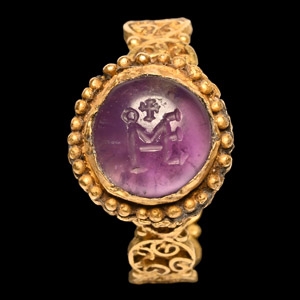
Byzantine Gold Filigree Ring with Monogram Amethyst Gemstone
5th-7th century A.D.Sold for (Inc. bp): £3,380
Composed of a delicate opus interrasile hoop, cup bezel with ribbed underside, granules to the rim, inset amethyst with monogram. 5.18 grams, 28.06 mm overall, 18.23 mm internal diameter (approximate size British N, USA 6 1/2, Europe 13.72, Japan 13)
Acquired 1970s-1980s. From the property of a deceased lady collector. This lot has been checked against the Interpol Database of stolen works of art and is accompanied by search certificate no.202957. -
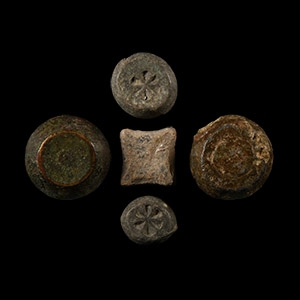
Byzantine Period Bronze Weight Collection
8th-12th century A.D.Sold for (Inc. bp): £20
Composed of weights of different types and sizes, including examples stamped with rosette motifs. 179 grams total, 16-24 mm
From the collection of H.N., Milton Keynes, 1980s-1990s.
