
Loading, please wait...
LOT 0969
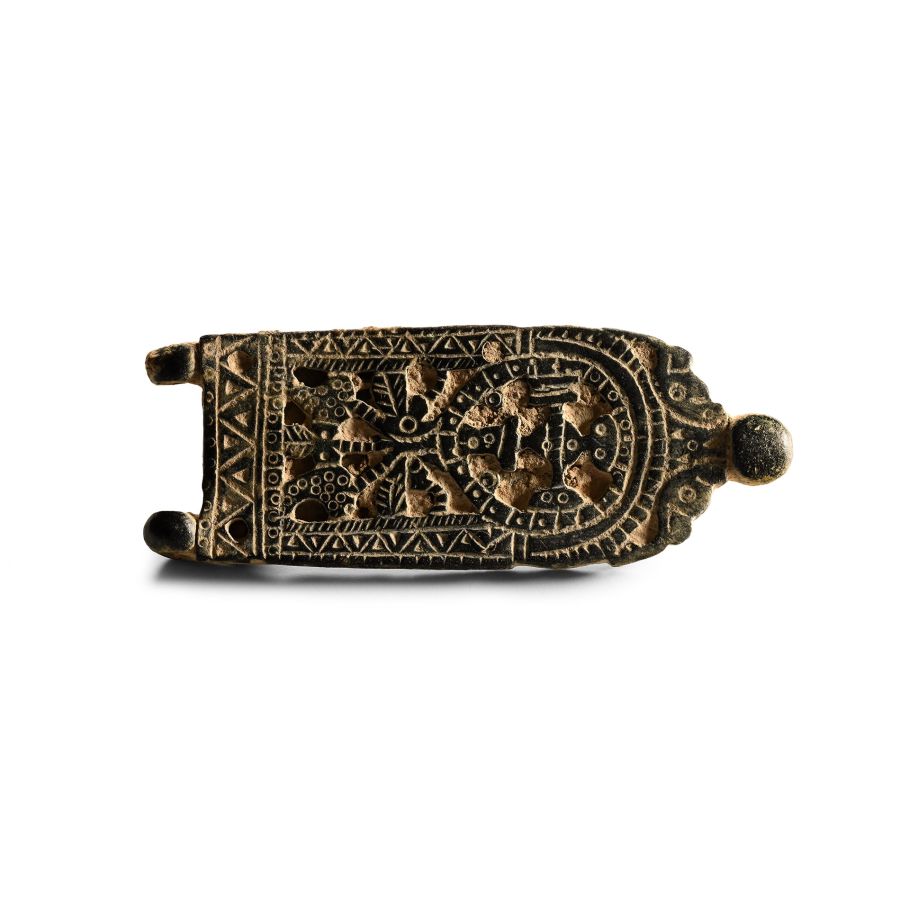
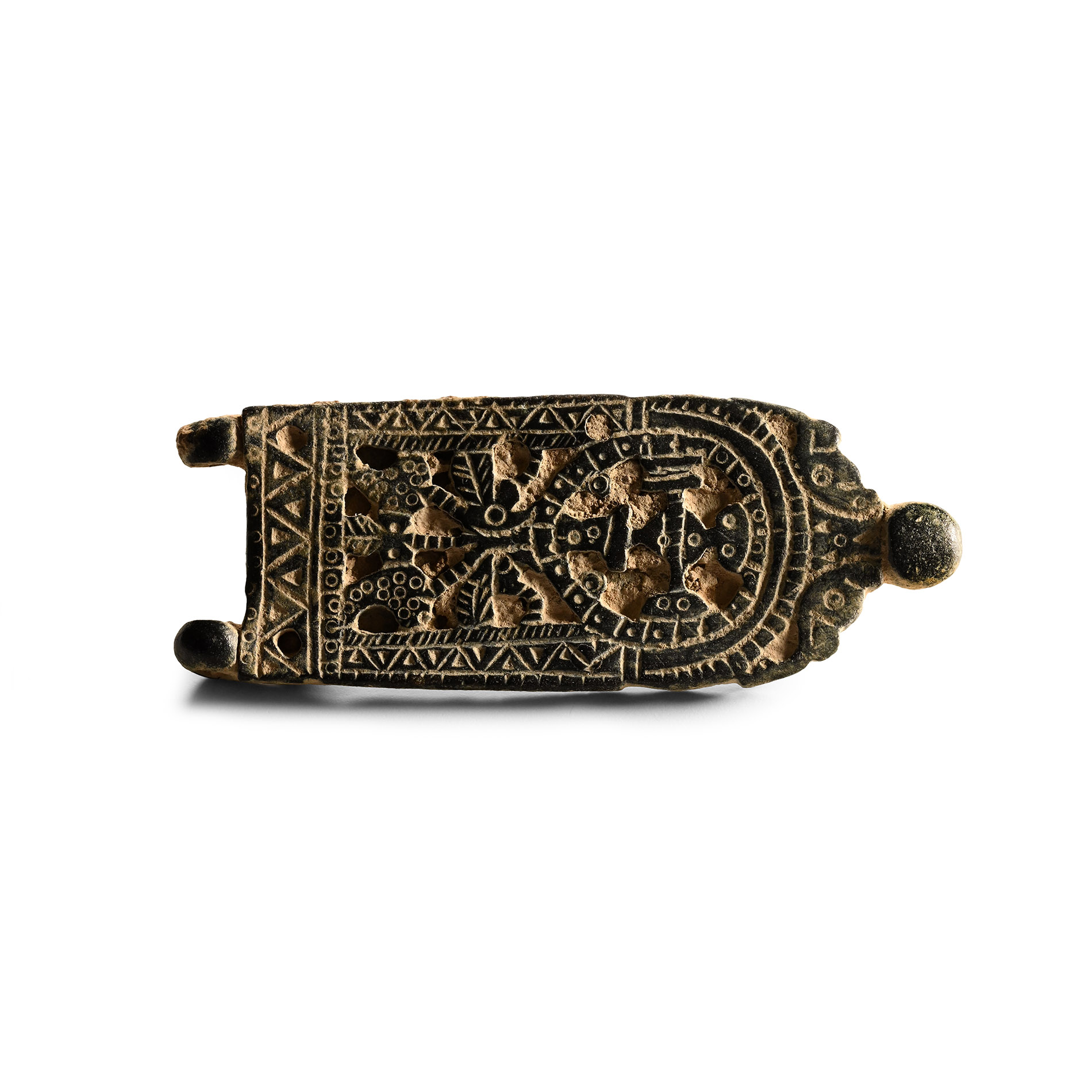
Byzantine Bronze Buckle Plate
7TH-8TH CENTURY A.D.
2 1/4 in. (21.2 grams, 57 mm).
Tongue-shaped with an applied openwork panel, cross-in-wheel motif within a segmented border and zoomorphic detailing; loops to the broad end and knop finial to the rounded end.
ProvenanceAcquired 1980-2015.
Ex Abelita family collection.
Cf. Wamser, L., Die Welt von Byzanz - Europas Östliches Erbe, München, 2004, item 445, for type.
FootnotesWithin the category of these buckles to which the current example belongs to, the plate was decorated with an openwork pattern which was rivetted onto a cover plate. The central decoration varied between purely vegetal depictions, mostly vines, and allegorical animal scenes, which J. Werner interpreted as a pictorial implementation of the animal symbolism of Physiologus.
CONDITIONTimeLine Auctions follows a vetting process to ensure the authenticity and legality of all items, reinforcing our commitment to integrity and responsible trading. Each antiquity, antique, and coin lot undergoes thorough examination by a vetting committee of at least ten external specialists, professional trade association members, scientists, and archaeologists: Our Vetting Process
AUCTIONS:
TimeLine is a leading auction house specialising in antiquities, ancient art, collectables, natural history, coins, medals, and books. Our auctions offer museums, collectors, historians, and enthusiasts the opportunity to acquire unique and historically significant pieces.
-
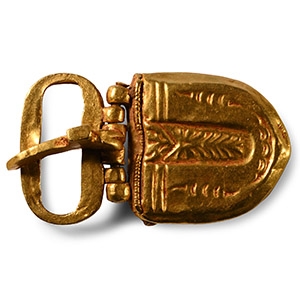
Byzantine Decorated Gold Belt Buckle
8th century A.D.Estimate: £4,000 - 6,000 (+bp*)
Opening Bid: £2,000
Comprising a D-shaped plate with acanthus-leaf motif in low-relief, beaded wire band above the hinge, kidney-shaped rectangular-section loop, flat tongue with spur to the upper face; three mounting studs to reverse. 33.02 grams, 55 mm
Acquired from Bernard Hern, 1970s. From an old UK collection, 1970s-1980s. This lot has been checked against the Interpol Database of stolen works of art and is accompanied by a search certificate number no.12113-217070. -
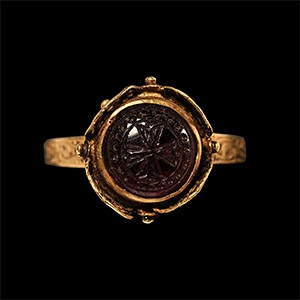
Byzantine Gold Rose Turreted Ring with Cross Gemstone
Circa 10th-12th century A.D.Sold for (Inc. bp): £5,460
Slender hoop with low-relief scrolled tendrils to the shoulders; openwork cup bezel with inset garnet cabochon, incised cross fleury motif. 4.28 grams, 28.85 mm overall, 19.02 mm internal diameter (approximate size British P 1/2, USA 7 3/4, Europe 16.86, Japan 16)
From the collection of a London, UK, gentleman, 1980-1990s. This lot has been checked against the Interpol Database of stolen works of art and is accompanied by a search certificate number no.12112-217763. -
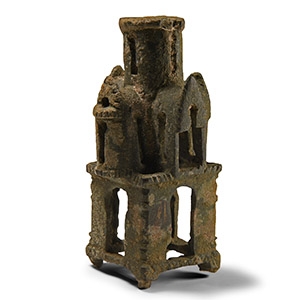
Byzantine Bronze Ecclesiastical Finial Support for a Cross
10th-12th century B.C.Sold for (Inc. bp): £975
Openwork finial formed as a miniature church comprising a square base with four stub feet, sidewalls each with a keyhole-shaped arch, upper storey cruciform in plan with radiating porticus ending in a tongue-shaped facade and loophole aperture; above, a tubular tower with loophole windows; flanged upper face with slot. 368 grams, 11.2 cm
Acquired in the mid 1980s-1990s. From the family collection of Mr S.A., Switzerland, thence by descent. Private collection since the late 1990s.
This object reproduces a building of three levels: it belongs to a processional pole which supported a Byzantine bronze cross, the lower end of which fitted into the slot visible on the top of the drum. This object, which remains above all a decorative element, recalls by its structure a Byzantine church with its cross-shaped plan: architectural models reproducing religious buildings were very appreciated by Byzantine craftsmen (especially in the capital Constantinople), who used these structures to produce not only the cross holders but also the reliquaries, host boxes, or censers. Originally, this construction was supported by four columns of which only the capitals and a few fragments of the shaft remain. The presentation and demonstration of a cross to the faithful could take place during different celebrations of the Christian liturgical calendar, or even during certain civil ceremonies, or taking place in a princely court.
