
Loading, please wait...
LOT 0801
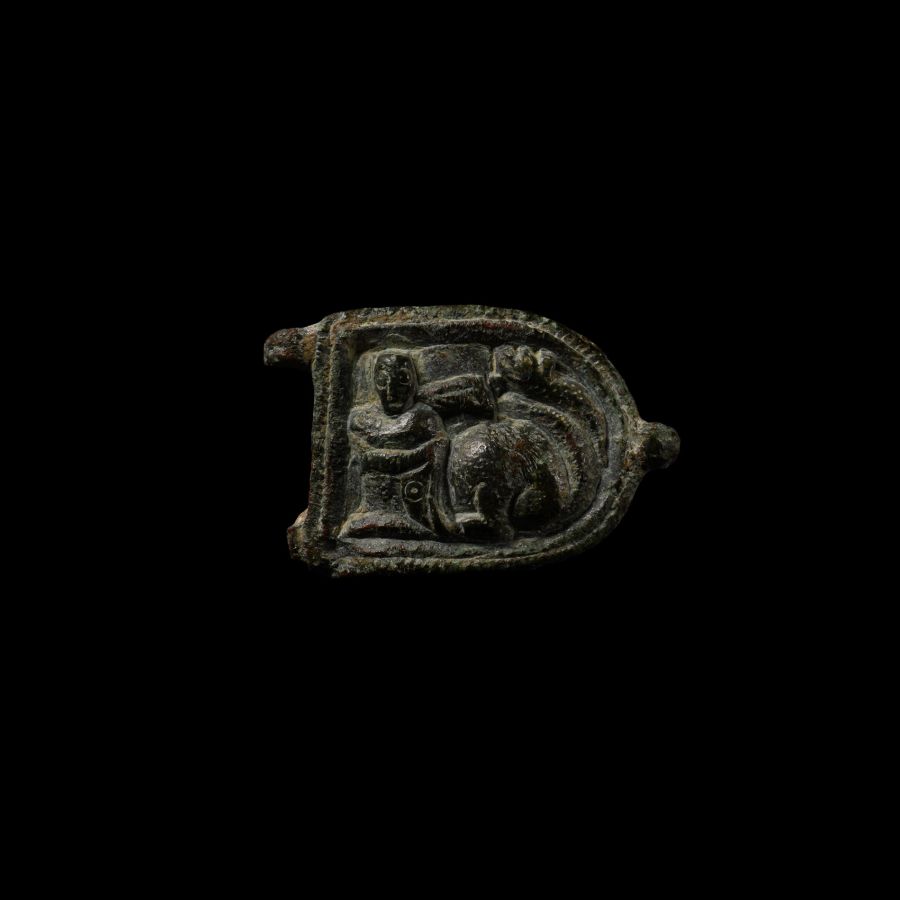
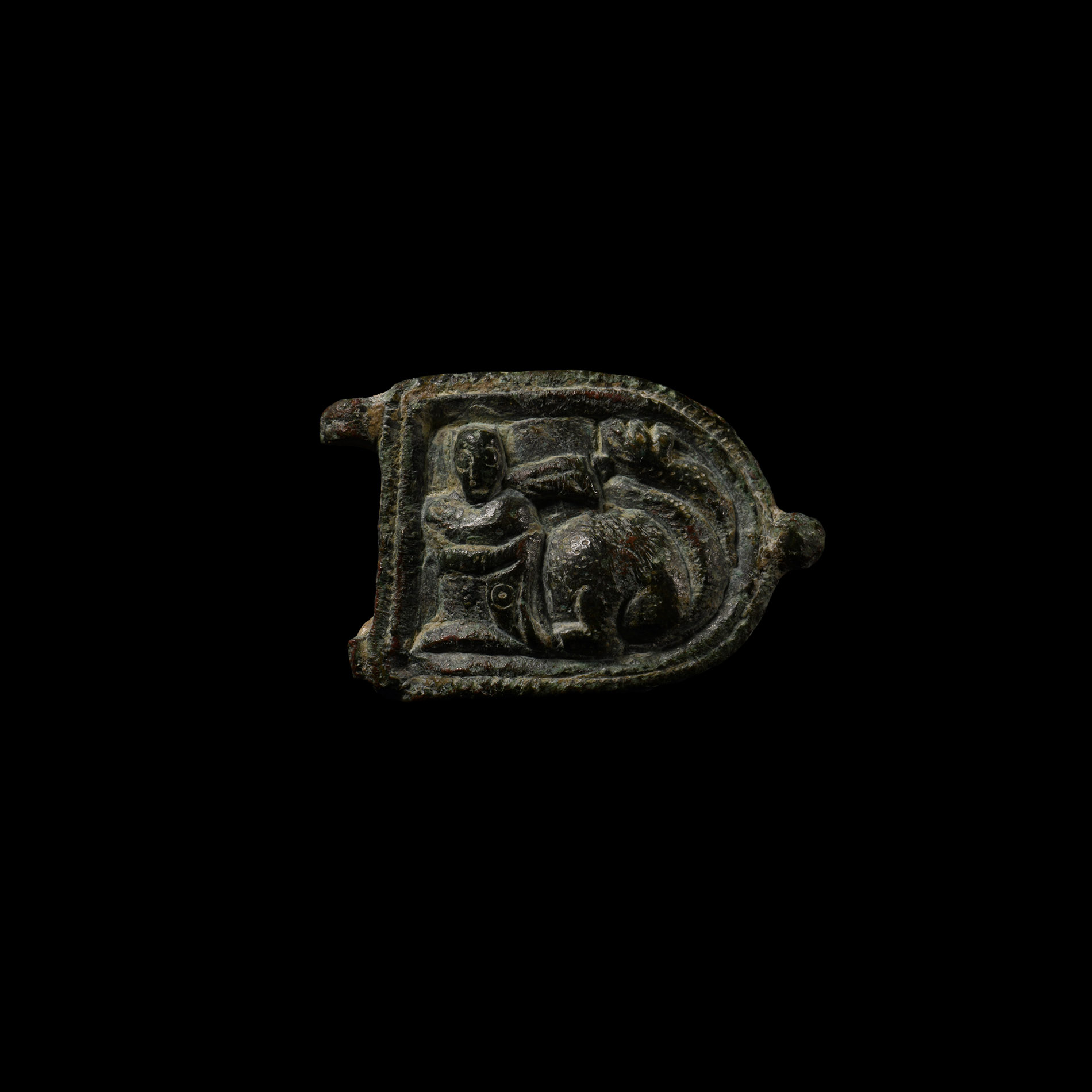
Byzantine Bronze Buckle Plate with Man and Beast
10TH-12TH CENTURY A.D.
1 3/8 in. (16.01 grams, 35 mm).
Heater-shaped with attachment lugs to the reverse; high-relief figural design, possibly 'Daniel in the Lion's Den'.
ProvenanceAcquired 1960s-1990s.
From the late Alison Barker collection, a retired London barrister.
TimeLine Auctions follows a vetting process to ensure the authenticity and legality of all items, reinforcing our commitment to integrity and responsible trading. Each antiquity, antique, and coin lot undergoes thorough examination by a vetting committee of at least ten external specialists, professional trade association members, scientists, and archaeologists: Our Vetting Process
AUCTIONS:
TimeLine is a leading auction house specialising in antiquities, ancient art, collectables, natural history, coins, medals, and books. Our auctions offer museums, collectors, historians, and enthusiasts the opportunity to acquire unique and historically significant pieces.
-
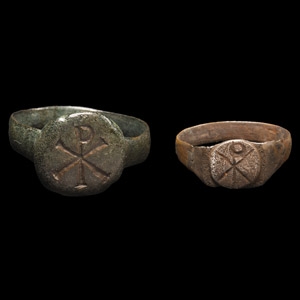
Byzantine Silver and Bronze Rings with Chi Rho Symbols
8th-15th century A.D.Sold for (Inc. bp): £195
One with incised lines and punched crescent; one with seriffed Chi Rho symbol. 7.32 grams total, 18-24 mm
From the collection of an EU gentleman formed in the 1990s. Acquired on the UK market. -
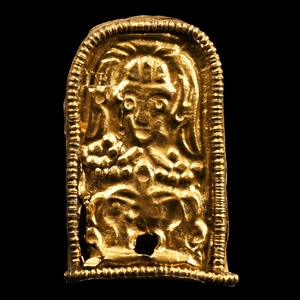
Byzantine Gold Strap End with Facing Figure
Circa 9th-10th century A.D.Estimate: £800 - 1,000 (+bp*)
Opening Bid: £320
The hollow-formed, tongue-shaped body adorned with a filigree border, repoussé figure with pellets on the torso and serpents framing the head. 7.40 grams, 39 mm
Acquired 1990s-early 2000s. East Anglian private collection. -
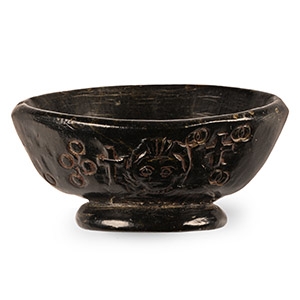
Byzantine Polished Black Stone Dish with Bust of an Emperor
5th century A.D. or laterSold for (Inc. bp): £260
Featuring a pedestal foot; the bust carved to one face, holding a globus cruciger in one hand, crosses and annulets in left and right fields, a horizontal register of concentric roundels to the opposite face. 49.7 grams, 59 mm
From a Paris gallery, French collection pre 1978.
