
Loading, please wait...
LOT 0272
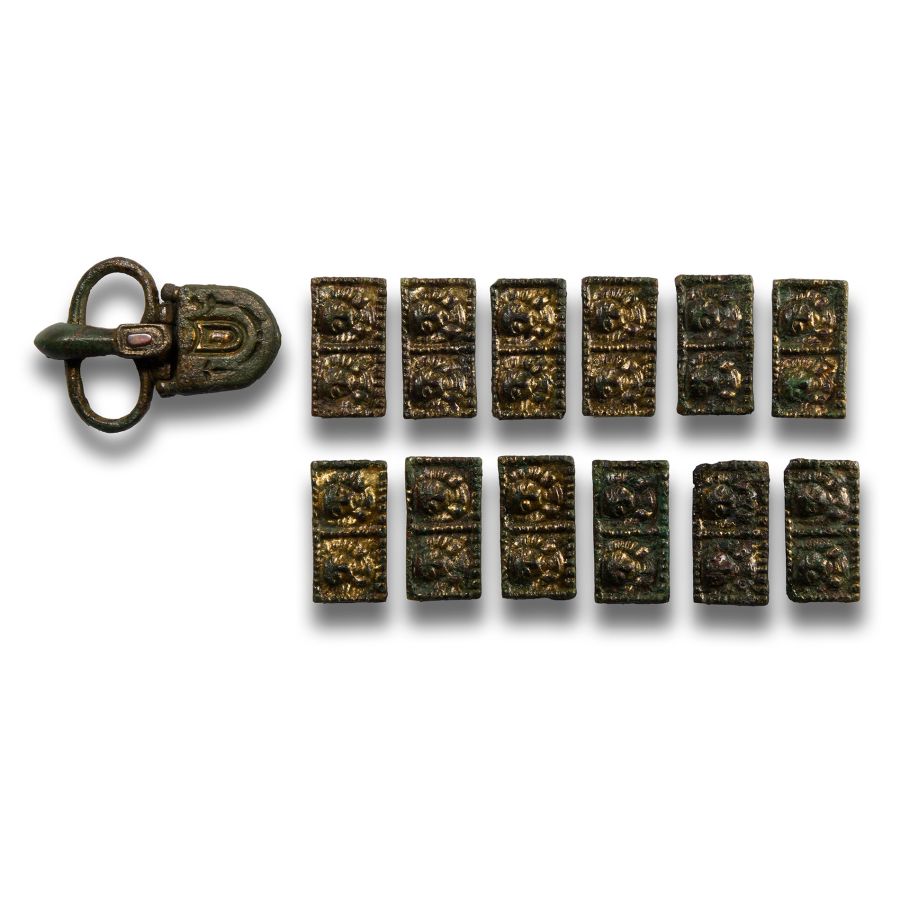
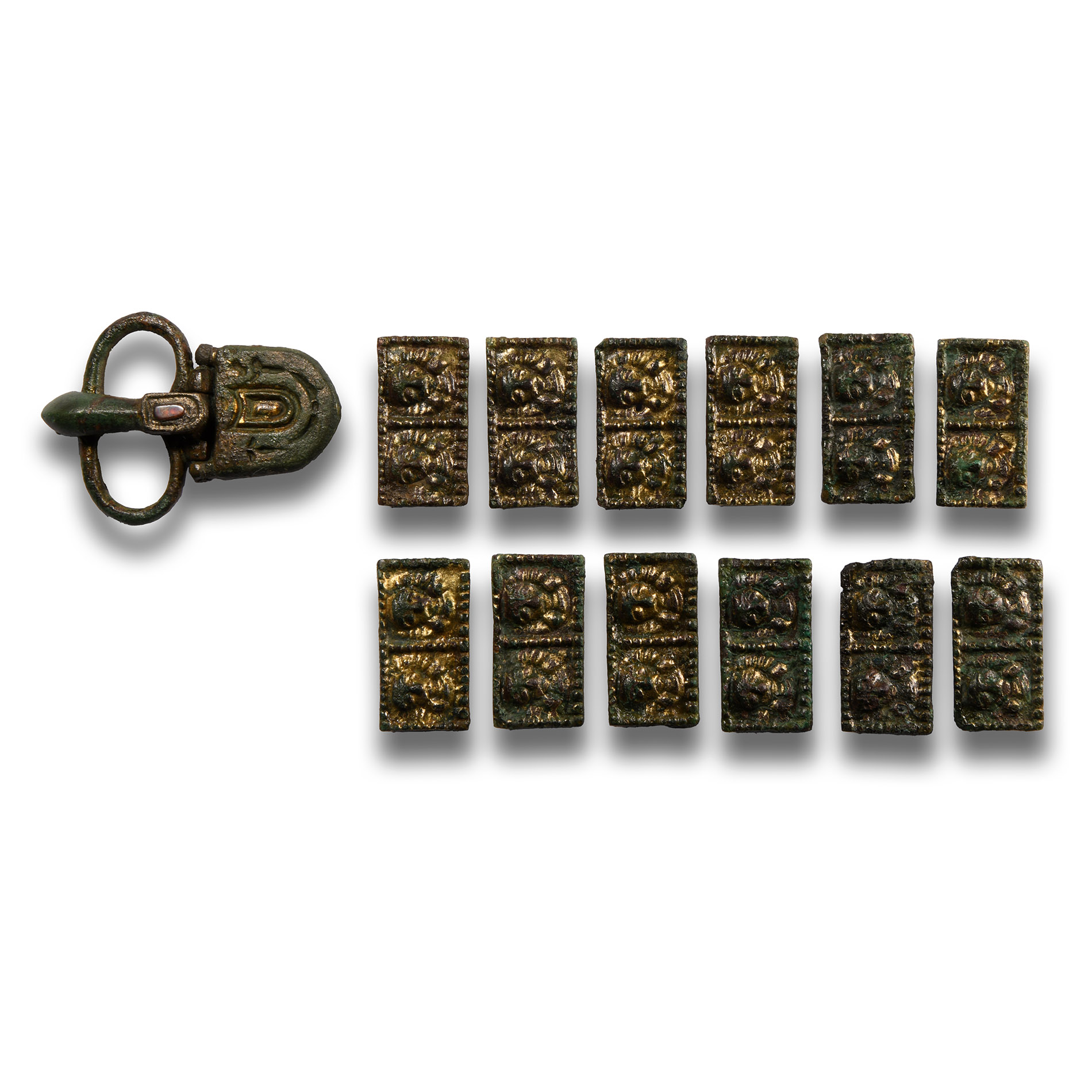
Byzantine Bronze Belt Fitting Set
6TH-7TH CENTURY A.D.
1 3/8 - 2 3/8 in. (150 grams total, 35-61 mm).
Comprising twelve rectangular plaques and a garnet inlaid buckle, each of the plaques with a pair of low-relief emperor's busts within a pelletted frame. [15]
ProvenanceFrom the private collection of a London gentleman, from his grandfather's collection formed before the early 1970s.
LiteratureCf. Schulze-Dörrlamm, M., Byzantinische Gürtelschnallen und Gürtelbeschläge im Römisch-Germanischen Zentralmuseum, Teil 1. Die Schnallen ohne Beschläg, mit Laschenbeschläg und mit festem Beschläg des 5. bis 7. Jahrhunderts, Mainz, 2009, fig.77, nos.1-2, for a similar typology of buckle.
CONDITIONTimeLine Auctions follows a vetting process to ensure the authenticity and legality of all items, reinforcing our commitment to integrity and responsible trading. Each antiquity, antique, and coin lot undergoes thorough examination by a vetting committee of at least ten external specialists, professional trade association members, scientists, and archaeologists: Our Vetting Process
AUCTIONS:
TimeLine is a leading auction house specialising in antiquities, ancient art, collectables, natural history, coins, medals, and books. Our auctions offer museums, collectors, historians, and enthusiasts the opportunity to acquire unique and historically significant pieces.
-
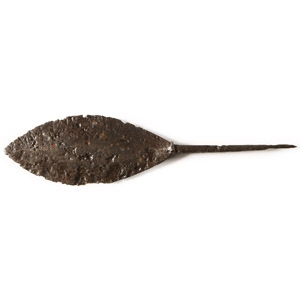
Large Medieval Leaf-Shaped Iron Arrowhead
13th-15th century A.D.Sold for (Inc. bp): £13
Comprising a broad scaphoid blade and bolster to the neck, round-section tang. 36.8 grams, 16.5 cm
Acquired York Antiques, Yorkshire, UK, in 2012. Property of a Kent lady collector. Accompanied by an original certificate of authenticity signed by Garry Edwards. -
.jpg)
Medieval 'Thames' Iron Dagger with Wood Handle
Circa 15th century A.D.Sold for (Inc. bp): £260
Sturdy single-edged triangular whittle-tang blade with thick back; with reproduction wooden handle. 137 grams, 34 cm
Found Billingsgate spoil from the Thames foreshore, London, UK, circa 1984. Property of an Essex collector. -
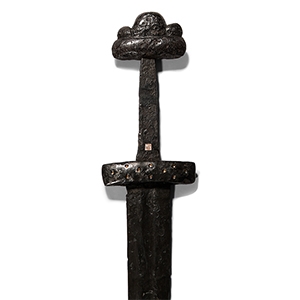
Viking Sword with Inlaid Cross and Orb Mark
Circa 10th-11th century A.D.Sold for (Inc. bp): £3,900
With three-lobe pommel and decorated guard; the blade 45mm wide at the upper end, gently tapering with fuller to both faces, rounded tip, indented ring to one face with silver inlay, scaphoid-section lower guard with two rows of shallow pellets to each face gilt or latten inlay; flat tapering tang; pommel of Petersen's Type S with traces of vertical inlaid wire. 752 grams, 93 cm
From the family collection of a London gentleman; formed in the late 1940s-1950s; thence by descent. Accompanied by metallurgic analytical report number 114366/569, written by metallurgist Dr Brian Gilmour of the Research Laboratory for Archaeology and the History of Art, University of Oxford. Accompanied by an academic report by Dr Raffaele D’Amato. This lot has been checked against the Interpol Database of stolen works of art and is accompanied by a search certificate number no.12020-214090.
