
Loading, please wait...
LOT 1025
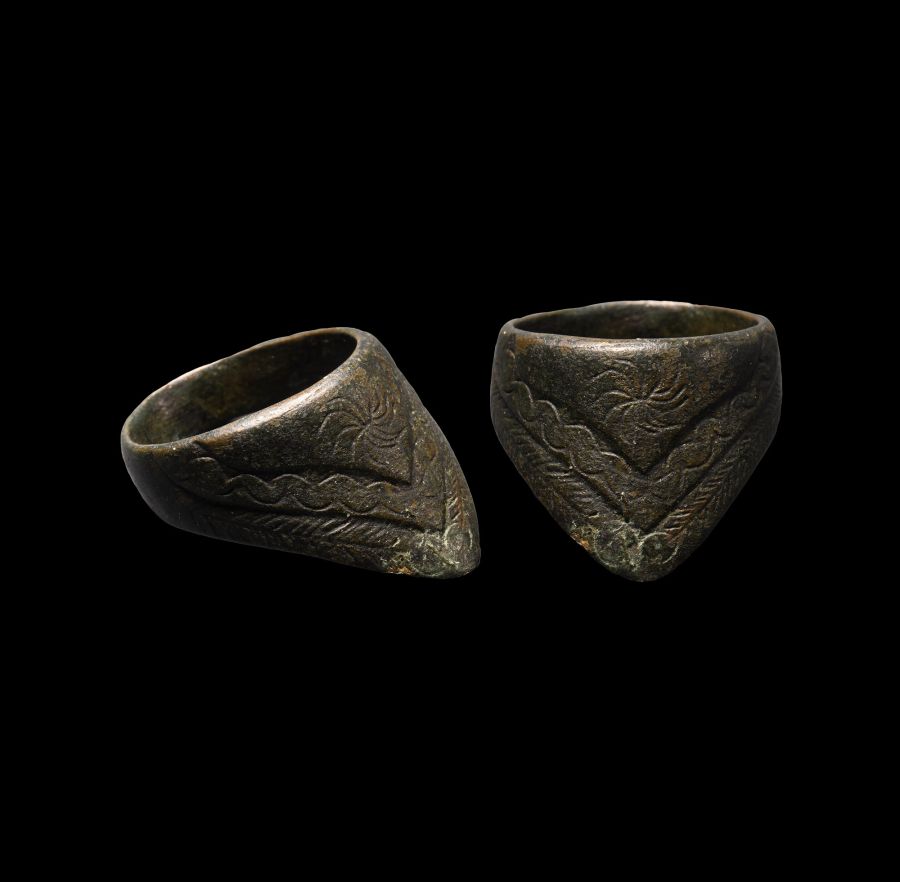
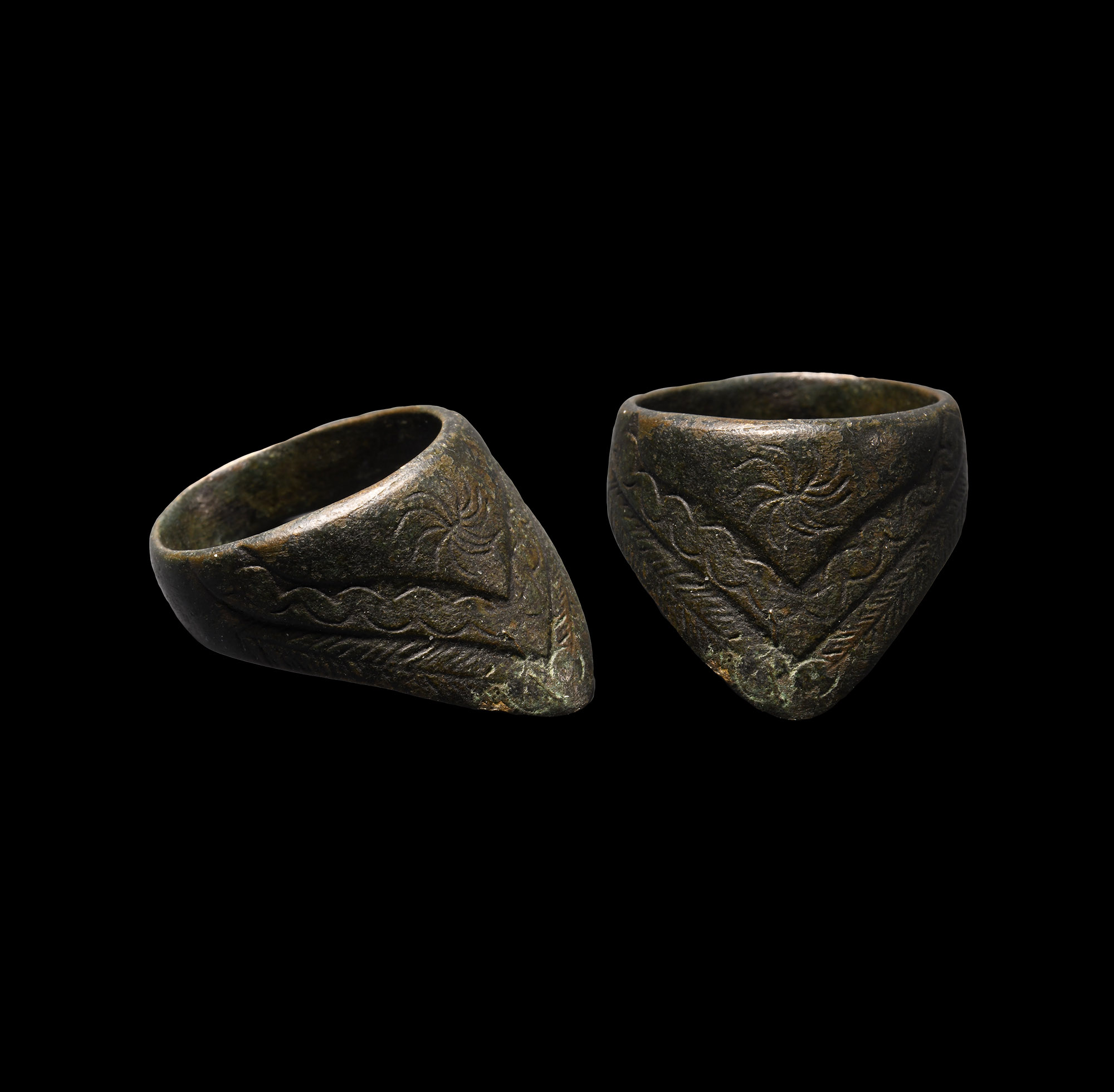
Byzantine Bronze Archer's Thumb Ring
14TH-15TH CENTURY A.D.
1 in. (9.59 grams, 27.27 mm overall, 21.60 mm internal diameter (approximate size British X 1/2, USA 11 3/4, Europe 26.92, Japan 25)).
Comprising a tapering hoop and triangular plaque, three bands of incised ornament.
ProvenanceAcquired by the vendor's father on the UK art market, before 1990.
CONDITIONTimeLine Auctions follows a vetting process to ensure the authenticity and legality of all items, reinforcing our commitment to integrity and responsible trading. Each antiquity, antique, and coin lot undergoes thorough examination by a vetting committee of at least ten external specialists, professional trade association members, scientists, and archaeologists: Our Vetting Process
AUCTIONS:
TimeLine is a leading auction house specialising in antiquities, ancient art, collectables, natural history, coins, medals, and books. Our auctions offer museums, collectors, historians, and enthusiasts the opportunity to acquire unique and historically significant pieces.
-
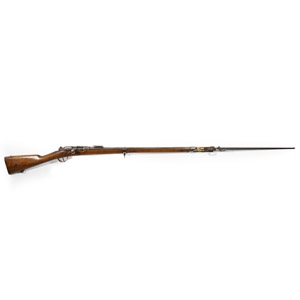
1866/74 Model Gras Rifle and Bayonet
Dated 1868 A.D.Estimate: £500 - 700 (+bp*)
Opening Bid: £222
Round rifled 90cm (35½") barrel of 11mm calibre with folding rear sight (without slide), bolt action with serial no.52431 to breech; fitted with full wood stock with steel butt cap, trigger guard, sling swivels and fore-end, steel cleaning rod; with correct Gras bayonet inscribed 'M[--] d'Armes de St Etienne 8bre 1878' to back and steel scabbard. 4.8 kg, 1.84 m
Acquired from Czerny's Auctions, Italy, 2019. The Kusmirek Collection, UK. Accompanied by a copy of Czerny's invoice and listing.
Sold as an exempt item under Section 58 (2) of the Firearms Act, 1968, to be held as a curiosity or ornament. No license required but buyer must be over 18 years of age. Overseas bidders should note that, due to UK regulations governing export of all firearms, overseas buyers will need to make arrangements for shipping this lot out of the UK directly, by air freight, with a specialist company or agent. -
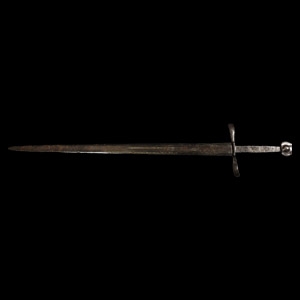
Medieval Schiavonesca Type Iron Sword with Inlay
14th-15th century A.D.Sold for (Inc. bp): £2,600
Comprising a broad, double-edged blade with rounded tip, shallow central fuller to the upper third of both sides; flat guard with stepped central panel, D-section arms formed in a horizontal S-curve, 'cat's head' truncated type pommel with an integral central boss to both faces; the tang with a sword-shaped stamp, the blade with an inlaid three-armed workshop mark and another stamp, including a V surmounted by a cross. 1.37 kg, 1.18 m
Restored and protected with a possible vertical suspension in acid solution, on the blade traces of delamination and flaking along the pattern-welds, some corrosion damages but in general very good condition.
From an English collection, acquired 1990s. The Kusmirek Collection, UK. This lot has been checked against the Interpol Database of stolen works of art and is accompanied by search certificate number no.11771-203963.
The Schiavonesca sword was used by Dalmatian mercenaries serving in the Venetian state armies, and were produced by the workshops of the Serenissima to which the marks probably belong. Many of these swords were produced in Dubrovnik, a Croatian city under the Venetian rule. Dr Aleksić mentions the swordsmith Radonja Vukotić, who made an agreement with blacksmith Andrija Miletin at the beginning of September 1436, to produce swords together in the following year. -
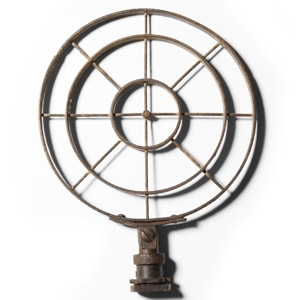
German WWII MG34 Anti-Aircraft Gun Sight
1939-1945 A.D.Sold for (Inc. bp): £195
Steel gunsight with three rings and cross-wires and pillar mount to fit the MG34 general purpose machine gun. 80 grams, 14 cm
Acquired from RJ Militaria, UK. The Kusmirek Collection, UK. Accompanied by a copy of the listing and an image.
