
Loading, please wait...
LOT 1092
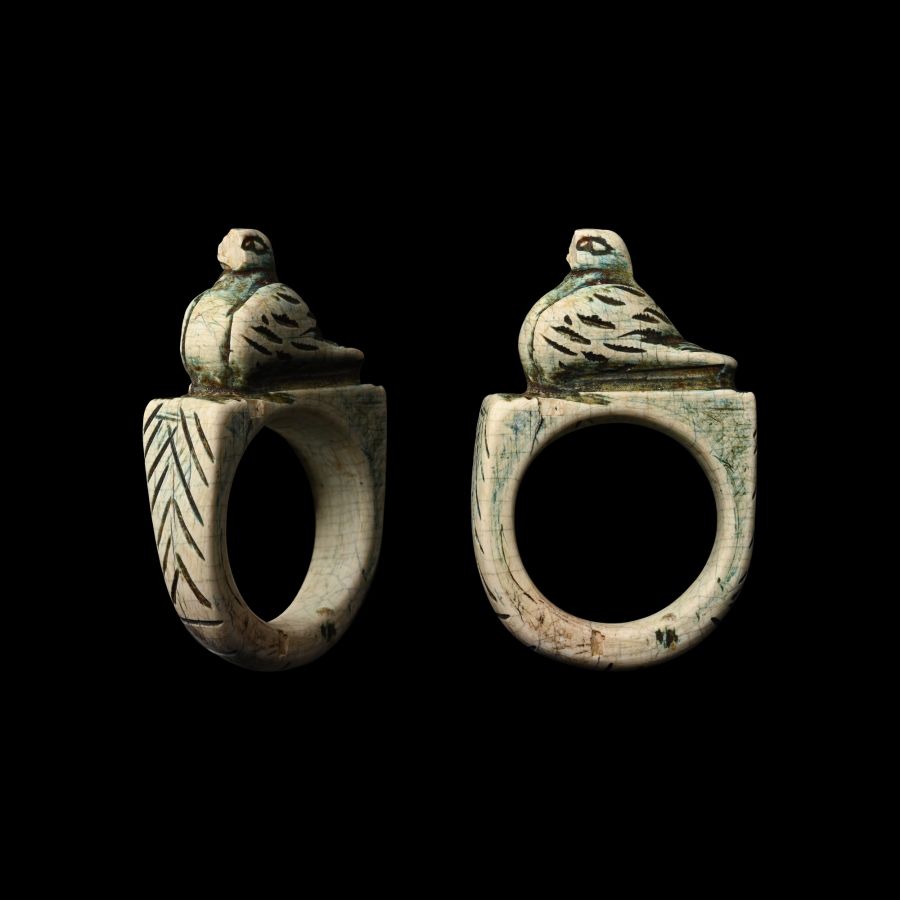
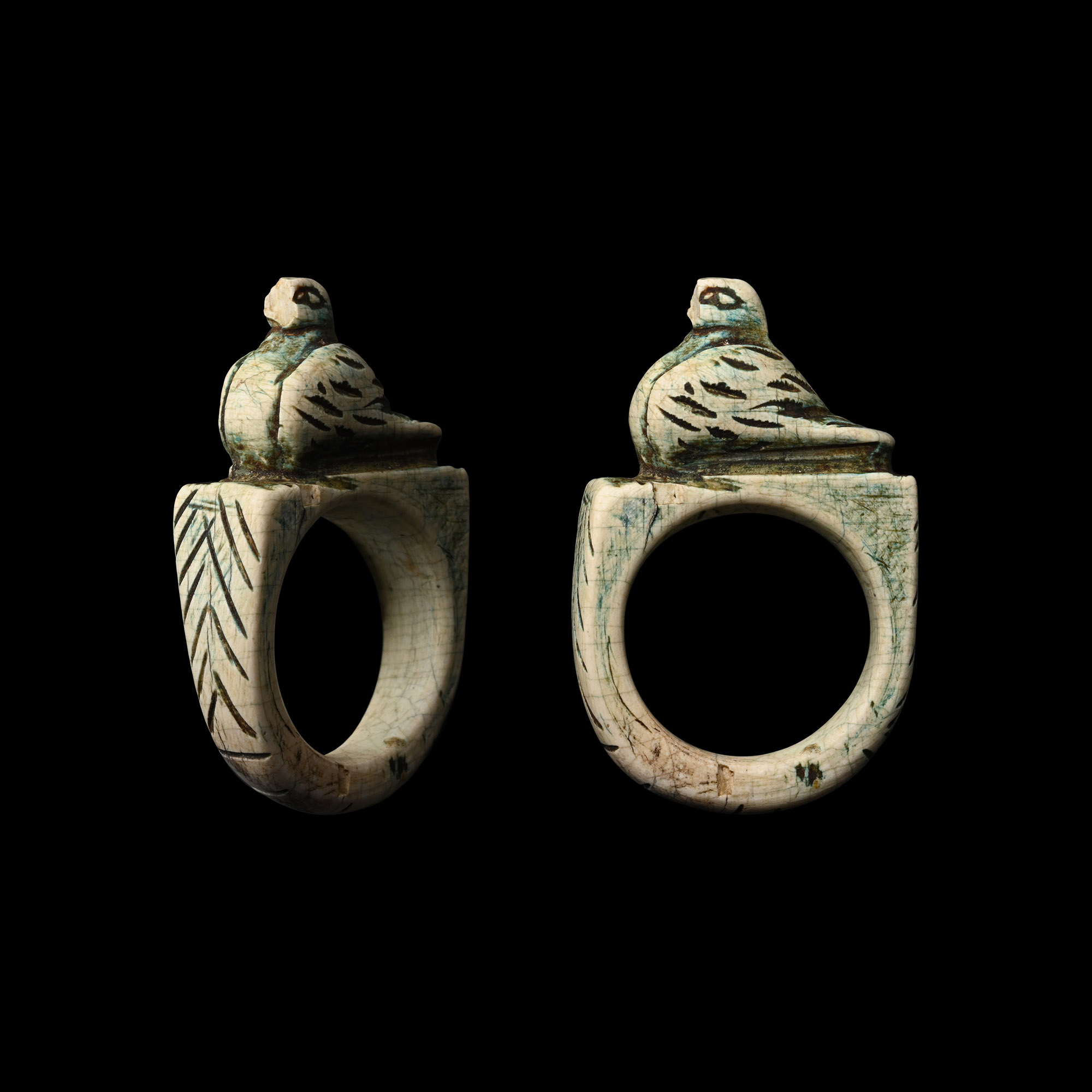
Byzantine Bone Ring with Dove
CIRCA 5TH-6TH CENTURY A.D. OR LATER
1 1/2 in. (9.08 grams, 40.97 mm overall, 19.28 x 18.50 mm internal diameter (approximate size British R 1/2, USA 8 3/4, Europe 19.38, Japan 18)).
Christian image of a dove resting modelled in the round on rectangular bezel, hoop and the dove's body both decorated with hatching. [No Reserve]
ProvenanceFamily collection formed in the 1970s.
Ex property of a London lady.
Northern Ireland collection.
TimeLine Auctions follows a vetting process to ensure the authenticity and legality of all items, reinforcing our commitment to integrity and responsible trading. Each antiquity, antique, and coin lot undergoes thorough examination by a vetting committee of at least ten external specialists, professional trade association members, scientists, and archaeologists: Our Vetting Process
AUCTIONS:
TimeLine is a leading auction house specialising in antiquities, ancient art, collectables, natural history, coins, medals, and books. Our auctions offer museums, collectors, historians, and enthusiasts the opportunity to acquire unique and historically significant pieces.
-
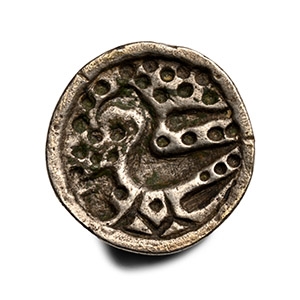
Byzantine Silver Stamp Seal with Bird
6th-8th century A.D.Estimate: £250 - 350 (+bp*)
Opening Bid: £115
Conical body with integral loop above, underside with a standing bird with hooked beak, pelletted field. 11.7 grams, 24 mm
Private collection, UK. -
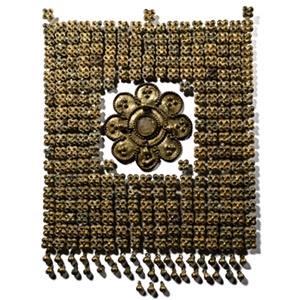
Byzantine Gilt Bronze Horse Harness Decoration Set
8th-10th century A.D.Estimate: £1,500 - 2,000 (+bp*)
Opening Bid: £600
Comprising: a large octofoil harness frontal plate with beaded rim and granulation; studs with quatrefoil plates; bell-shaped dangles. 556 grams total, 11-92 mm
From the private collection of a London gentleman, from his grandfather's collection formed before the early 1970s. This lot has been checked against the Interpol Database of stolen works of art and is accompanied by a search certificate number no.12687-234699. This lot has been cleared against the Art Loss Register database, and is accompanied by an illustrated lot declaration signed by the Head of the Antiquities Department, Dr Raffaele D'Amato. -
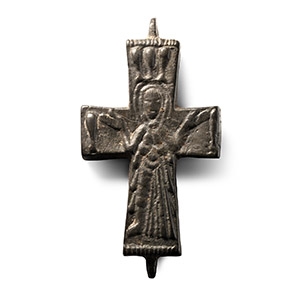
Byzantine Bronze Reliquary Cross Pendant Plate
10th-12th century A.D.Sold for (Inc. bp): £169
Enkolpion plate with pierced lugs; obverse with low-relief nimbate robed figure in orans pose with teardrop motifs surrounding. 13.8 grams, 52 mm
Ex David Miller, Hemel Hempstead, London, UK. From the private collection of a West London, UK, gentleman, formed since the early 2000s. Accompanied by a handwritten ticket.
