
Loading, please wait...
LOT 0990
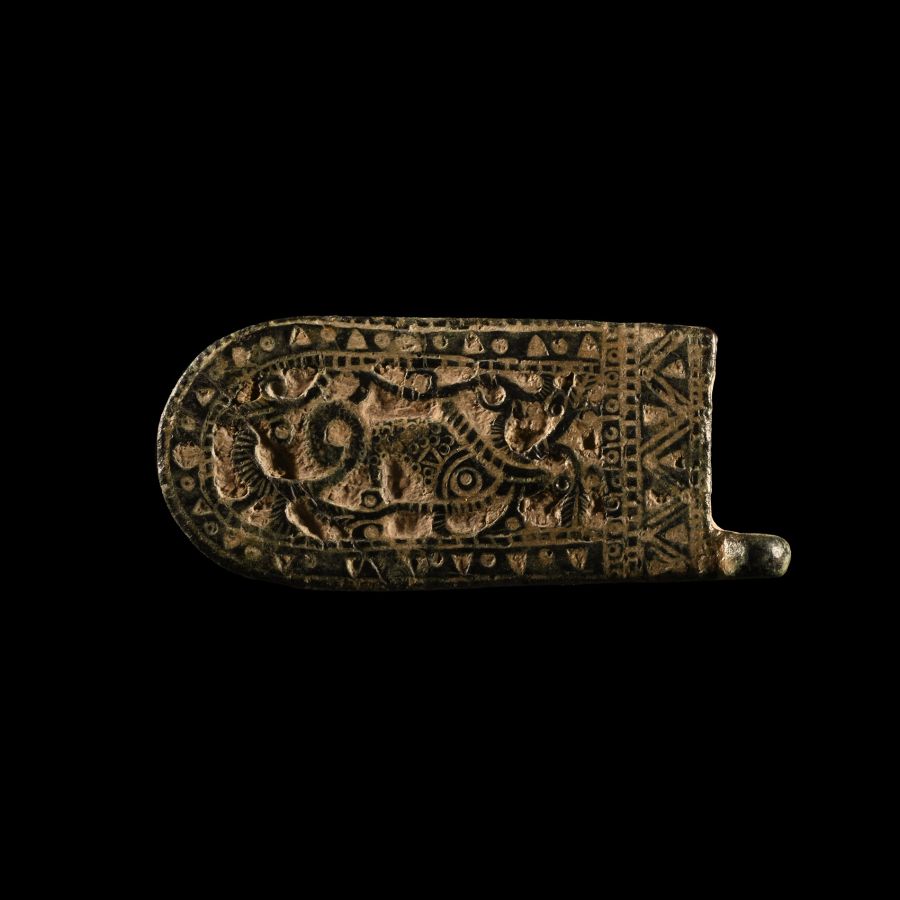
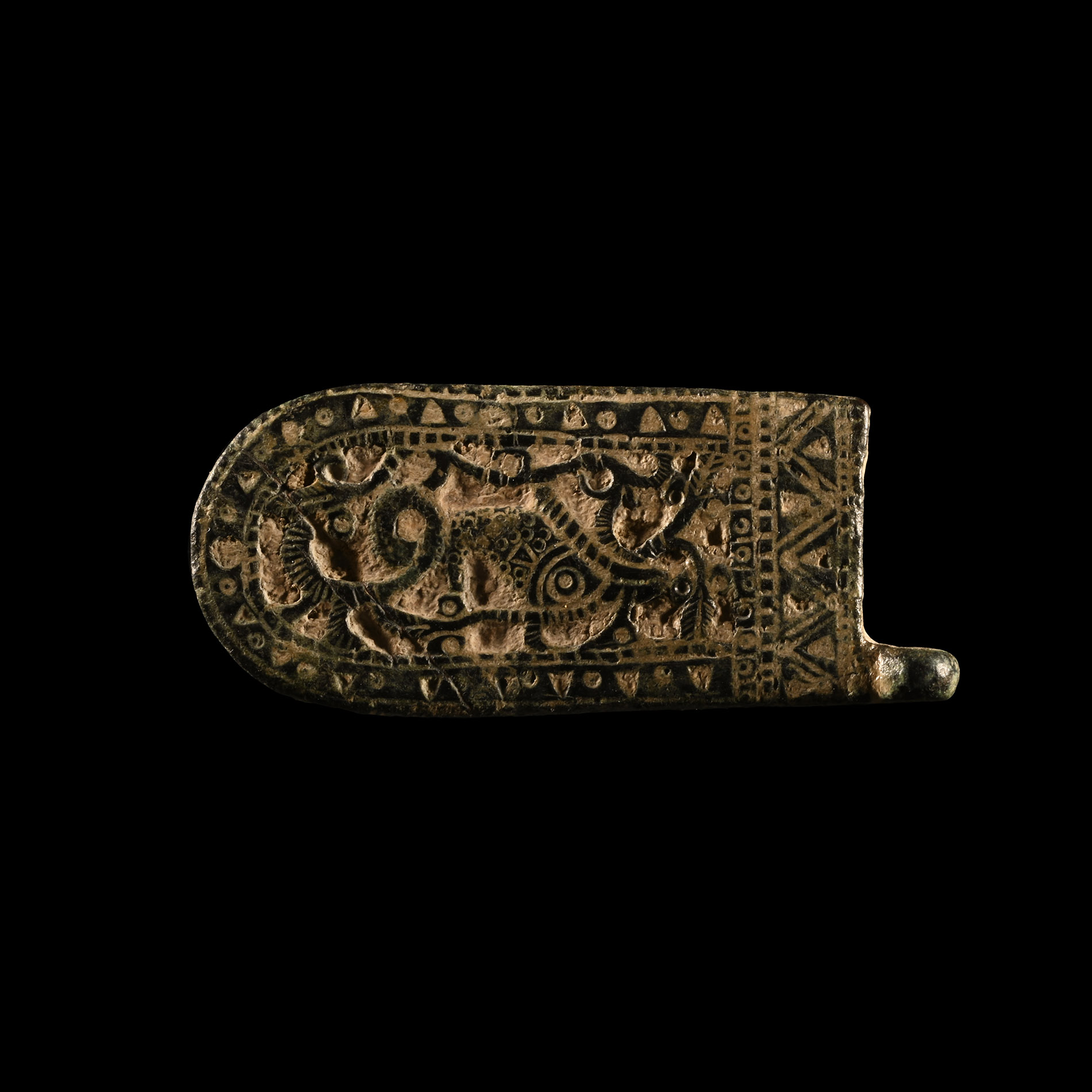
Byzantine Belt Mount with Animal
CIRCA 6TH-7TH CENTURY A.D.
1 5/8 in. (13.8 grams, 40 mm).
Tongue-shaped with attachment lug to the reverse and hinge knuckles to the edge; reserved design of a bull amid tendrils; geometric border. [No Reserve]
ProvenanceAcquired on the Europen art market.
From the collection of an London antiquarian.
Cf. Wamser, L., Die Welt von Byzanz - Europas Östliches Erbe, München, 2004, items 253, 453, for type.
CONDITIONTimeLine Auctions follows a vetting process to ensure the authenticity and legality of all items, reinforcing our commitment to integrity and responsible trading. Each antiquity, antique, and coin lot undergoes thorough examination by a vetting committee of at least ten external specialists, professional trade association members, scientists, and archaeologists: Our Vetting Process
AUCTIONS:
TimeLine is a leading auction house specialising in antiquities, ancient art, collectables, natural history, coins, medals, and books. Our auctions offer museums, collectors, historians, and enthusiasts the opportunity to acquire unique and historically significant pieces.
-
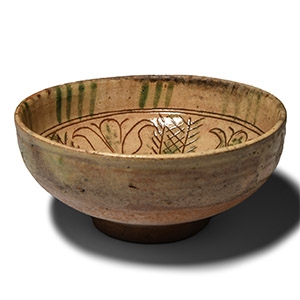
Byzantine Green-Glazed Sgraffito Bowl
Circa 12th-15th century A.D.Sold for (Inc. bp): £585
Broad with basal disc, cream-glazed inner face with green detailing, sgraffito design of tulip flowers and hatched bands. 322 grams, 15.2 cm
From a collection acquired on the UK art market from various auction houses and collections mostly before 2000. From an important Cambridgeshire estate; thence by descent. -
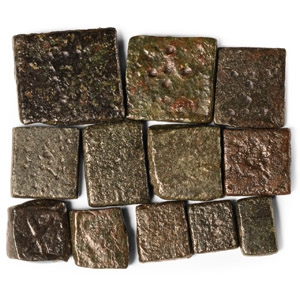
Byzantine Bronze Trade Weight Collection
Circa 6th-12th century A.D.Sold for (Inc. bp): £59
Mixed group of square trade weights of various typessome with pointillé or stamped detailing. 38.6 grams total, 8-17 mm
Acquired since the 1970s. From the private collection of a Surrey, UK, gentleman. -
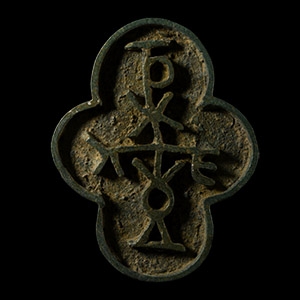
Large Byzantine Bronze Bread Stamp
Circa 7th-11th century A.D.Sold for (Inc. bp): £1,560
Featuring a crucifix-shaped monogram with reversed inscription in Greek letters written in two intersecting lines 'ΠET PX Y', translating to 'Peter, servant of God' most likely a benefaction to Jesus Christ from an individual; large applied handle to the reverse. 361 grams, 12.7 cm
Previously in a German collection. Ex Austrian collection. In a London collection from the 1990s. Accompanied by a previous catalogue information slip.
