
Loading, please wait...
LOT 0222
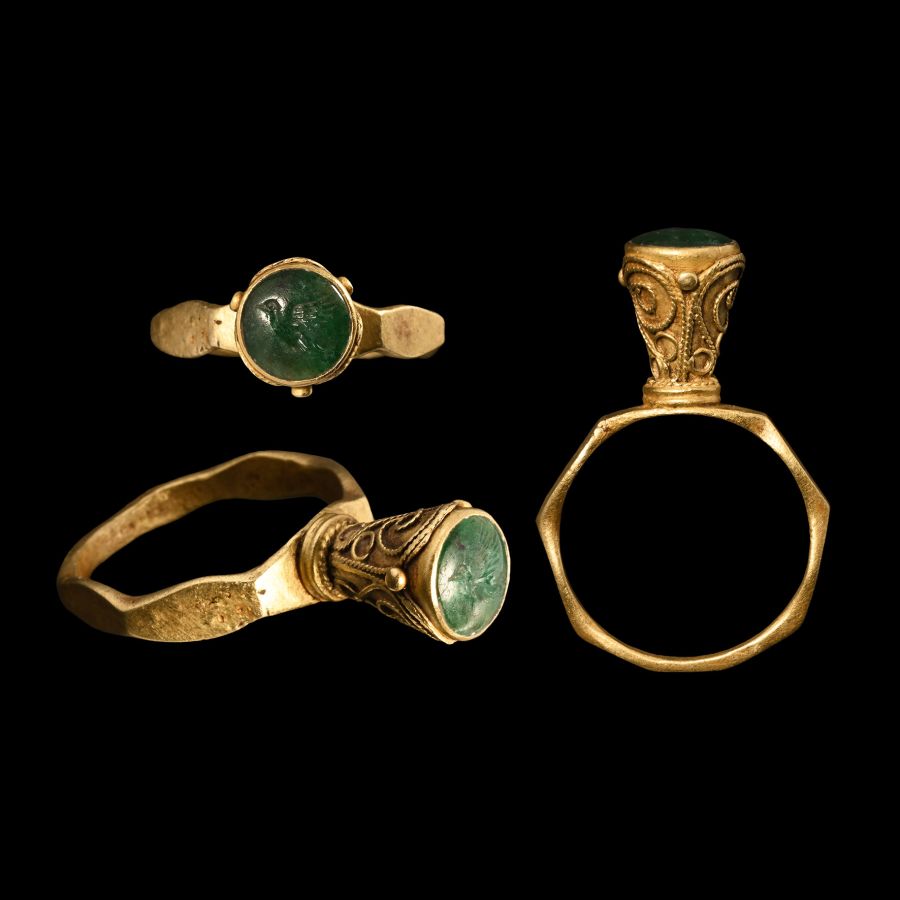
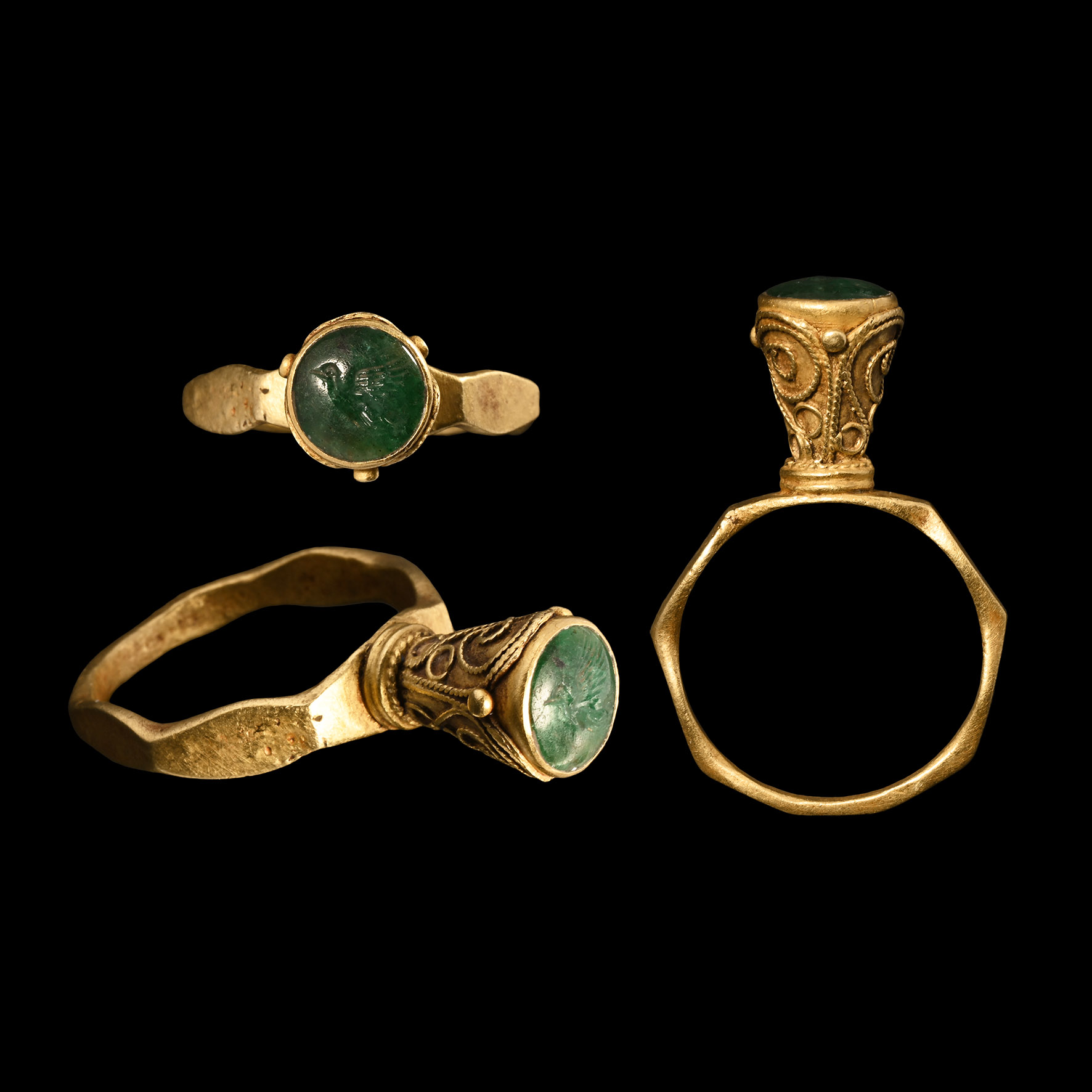
Byzantine Architectural Electrum Ring with Emerald Engraved with a Dove
6TH-8TH CENTURY A.D.
1 1/2 in. (7.55 grams, 37.12 mm overall, 20.74 mm internal diameter (approximate size British W, USA 11, Europe 25, Japan 24)).
With facetted hoop and conical architectural bezel with applied filigree decoration, set with an emerald with engraved dove flying left.
ProvenanceEx Michael O'hara collection, before 1989.
From the private collection of the late A.B., London, UK.
Accompanied by an academic report by Dr Raffaele D’Amato.
This lot has been checked against the Interpol Database of stolen works of art and is accompanied by a search certificate number no.12004-213033.
Cf. Chadour, A.B., Rings. The Alice and Louis Koch Collection, volume I, Leeds, 1994, items 483, 484, for the type; Baldini Lippolis, I., L'Oreficeria nell'Impero di Costantinopoli tra IV e VII secolo (the Jewellery in the Empire of Constantinople between IV and VII century, in Italian), Bari, 1999, pp.229ff, for the type of rings, items pp.202-203; Wamser, L., Die Welt von Byzanz - Europas Östliches Erbe, München, 2004, items 638-639, for similar types.
FootnotesThe quality of this finger ring suggests that it was the work of an excellent goldsmith who may have worked for the court in Constantinople or an important provincial imperial capital, like Ravenna or Carthage.
CONDITIONTimeLine Auctions follows a vetting process to ensure the authenticity and legality of all items, reinforcing our commitment to integrity and responsible trading. Each antiquity, antique, and coin lot undergoes thorough examination by a vetting committee of at least ten external specialists, professional trade association members, scientists, and archaeologists: Our Vetting Process
AUCTIONS:
TimeLine is a leading auction house specialising in antiquities, ancient art, collectables, natural history, coins, medals, and books. Our auctions offer museums, collectors, historians, and enthusiasts the opportunity to acquire unique and historically significant pieces.
LOT 0222
Byzantine Architectural Electrum Ring with Emerald Engraved with a Dove
Sold for (Inc. bp): £2,860
-
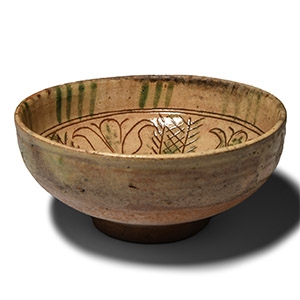
Byzantine Green-Glazed Sgraffito Bowl
Circa 12th-15th century A.D.Sold for (Inc. bp): £585
Broad with basal disc, cream-glazed inner face with green detailing, sgraffito design of tulip flowers and hatched bands. 322 grams, 15.2 cm
From a collection acquired on the UK art market from various auction houses and collections mostly before 2000. From an important Cambridgeshire estate; thence by descent. -
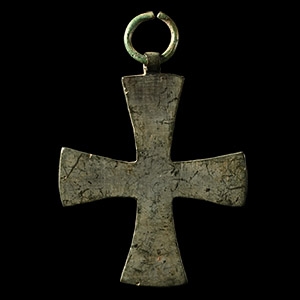
Byzantine Bronze Inscribed Cross Pendant
7th century A.D.Sold for (Inc. bp): £169
Flat in section with pierced lug and suspension ring, lightly inscribed to the ends of the arms 'NI / KA / HC / ΛC'. 10.3 grams, 56 mm
Acquired in Munich, Germany, in 2001. European private collection. -
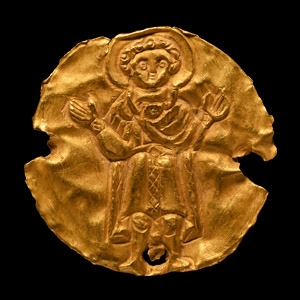
Byzantine Gold Roundel of a Standing Saint
Late 10th-early 11th century A.D.Sold for (Inc. bp): £546
Sheet gold disc with three holes close to the rim for attachment of links (two damaged); repoussé facing image of a nimbate saint standing wearing a knee-length tunic with decorative hatched panel to the front, calf-length cloak with hatched texture, disc brooch beneath the chin, both arms raised in the orans gesture. 1.19 grams, 23 mm
Ex Elie Borowski, 1988.
