
Loading, please wait...
LOT 0796
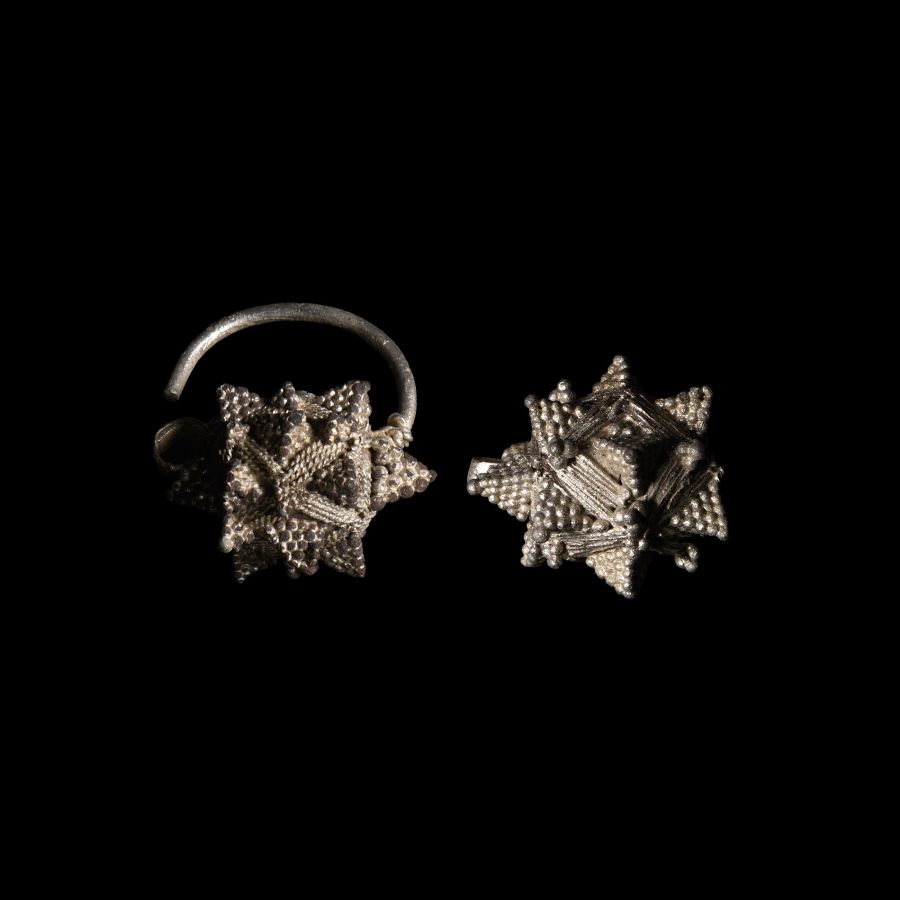
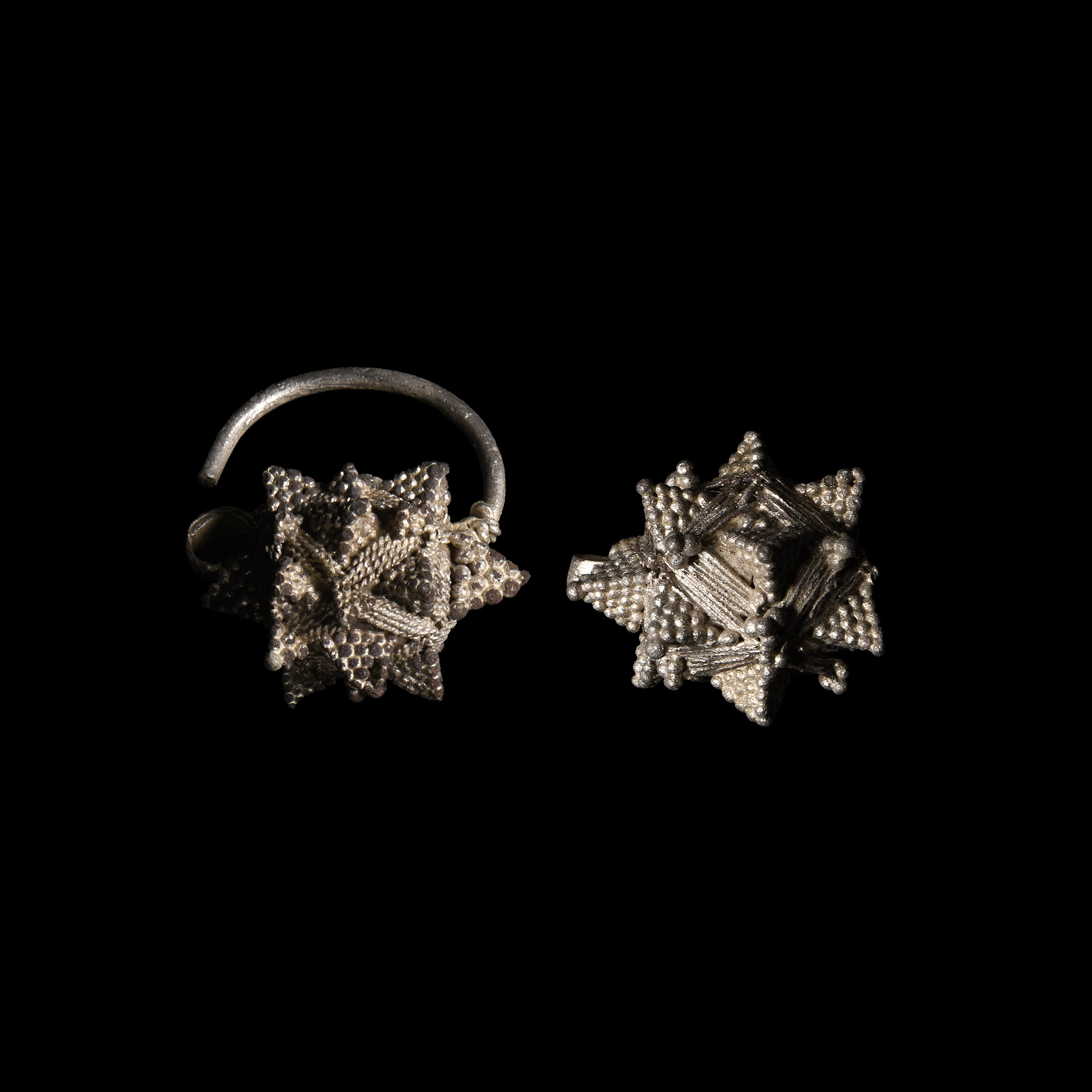
Byzantine Age Silver Temple Ring Pair
10TH-11TH CENTURY A.D.
1 - 1 1/4 in. (19.1 grams total, 26-31 mm).
Composed of a facetted bulb adorned with granulated pyramids; one hoop absent. [2, No Reserve]
ProvenanceFrom the collection of a North American gentleman, formed in the 1990s.
CONDITIONTimeLine Auctions follows a vetting process to ensure the authenticity and legality of all items, reinforcing our commitment to integrity and responsible trading. Each antiquity, antique, and coin lot undergoes thorough examination by a vetting committee of at least ten external specialists, professional trade association members, scientists, and archaeologists: Our Vetting Process
AUCTIONS:
TimeLine is a leading auction house specialising in antiquities, ancient art, collectables, natural history, coins, medals, and books. Our auctions offer museums, collectors, historians, and enthusiasts the opportunity to acquire unique and historically significant pieces.
-
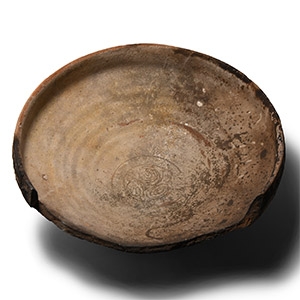
Byzantine Terracotta Shipwreck Bowl
Circa 12th-14th century A.D.Sold for (Inc. bp): £91
Featuring a tapering sidewall, vertical convex rim and foot; stylised vegetal design to interior base; chipped rim. 1.1 kg, 27.5 cm wide
Acquired 1990s-early 2000s. East Anglian private collection. -
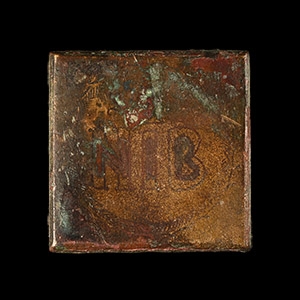
Byzantine Bronze Trade Weight
5th-6th century A.D.Sold for (Inc. bp): £59
Square in form with 'NIB' within wreath to one face, IB meaning the number twelve. 53 grams, 29 mm
From the private collection of the late Mr S.M., London, UK. -
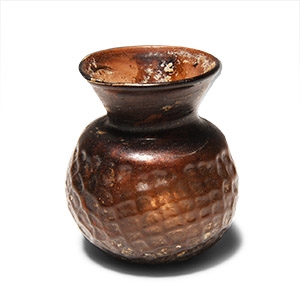
Byzantine Mould-Blown Aubergine Glass Jar
5th-8th century A.D.Estimate: £600 - 800 (+bp*)
Opening Bid: £333
Or flask with bulbous body featuring a 'net' design and trumpet-style neck and rim; shallow kick-up to base; iridescent surfaces. 58 grams, 69 mm high
Fine condition.
Acquired 1969-1999. London collection of the late Mr S.M., thence by descent.
