
Loading, please wait...
LOT 1197
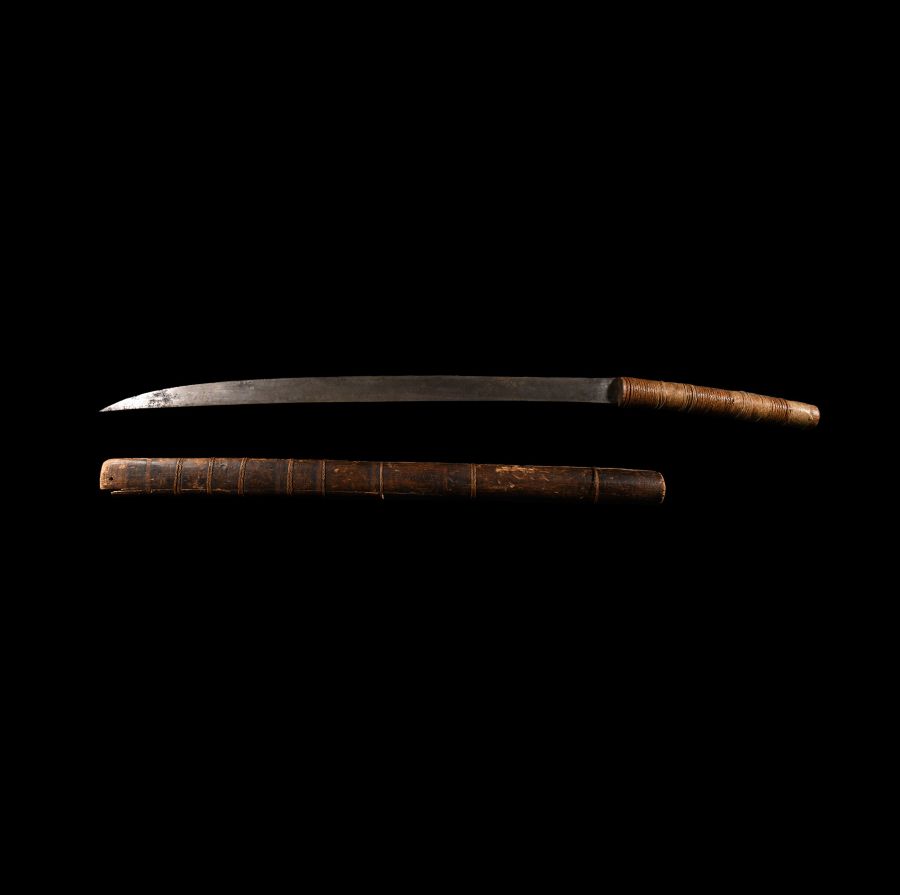
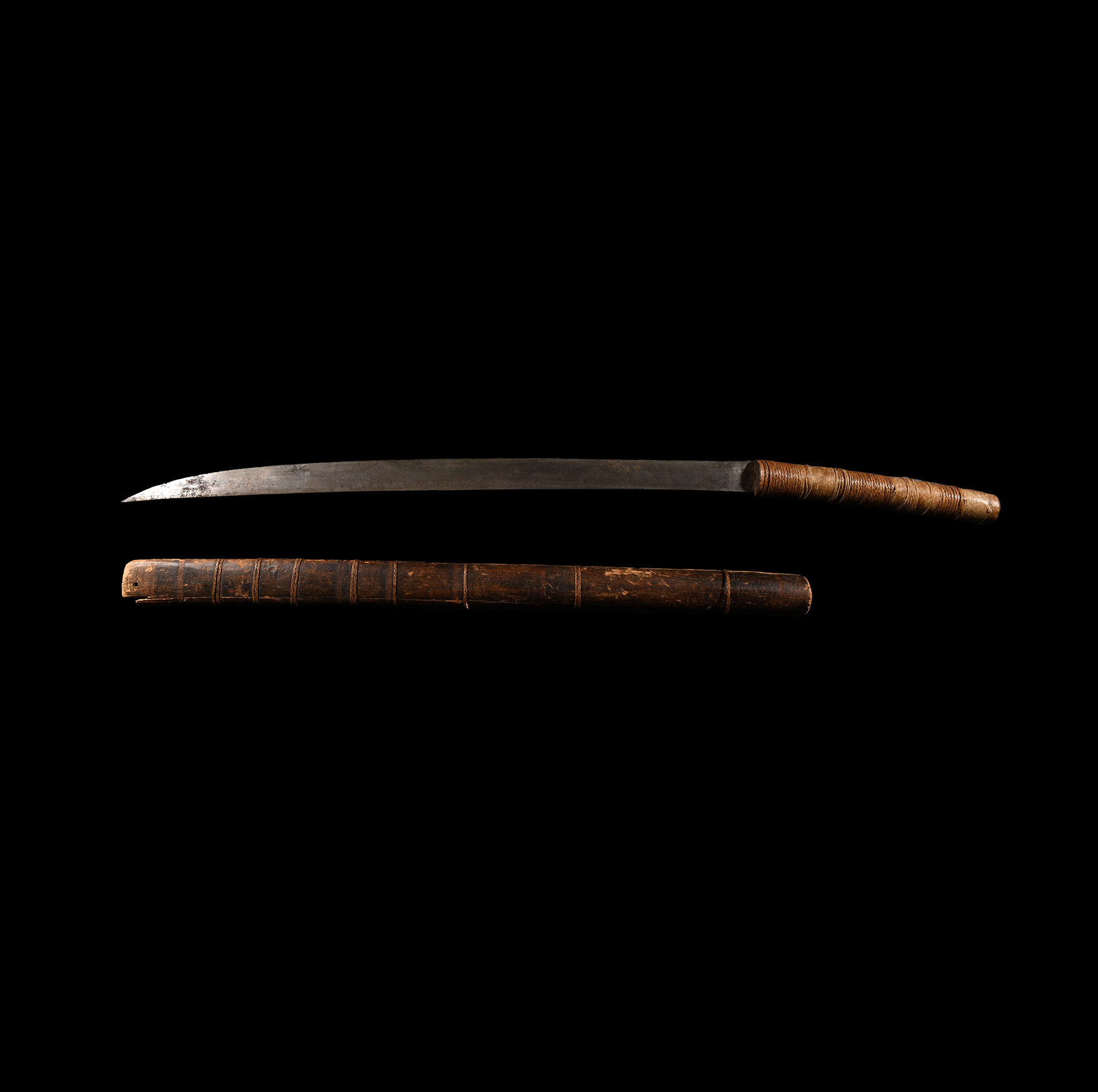
Burmese Iron Single-Edged Sword with Scabbard
19TH CENTURY A.D. OR EARLIER
35 7/8 in. (886 grams, 91 cm long).
Comprising a smooth, slightly curved and unornamented blade, the hilt wrapped with organic plaited and plain string; tubular bamboo(?) scabbard wrapped with plaited string. [No Reserve]
ProvenanceEx Reeman Dansie, Colchester, Essex, UK.
LiteratureCf. similar specimen in the Metropolitan Museum of Arts, accession number 36.25.1437a,b.
FootnotesThe dha may have its origins with the Tai people who migrated to the area from present-day Yunnan Province in southern China. This sabre varied considerably according to locality but they shared some features that define them apart from other weapons and tools of the area, like the round cross-section grip, a long, gently curving blade with a single edge, and the absence of a guard.
CONDITIONTimeLine Auctions follows a vetting process to ensure the authenticity and legality of all items, reinforcing our commitment to integrity and responsible trading. Each antiquity, antique, and coin lot undergoes thorough examination by a vetting committee of at least ten external specialists, professional trade association members, scientists, and archaeologists: Our Vetting Process
AUCTIONS:
TimeLine is a leading auction house specialising in antiquities, ancient art, collectables, natural history, coins, medals, and books. Our auctions offer museums, collectors, historians, and enthusiasts the opportunity to acquire unique and historically significant pieces.
-
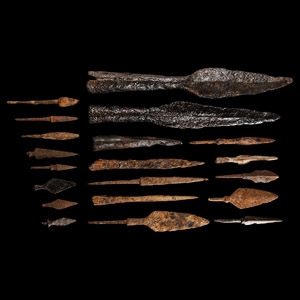
Medieval Iron Spear and Arrowhead Group
Circa 10th-15th century A.D.Sold for (Inc. bp): £156
Mainly comprising socketted spearheads and tanged arrowheads of various types, including conical, triangular-section, bodkin and lanceolate types. 408 grams total, 3.3-20 cm
UK private collection, 1990s. Acquired from a provincial auction. -
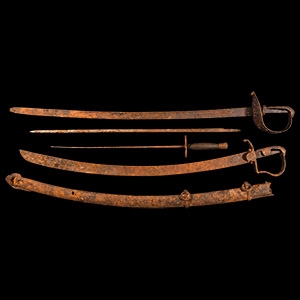
Post Medieval Iron Sword Group
18th-19th century A.D.Sold for (Inc. bp): £156
Comprising military and civilian weapons: short rapier; basket hilted sword; sabre seemingly with scabbard; rapier blade. 3.45 kg total, 62-100 cm
Acquired 1990s-early 2000s. East Anglian private collection.
The two sabres, with the particular hilt and steel scabbard, seems to have affinities with Hungarian sabres of about 1837-1838, destined to staff and senior officers of the Austro-Hungarian Kingdom Hussars. At the end of the 1830s, the Austrian military leaders introduced a new type of sabre for the Hussar officers, while the 1837 infantry officer sabre was standardised. -
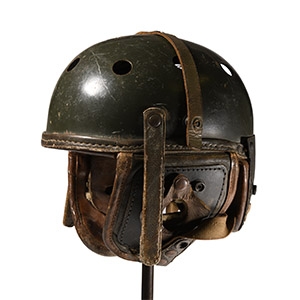
United States M38 Tank Crew Helmet
Circa 1940's A.D.Sold for (Inc. bp): £143
Rawling's pattern M38 composition tank crew helmet with neck protection plate and ear-flaps, fitted with leather lining with leather and fabric securing straps; finished dark green; with later inked 'CESARE' owner name and '1-5-79' date to liner. 613 grams, 27 cm high
Acquired from Czerny's Auction, lot 81515. The Kusmirek Collection, UK. Accompanied by copy of a previous invoice and lot description.
Possibly of Italian manufacture of the type used by US forces in WWII.
