
Loading, please wait...
LOT 2100
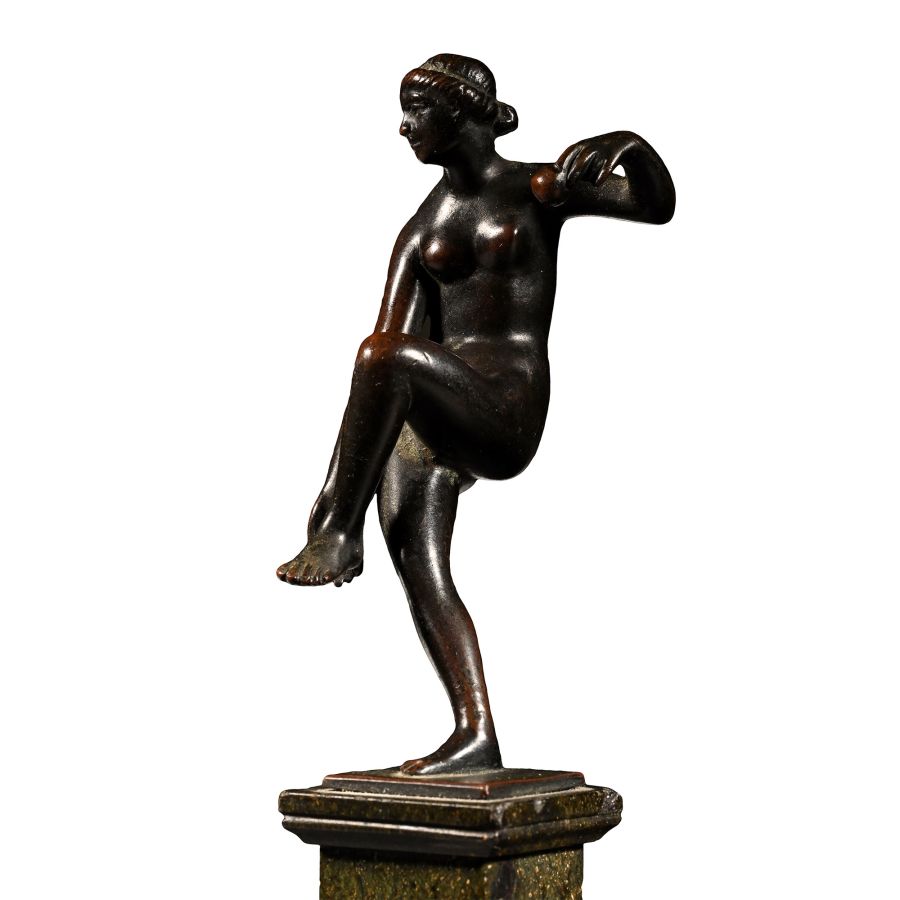
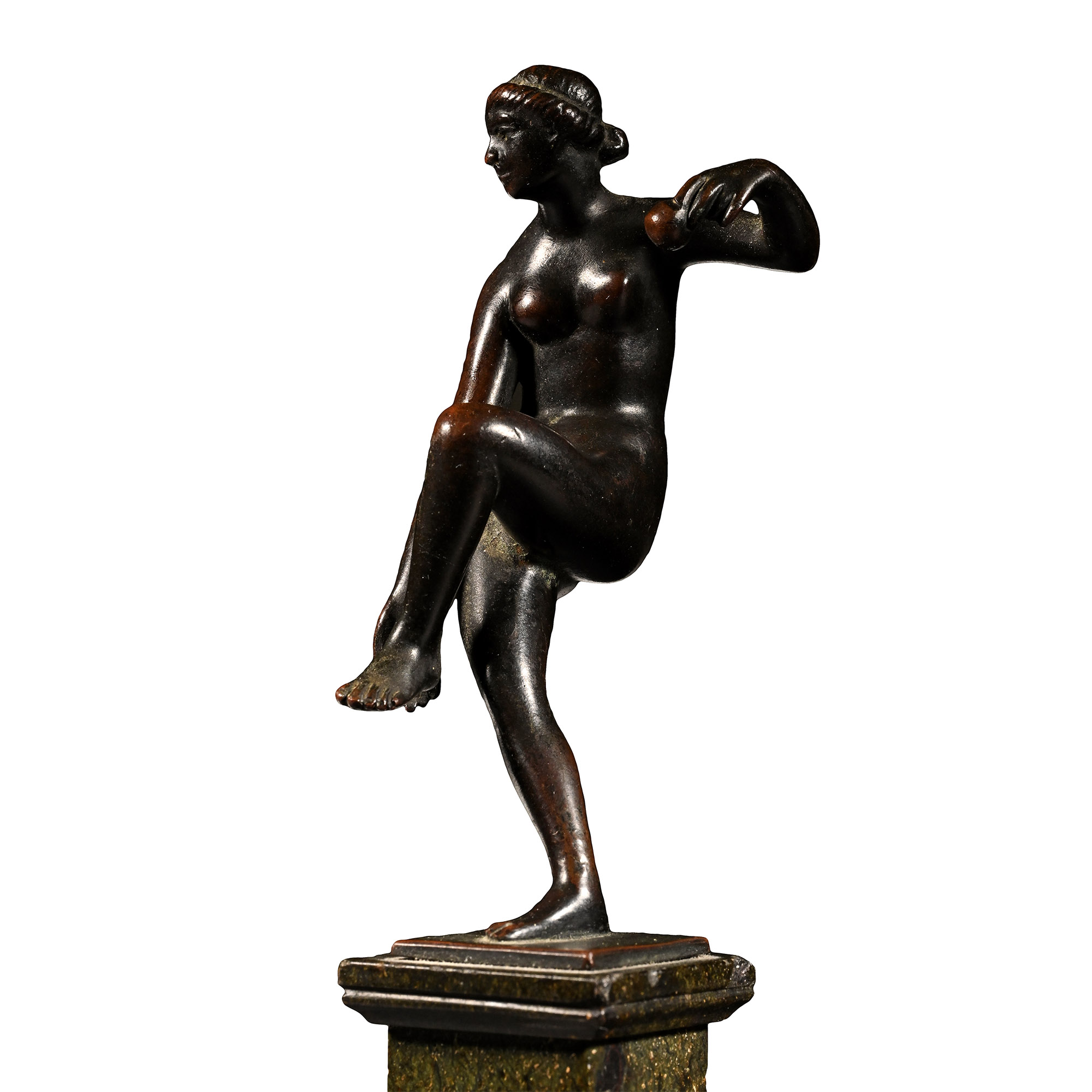
Bronze Statuette of Aphrodite
19TH CENTURY A.D.
6 1/4 in. (366 grams, 16 cm).
Modelled nude with hair dressed in a chignon, right hand extended to the heel of the left foot raised to knee-height; apple in the left hand; based on the image of Aphrodite loosening her sandal; mounted on a tiered stand.
ProvenancePrivate collection, England.
LiteratureCf. original in the Walters Art Museum under accession no.54.921.
CONDITIONTimeLine Auctions follows a vetting process to ensure the authenticity and legality of all items, reinforcing our commitment to integrity and responsible trading. Each antiquity, antique, and coin lot undergoes thorough examination by a vetting committee of at least ten external specialists, professional trade association members, scientists, and archaeologists: Our Vetting Process
AUCTIONS:
TimeLine is a leading auction house specialising in antiquities, ancient art, collectables, natural history, coins, medals, and books. Our auctions offer museums, collectors, historians, and enthusiasts the opportunity to acquire unique and historically significant pieces.
-
.jpg)
Silver Bowl with Animals and Calligraphy
18th-19th century A.D.Sold for (Inc. bp): £244
Decorated with circumferential bands of lozenges, floral vines, calligraphic text, animals processing right amid flowers, second band of floral vines and panel of text to base. 140 grams, 12.2 cm wide
Fine condition.
Acquired on the UK art market, 2000s. Property of a Suffolk gentleman. -
.jpg)
Chinese Tang Style Straw-Glazed Jug
20th century A.D. or earlierSold for (Inc. bp): £46
Of conical profile with broad rounded shoulder, trumpet-shaped neck with carinated sidewall; two square pierced lugs to the shoulder, zoomorphic spout and handle; band of interlocking 'wine-glass' motifs to the equator. 2.2 kg, 34 cm
Ex West Country, UK, collection, 1980-1990s. -
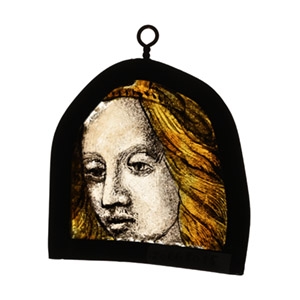
Renaissance Stained Glass Panel of a Head of a Woman
Northern France, circa 1480-1500 A.D.Sold for (Inc. bp): £975
Irregular D-shaped panel with female head in three-quarter view, her hair worn loose with a diadem or crespine; old collector's label '20668015'; framed with a lead came and suspension loop. 46 grams, 71 mm
De Baecque Vente aux enchere, 8 June 2023, no.511 (part). Ex central London gallery.
