
Loading, please wait...
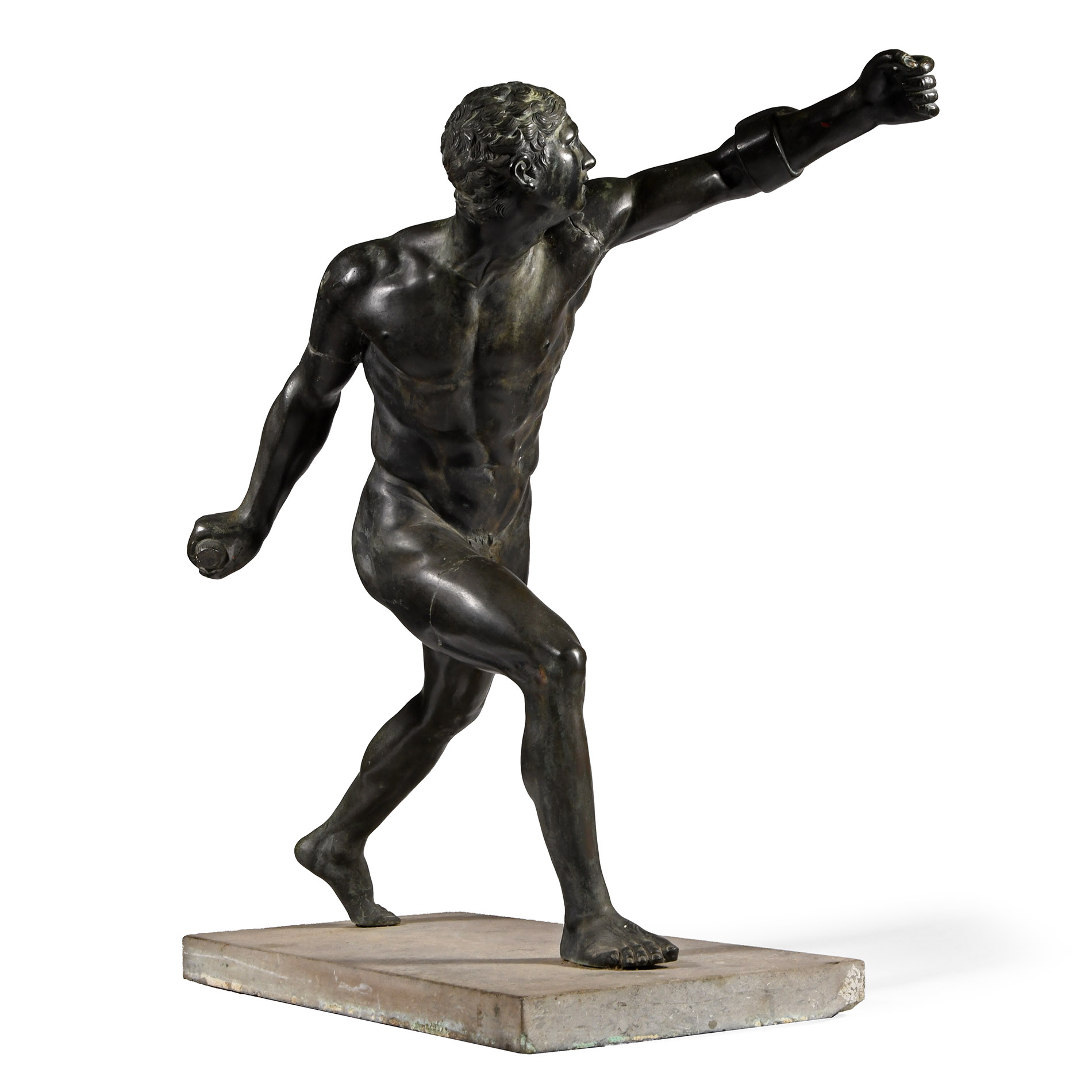
LOT 0417
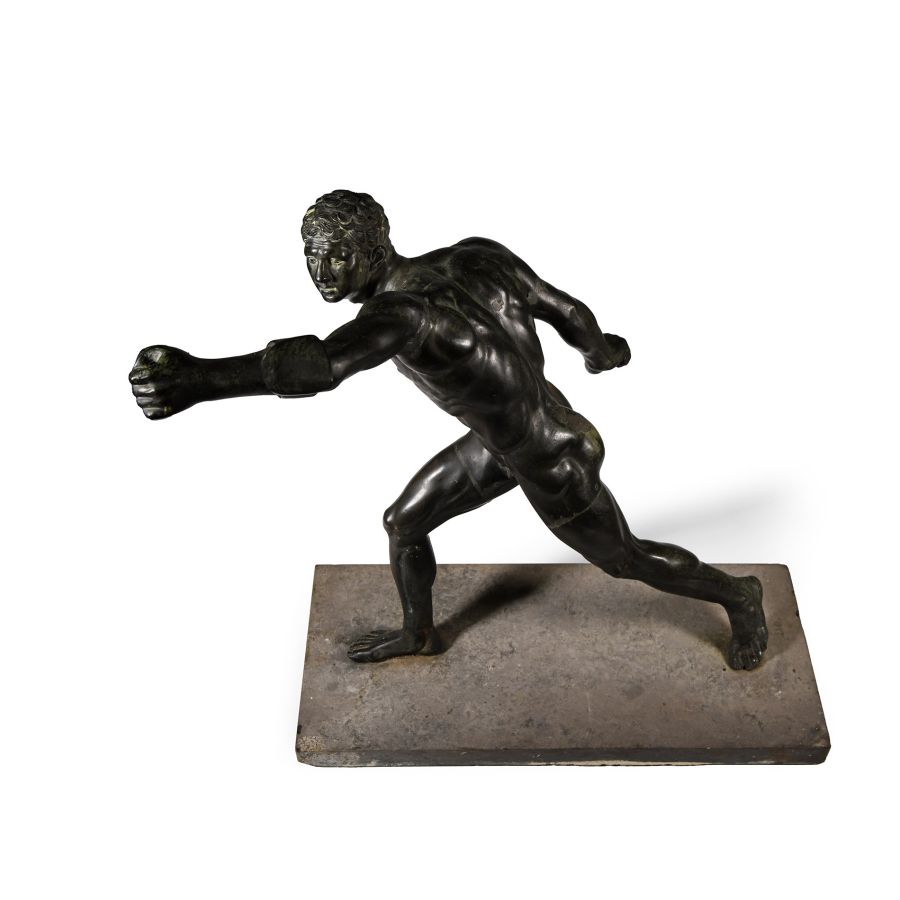
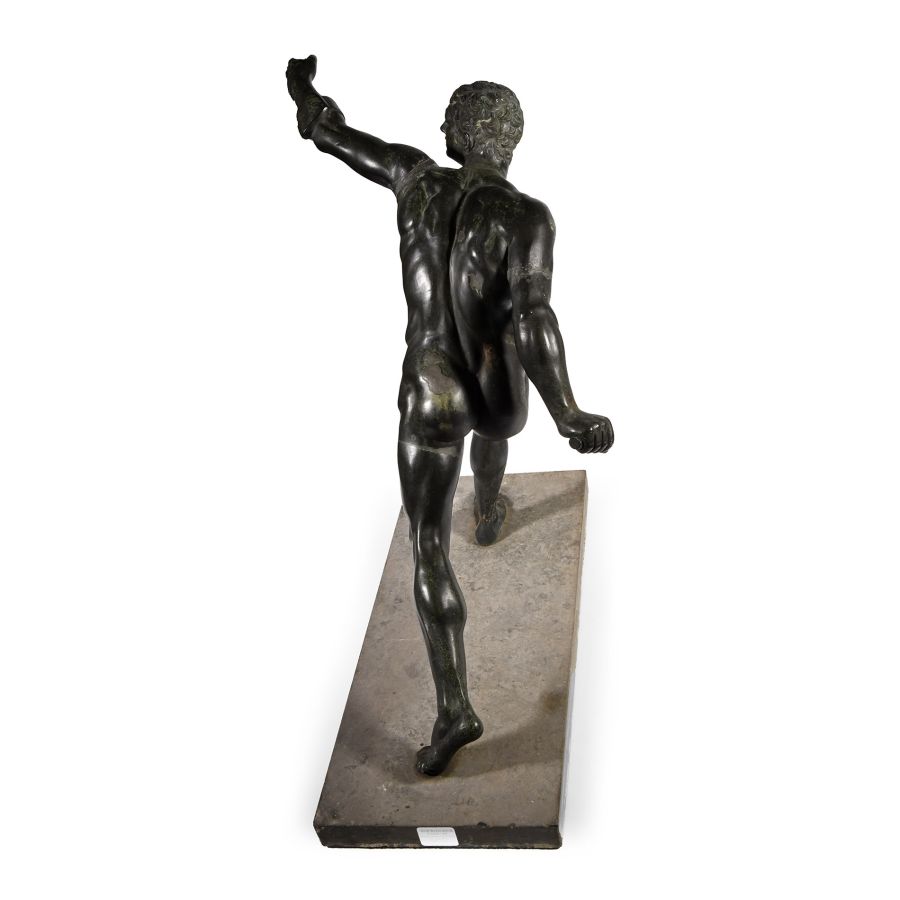
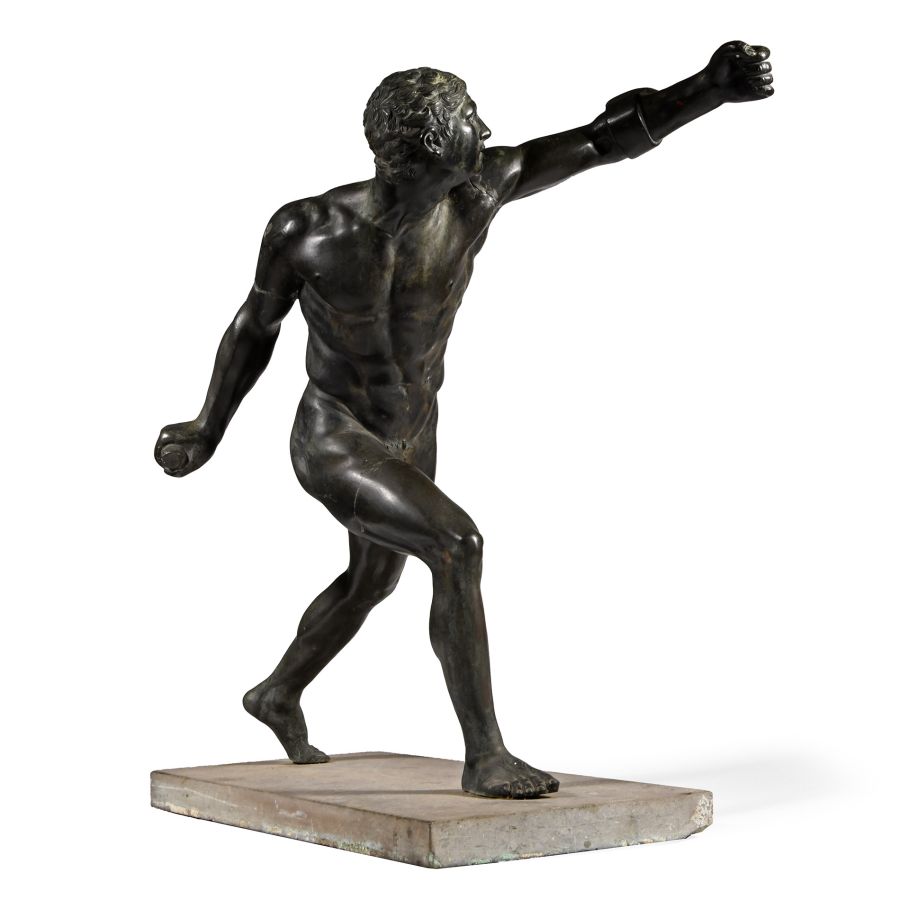
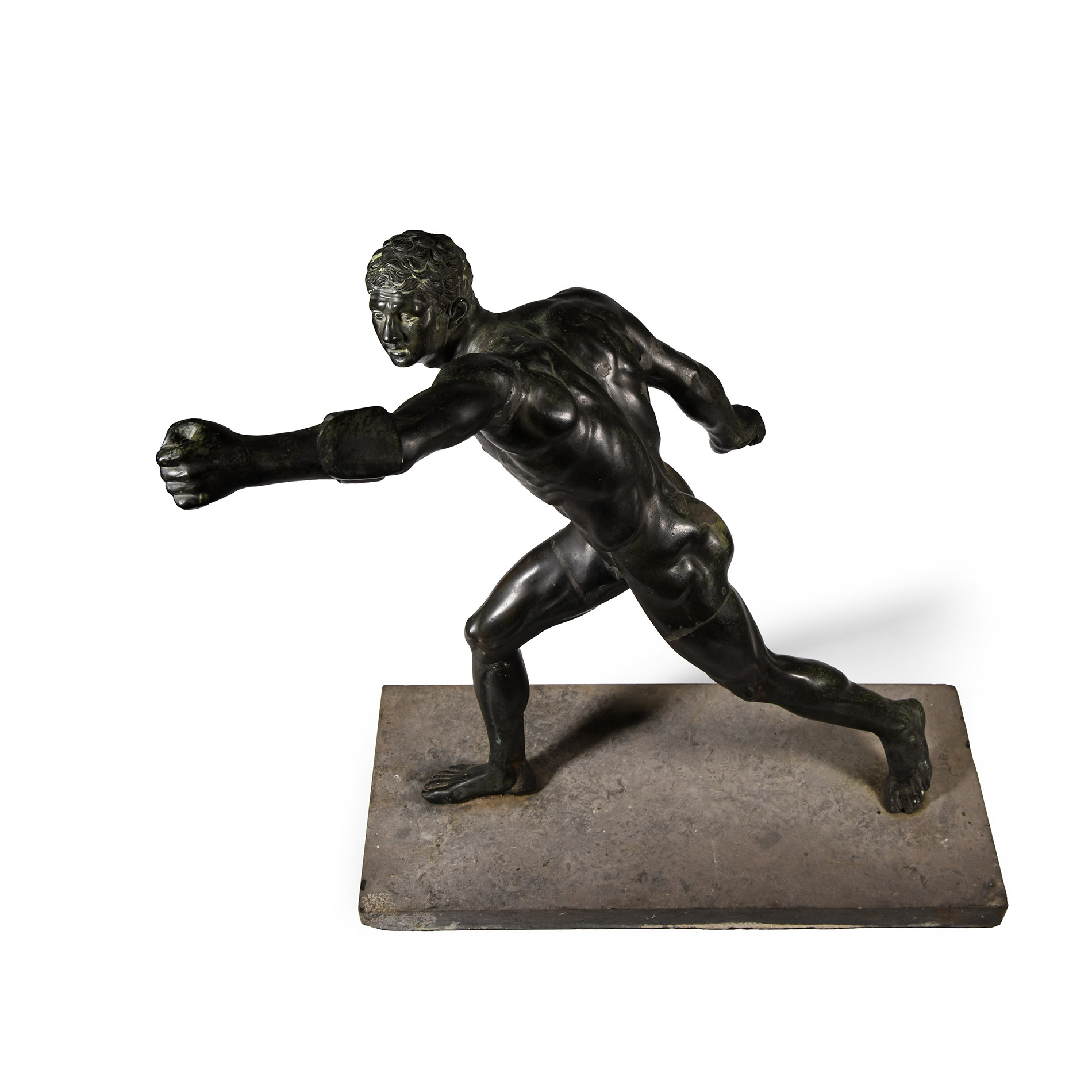
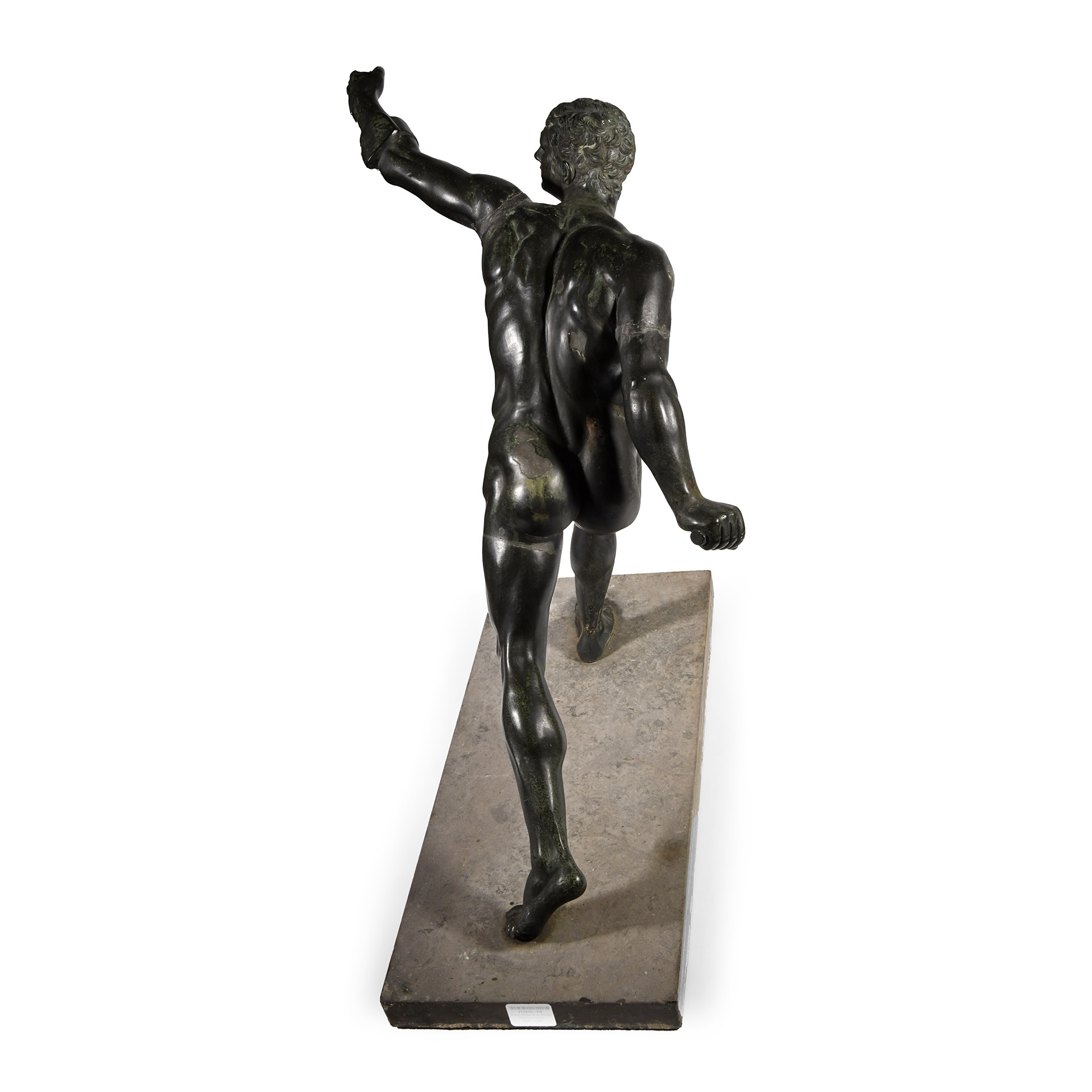
Bronze Statue the Borghese Gladiator
19TH CENTURY A.D.
19 3/4 in. (15.45 kg total, 50.5 cm including stand).
Modelled nude with right leg thrust forward, left arm raised and head turned, right arm held back for balance; miniature heater shield on strap to left forearm; mounted on a rectangular base.
ProvenancePrivate collection, England.
CONDITIONTimeLine Auctions follows a vetting process to ensure the authenticity and legality of all items, reinforcing our commitment to integrity and responsible trading. Each antiquity, antique, and coin lot undergoes thorough examination by a vetting committee of at least ten external specialists, professional trade association members, scientists, and archaeologists: Our Vetting Process
AUCTIONS:
TimeLine is a leading auction house specialising in antiquities, ancient art, collectables, natural history, coins, medals, and books. Our auctions offer museums, collectors, historians, and enthusiasts the opportunity to acquire unique and historically significant pieces.
-
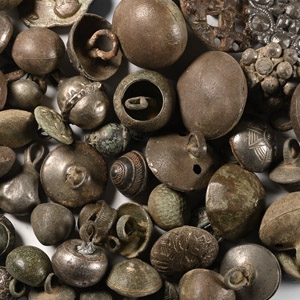
Post Medieval Mixed Bronze Button Collection
17th-19th century A.D.Sold for (Inc. bp): £7
Including fluted dome, hollow, two-piece, openwork disc and other types; many of these objects are published in the Detector Finds book series as well as Buttons & Fasteners 500BC-1840AD. 125 grams total, 10-26 mm
From the collection of the famous author, writer and speaker, Gordon Bailey, Essex, UK; formed since 1968. -
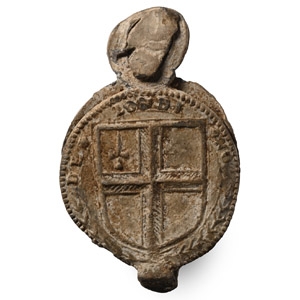
Charles I City of London Lead Seal
1625-1631 A.D.Sold for (Inc. bp): £111
Two-part, four-lobed seal with strap and tag above; obverse with heater shield bearing the arms of the City of London with legend to beaded border 'DE * LO[.]DI ONO' (from London); reverse with angel holding an orb with legend 'GLORIA * IN * EXCELSIS' (glory in the highest); accompanied by a letter from the British Museum, with attachments. 37.5 grams, 57 mm
From the collection of the famous author, writer and speaker, Gordon Bailey, Essex, UK; formed since 1968. Accompanied by the original Museum of London letter by Geoff Egan dated 3rd January 1979.
The item was identified by Geoff Egan (then on secondment from the Museum of London to the British Museum) in 1979 as a four-lobed cloth seal, of a type which had recently been found from a shipwreck off the coast of Norway. The likelihood is that the seal was issued by or in connection with Blackwell Hall, which had a near-monopoly on the cloth trade in 17th c. London. The significance of the angel motif and the motto were not known to Egan, and are still debated. -
.jpg)
Roman Style Marble Torso with Lionskin
19th century A.D. or earlierEstimate: £400 - 600 (+bp*)
Opening Bid: £222
Modelled as a muscular nude torso with lionskin draped over the left shoulder. 508 grams, 14 cm
Acquired in the 1980s. From an interesting European collection of marbles. Property of a European gentleman.
Probably intended to depict Hercules, who customarily wore a lionskin.
