
Loading, please wait...
LOT 0682
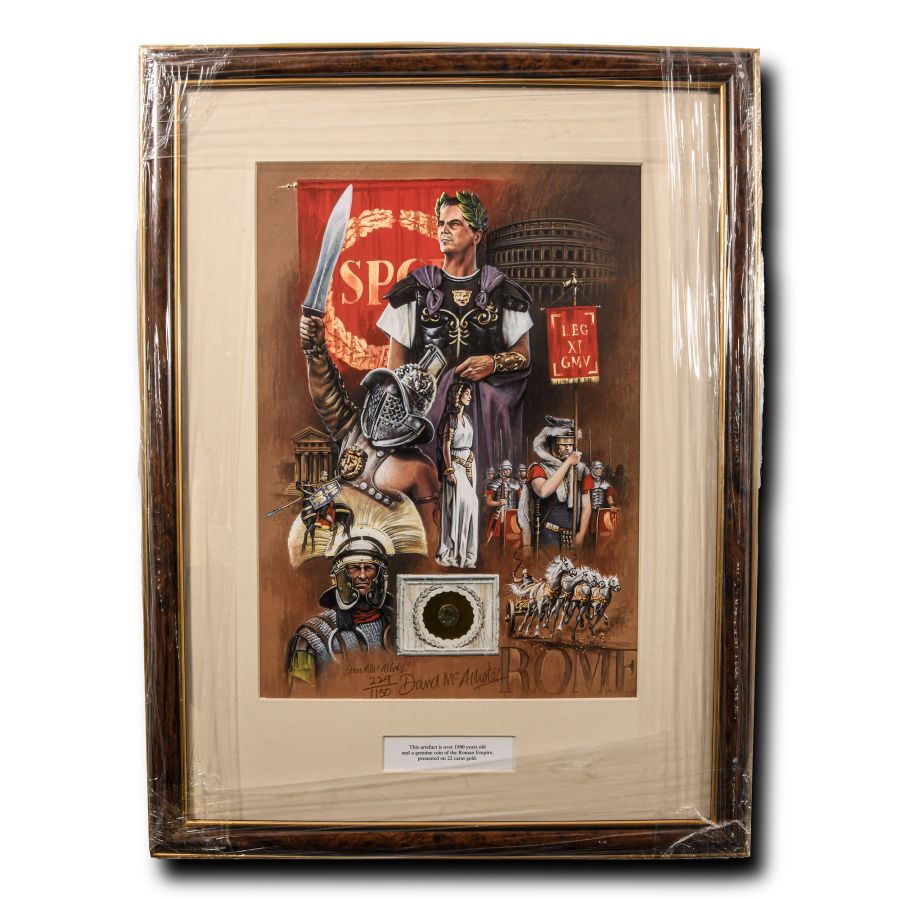
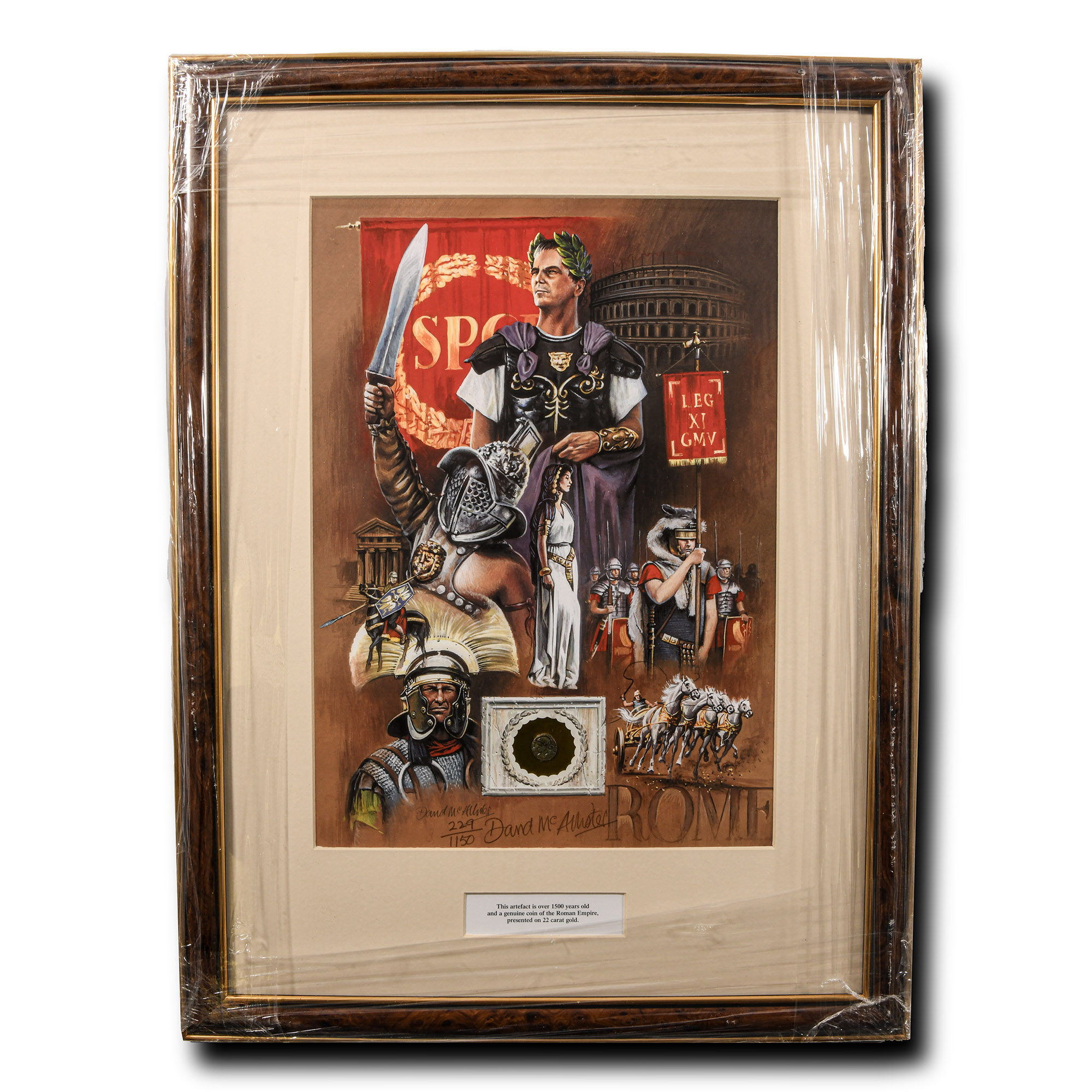
Bronze Roman Coin and Limited Edition Framed Print
3RD CENTURY A.D. AND LATER
19 1/2 x 14 3/4 in. (1.26 kg, 49.5 x 37.5 cm).
The coin of Constantine the Great (272-337 A.D.) mounted on 22 carat gold foil, framed with an art print signed by the artist David McAllister, depicting scenes of Roman military activity; limited edition number 229/1150. [No Reserve]
ProvenanceUK gallery, early 2000s.
Accompanied by a previous certificate of authenticity.
David McAllister's exciting design is a 'one of a kind' work that portrays the might and riches of the Roman civilisation. This limited edition print is a celebration of the award winning artist's lifetime dedication to historical paintings of the ancient world. To enhance appreciation of this rare and historic work, each individual print is signed and numbered by the artist.
CONDITIONTimeLine Auctions follows a vetting process to ensure the authenticity and legality of all items, reinforcing our commitment to integrity and responsible trading. Each antiquity, antique, and coin lot undergoes thorough examination by a vetting committee of at least ten external specialists, professional trade association members, scientists, and archaeologists: Our Vetting Process
AUCTIONS:
TimeLine is a leading auction house specialising in antiquities, ancient art, collectables, natural history, coins, medals, and books. Our auctions offer museums, collectors, historians, and enthusiasts the opportunity to acquire unique and historically significant pieces.
-
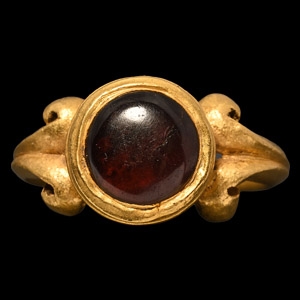
Roman Gold Ring with Garnet Cabochon
Circa 2nd-3rd century A.D.Estimate: £3,000 - 4,000 (+bp*)
Opening Bid: £1,600
Comprising a keeled hoop forked at the shoulders to form two elegant scrolls supporting the raised bezel, decorative grooves framing the garnet cabochon. 8.16 grams, 23.85 mm overall, 19.37 mm internal diameter (approximate size British N, USA 6 1/2, Europe 13.72, Japan 13)
Acquired from London galleries during the 1990s. From the jewellery collection of a London, UK, gentleman. This lot has been checked against the Interpol Database of stolen works of art and is accompanied by search certificate no.12114-214295.
The type of ring seems to date (with the volutes on the shoulders) to the late 2nd-early 3rd century A.D., although the model is certainly derived from the Hellenistic world. The use of carnelian and garnet was abundant in Hellenistic and Roman rings, and the style of the rings continued without change in the Roman Hellenised east. -
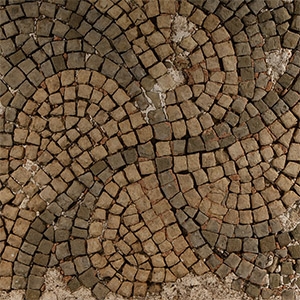
Roman 'Gloucestershire' Mosaic Panel
Circa 2nd-3rd century A.D.Sold for (Inc. bp): £1,105
Irregular mosaic fragment of beige, cream and grey tesserae with radiating trumpet-shaped swirls; mounted in a modern rectangular matrix. 33 kg, 76 cm high
Found Gloucestershire, UK. From a collection acquired on the UK art market from various auction houses and collections mostly before 2000. From an important Cambridgeshire estate; thence by descent.
A mosaic found in Cirenchester (insula IX, Chester Street) shows panels defined by a dark blue-grey single fillet with an additional double fillet parallel to it on a longer axis, having an overall scheme of running pelta-pattern. Each pelta is outlined in dark-blue grey and infilled with red, white and dark blue grey at the centre. -
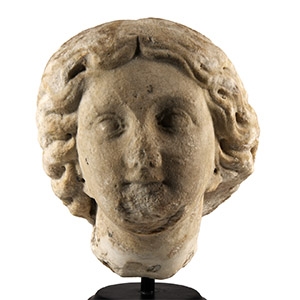
Roman Marble Statue Head
Circa 2nd-3rd century A.D.Sold for (Inc. bp): £1,170
Carved with a rounded face and small mouth, hair arranged in neat curls with central partition; mounted on a custom-made display stand. 7.1 kg total, 29 cm including stand
From a private French collection. Acquired in France before 1993. From the personal collection of Gordon Gridley. Gordon Gridley was a founding member of the Camden Passage antique dealers’ association. Trading in antiques from the late 1960s, he opened his first shop in 1971 and remained a well-known and respected figure in the antiques world until his retirement.
