
Loading, please wait...
LOT 1933
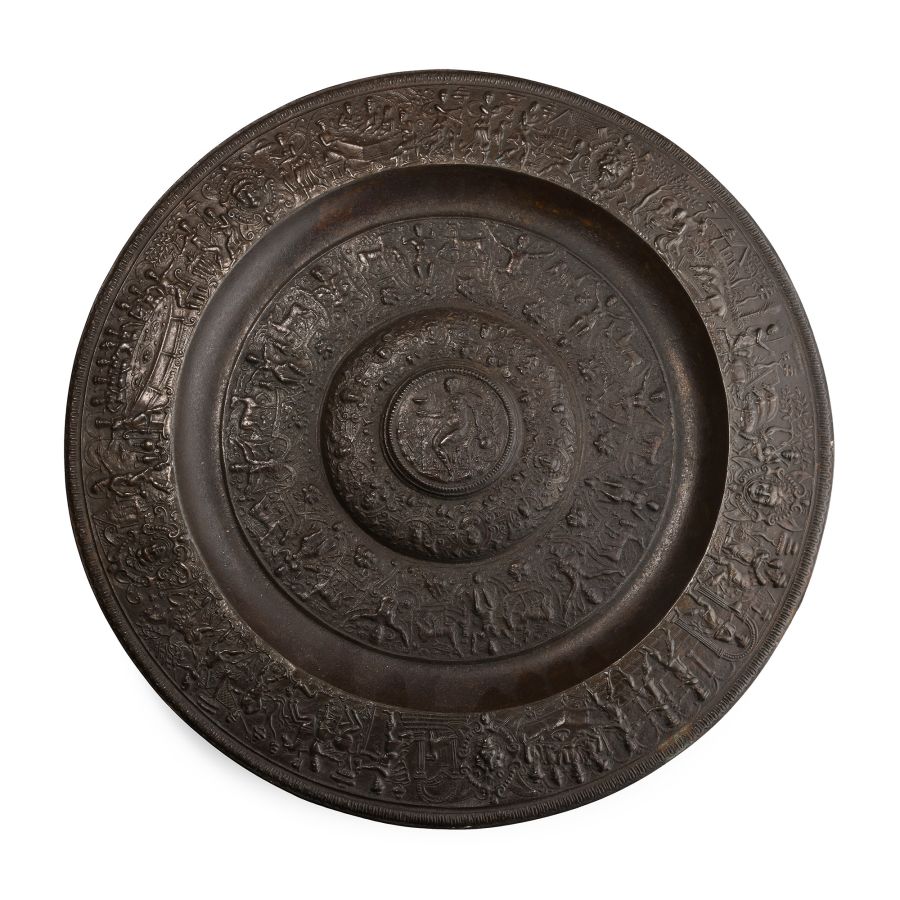
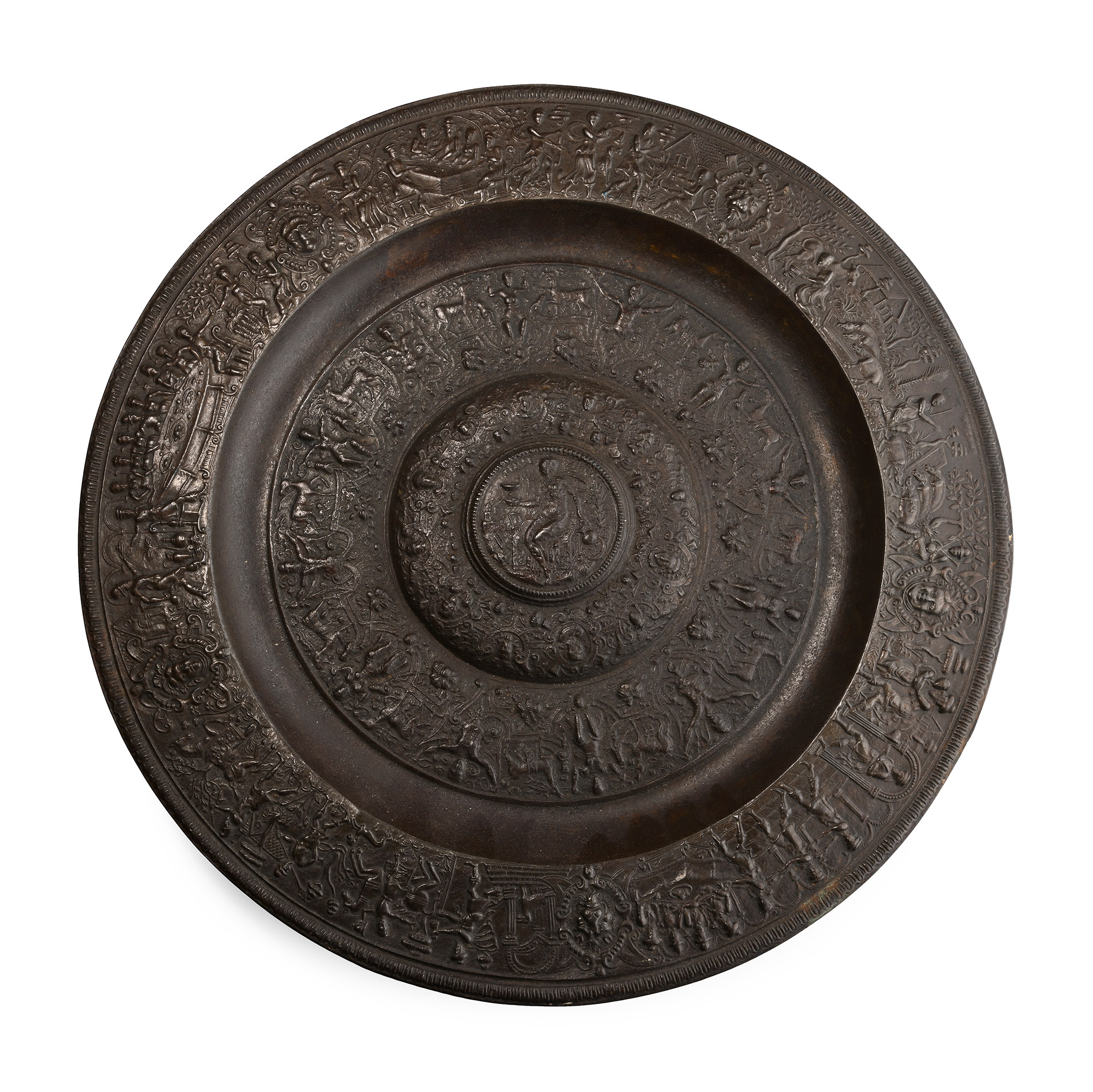
Bronze Replica of 'Venus Rosewater Dish' Platter
20TH CENTURY A.D.
15 1/4 in. (2.17 kg, 38.6 cm).
Copying the original 'Temperantia' made by Francois Briot in the 16th century, showing scenes of classical mythology and having a large central medallion with Sophrosyne; three mounting lugs on the reverse. [No Reserve]
ProvenanceFrom a private Tyneside collection, formed since the early 2000s.
CONDITIONTimeLine Auctions follows a vetting process to ensure the authenticity and legality of all items, reinforcing our commitment to integrity and responsible trading. Each antiquity, antique, and coin lot undergoes thorough examination by a vetting committee of at least ten external specialists, professional trade association members, scientists, and archaeologists: Our Vetting Process
AUCTIONS:
TimeLine is a leading auction house specialising in antiquities, ancient art, collectables, natural history, coins, medals, and books. Our auctions offer museums, collectors, historians, and enthusiasts the opportunity to acquire unique and historically significant pieces.
-
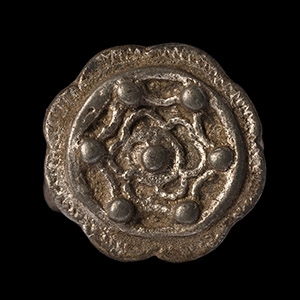
Georgian Period Silver Ring with Floral Design
Circa 18th century A.D.Estimate: £100 - 140 (+bp*)
Opening Bid: £50
With lateral spurs and stepped shoulders, the bezel an octofoil with raised hexafoil motif and pellets. 11.08 grams, 25.60 mm overall, 19.72 mm internal diameter (approximate size British Q, USA 8, Europe 17.49, Japan 16)
Acquired on the London art market in the late 1980s-1990s. From the family collection of an East London, UK, gentleman. -
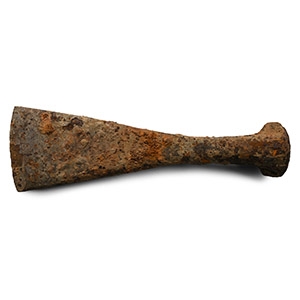
The Royal Navy's First Invincible Shipwreck Iron Caulking Tool
1758 A.D.Sold for (Inc. bp): £143
Comprising a triangular splayed blade with chiselled edge, columnar shank and broad striking face above. 347 grams, 17 cm
From the private collection of author and historian Dr DeWitt Bailey, one of the global authorities on the confederate army in the US civil war; thence by descent to his grandson. -
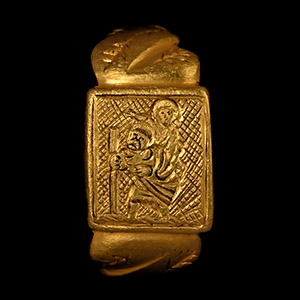
Medieval Style Gold Ring with Saint Christopher
19th-20th century A.D.Sold for (Inc. bp): £1,690
The hoop formed as a barleytwist band with incised frond detailing; rectangular bezel with frame enclosing a hatch field with reserved image of St Christopher bearing the infant Jesus, supporting himself with a staff. 7.50 grams, 22.05 mm overall, 19.41 mm internal diameter (approximate size British P, USA 7 1/2, Europe 16.23, Japan 15)
Acquired on the UK art market. Property of a Suffolk, UK, gentleman.
