
Loading, please wait...

LOT 0992
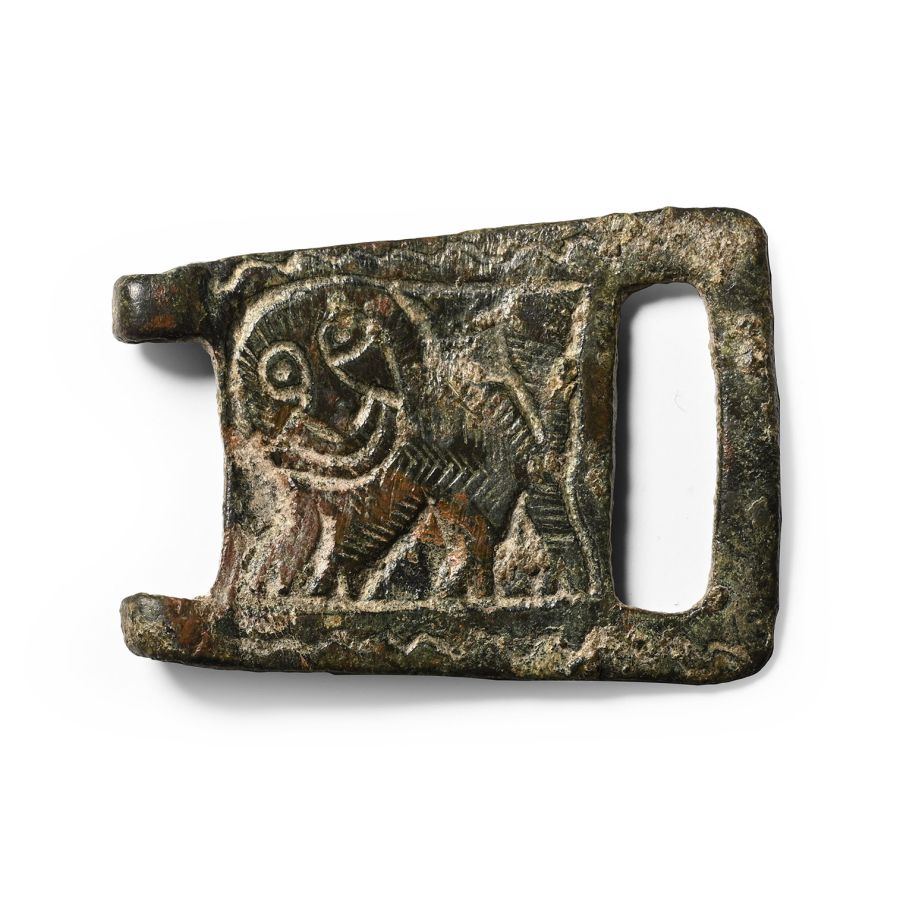
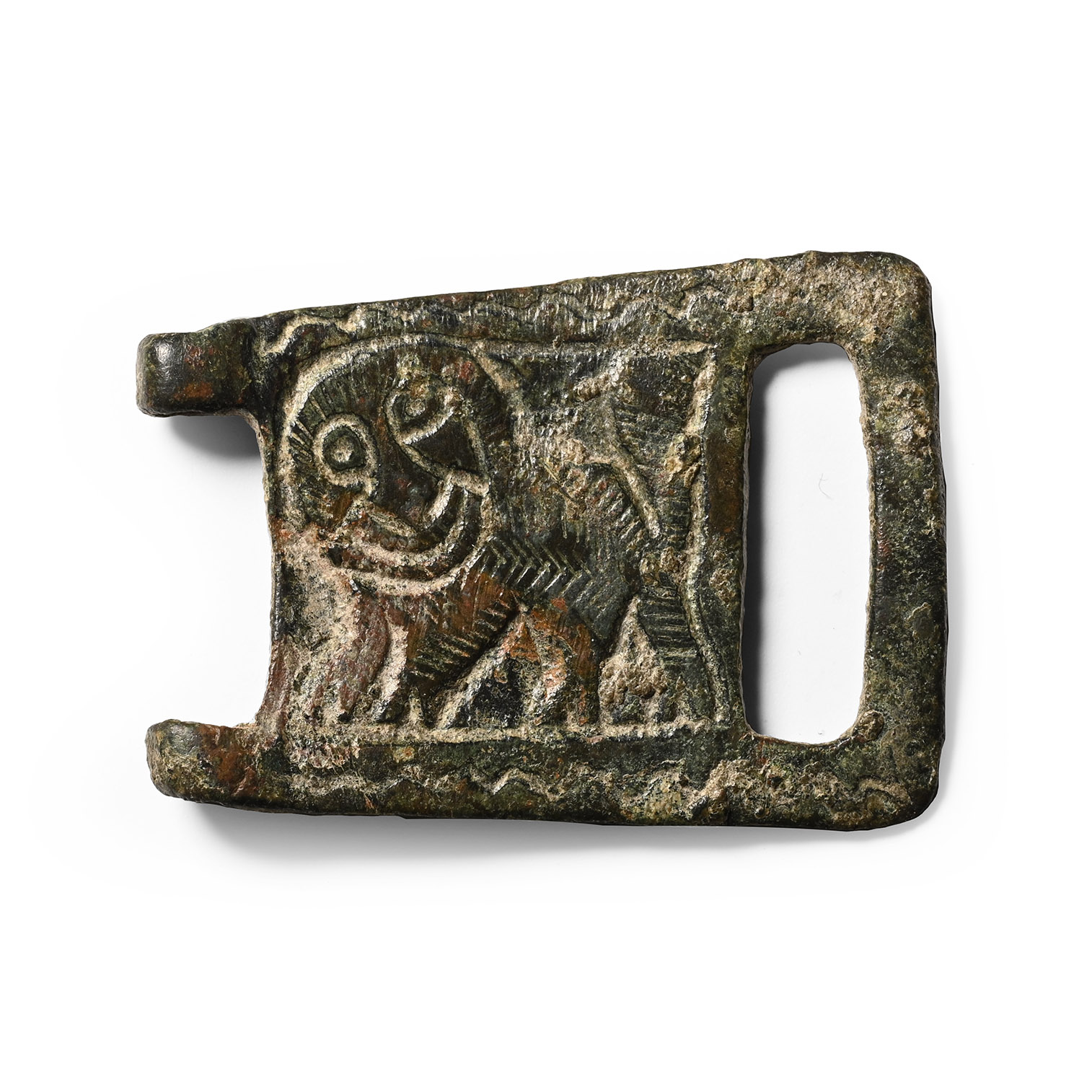
Bronze Plaque with Lion
6TH-8TH CENTURY A.D.
1 5/8 in. (11.7 grams, 40 mm).
Rectangular belt-buckle plaque with hinge knuckles and slotted rear; low-relief panel with advancing lion motif. [No Reserve]
ProvenanceEx German art market, 2000s.
Acquired from an EU collector living in London.
From the collection of Surrey, UK, gentleman.
Cf. Wamser, L., Die Welt von Byzanz - Europas Östliches Erbe, München, 2004, item 459, for type.
CONDITIONTimeLine Auctions follows a vetting process to ensure the authenticity and legality of all items, reinforcing our commitment to integrity and responsible trading. Each antiquity, antique, and coin lot undergoes thorough examination by a vetting committee of at least ten external specialists, professional trade association members, scientists, and archaeologists: Our Vetting Process
AUCTIONS:
TimeLine is a leading auction house specialising in antiquities, ancient art, collectables, natural history, coins, medals, and books. Our auctions offer museums, collectors, historians, and enthusiasts the opportunity to acquire unique and historically significant pieces.
-
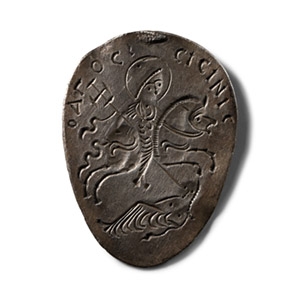
Byzantine Silver Magical Plaque with St. Sisinnius
6th-7th century A.D.Sold for (Inc. bp): £715
Ovoid plaque with incised amuletic ornament; obverse with nimbate horseman bearing a cross potent spearing a supine stylised female figure, Greek legend above 'oΑΓΟC CICINIC' (St. Sisinnius); reverse with advancing lion and Syrian and Greek legend relating to Μαρία η Αιγυπτία (St. Mary of Egypt). 4.13 grams, 31 mm
From the collection of a gentleman, acquired on the London art market in the 1990s.
In Byzantine folklore, St Sisinnius was the supernatural horseman and opponent of the Gelloudes, a class of female witches. -
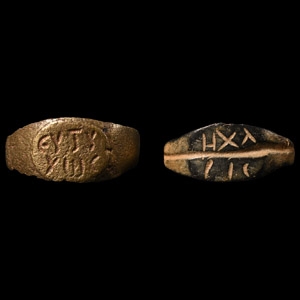
Byzantine Bronze Epigraphic Rings
6th-12th century A.D.Sold for (Inc. bp): £72
Comprising: one with segmented bezel, incised legend 'HXA / IIC'; one with ellipsoid plaque, incised legend 'EYTY / XWC', shank partly absent. 2.03 grams total, 18 mm each
Acquired 1980-2015. Ex Abelita family collection. -
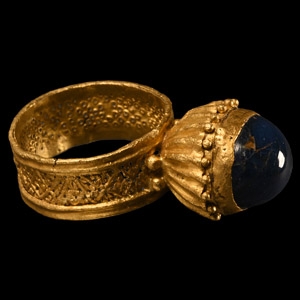
Byzantine Gold Ring with Sapphire
5th-6th century A.D.Sold for (Inc. bp): £1,972
Flat-section hoop displaying geometric pierced work between raised bands, fluted hemispherical bezel adorned with granules and set with possibly a later polished cabochon sapphire. 8.66 grams, 33.78 mm overall, 16.94 mm internal diameter (approximate size British M 1/2, USA 6 1/4, Europe 13.09, Japan 13)
Acquired 1990s-early 2000s. East Anglian private collection. This lot has been checked against the Interpol Database of stolen works of art and is accompanied by search certificate no.201084.
