
Loading, please wait...
LOT 0507
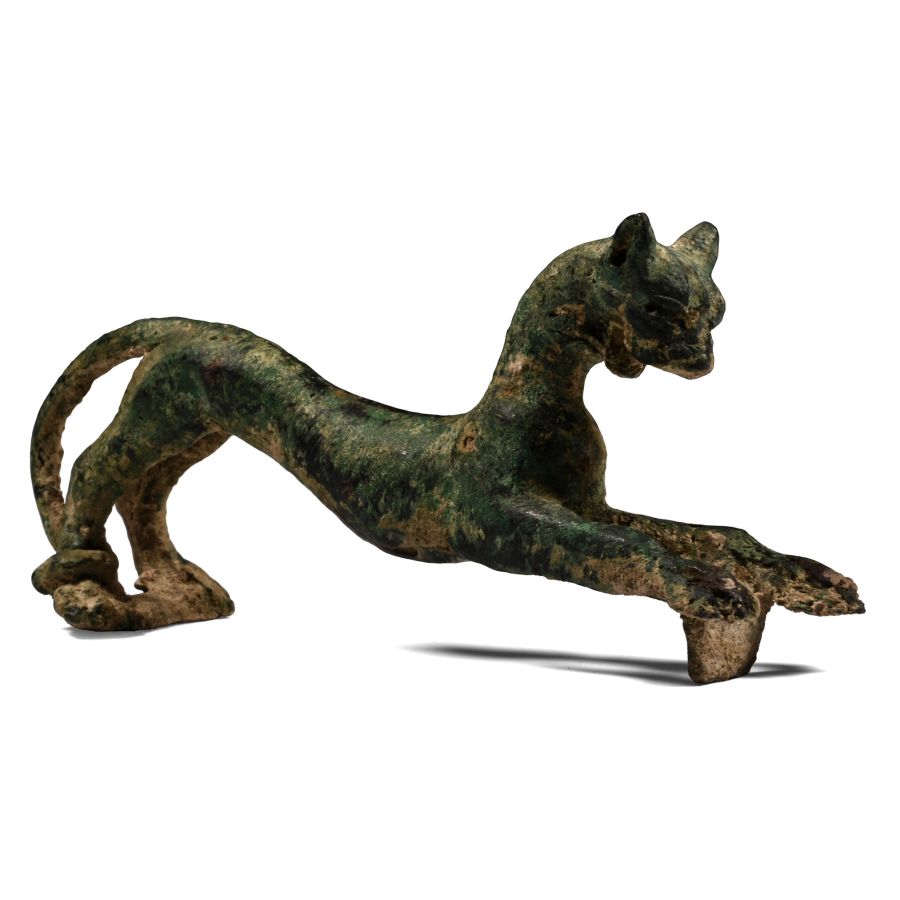
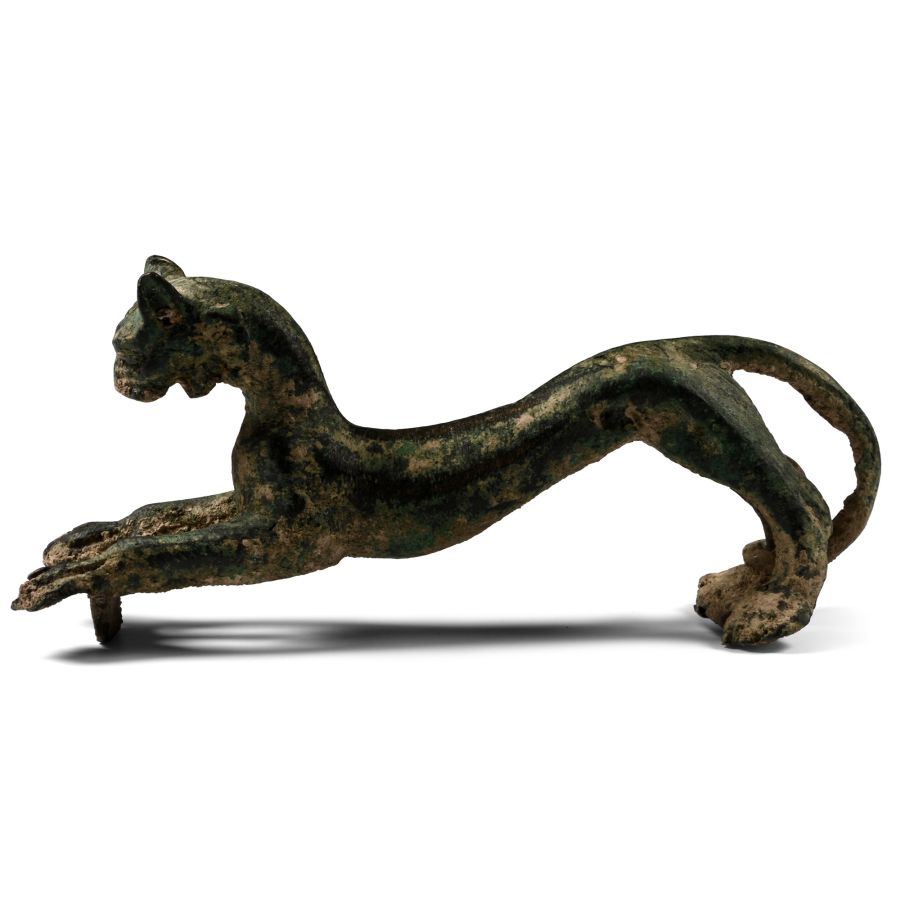
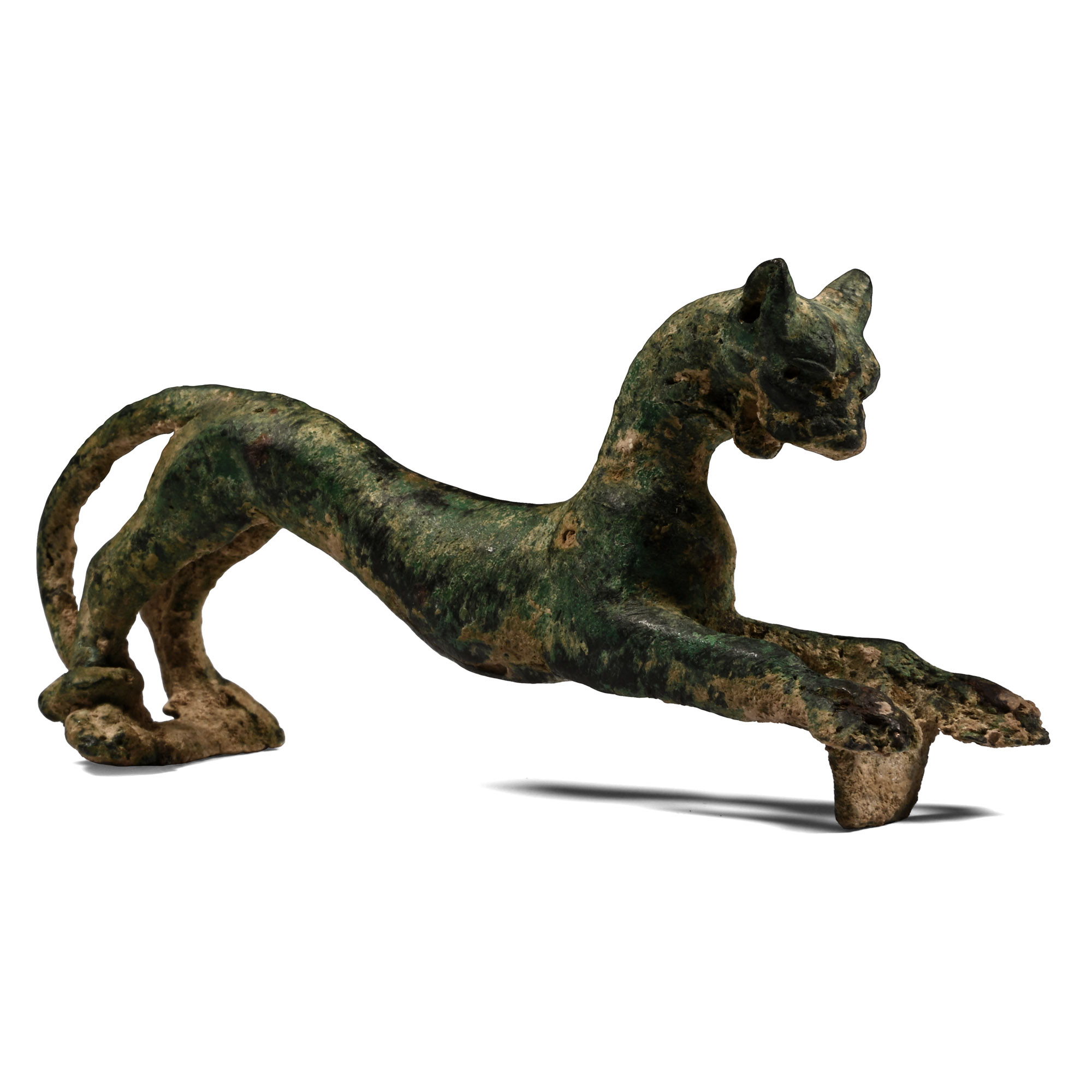
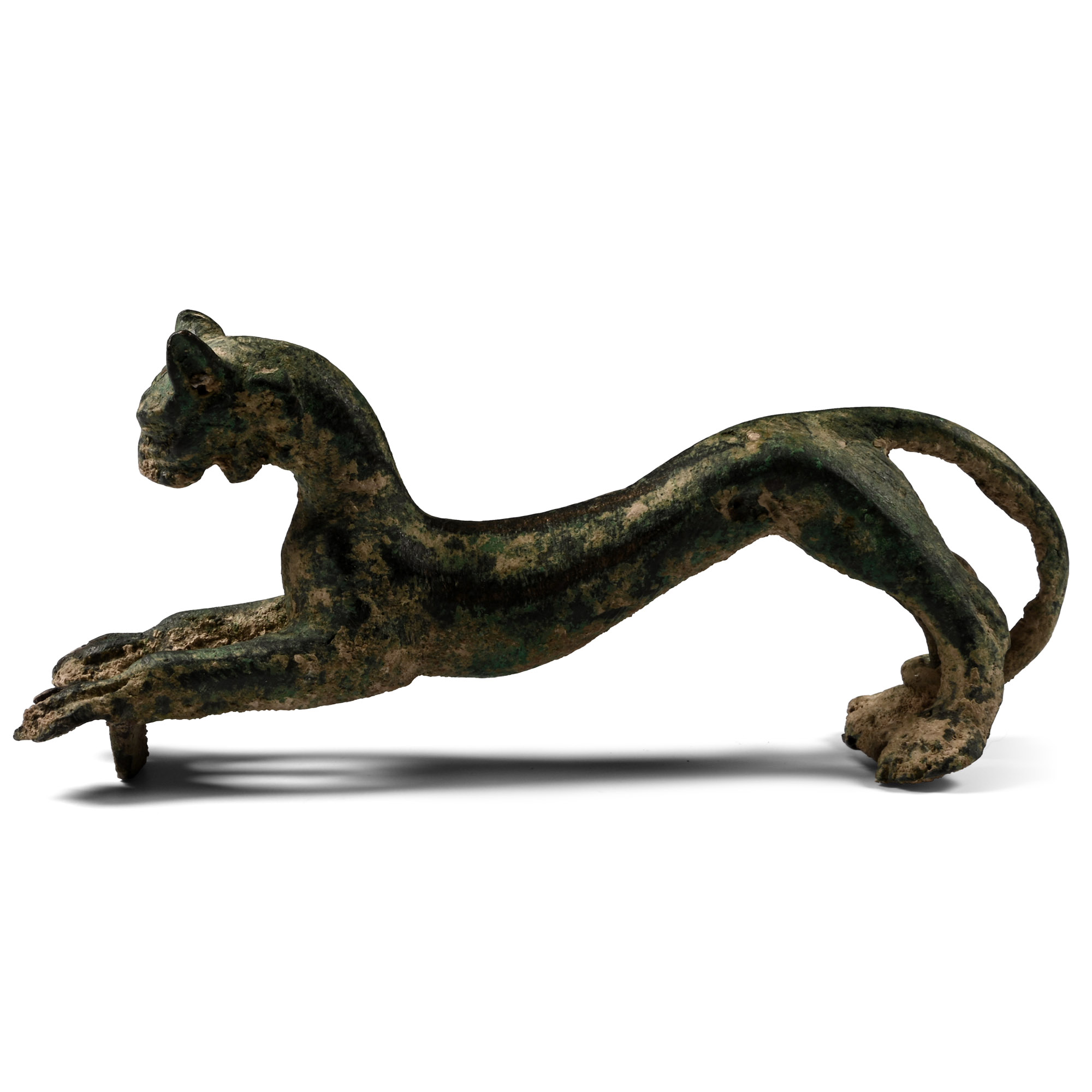
Bronze Handle of a Leaping Panther
2ND-4TH CENTURY A.D.
5 1/2 in. (180 grams, 14 cm).
Roman or Parthian handle modelled in the round in leaping stance with forepaws extended, tail curled between the legs, mouth gaping in a roar; tab and sprue between the forelegs, bar between the hind feet; furniture fitting.
ProvenanceAcquired in the 1980s.
Private collection, Switzerland, thence by descent.
Private collection, since the late 1990s.
This lot has been checked against the Interpol Database of stolen works of art and is accompanied by a search certificate number no.12744-234682.
This lot is accompanied by an illustrated lot declaration signed by the Head of the Antiquities Department, Dr Raffaele D'Amato.
Cf. Tassinari, S., La Vaisselle de Bronze, Romaine et Provinciale, au Musée des Antiquités Nationales, XXIXe supplément de Gallia, Paris, 1975, items 152, 178, for type.
CONDITIONTimeLine Auctions follows a vetting process to ensure the authenticity and legality of all items, reinforcing our commitment to integrity and responsible trading. Each antiquity, antique, and coin lot undergoes thorough examination by a vetting committee of at least ten external specialists, professional trade association members, scientists, and archaeologists: Our Vetting Process
AUCTIONS:
TimeLine is a leading auction house specialising in antiquities, ancient art, collectables, natural history, coins, medals, and books. Our auctions offer museums, collectors, historians, and enthusiasts the opportunity to acquire unique and historically significant pieces.
LOT 0507
Bronze Handle of a Leaping Panther
Estimate £1,000 - 1,400€1,160 - 1,620 (for guidance only)$1,350 - 1,890 (for guidance only)
-
Greek Core-Formed Glass Amphoriskos
5th-3rd century B.C.Estimate: £3,000 - 4,000 (+bp*)
Opening Bid: £1,350
Elongated piriform amphora shape, tubular neck and everted rim, decorated with polychrome festooning and trails, applied amber-green handles and knop foot. 152 grams, 18 cm high
Acquired early 1990s. Ex private American collection; thence by descent. Private collection since 1998. This lot has been checked against the Interpol Database of stolen works of art and is accompanied by search certificate number no.12206-222129. This lot has been cleared against the Art Loss Register database, and is accompanied by an illustrated lot declaration signed by the Head of the Antiquities Department, Dr Raffaele D'Amato. -
Greek Terracotta Head of a Goddess
Circa 4th-3rd century B.C.Sold for (Inc. bp): £208
An attractive head from a statuette of a goddess, thick hair ornately coiffed, lips pouted, and the traces of the artisan’s fingerprints preserved along the neck; mounted on a custom-made display stand. 64 grams total, 10.9 cm high including stand
From the private collection of C.R., Ticino, Switzerland, before 1970. with Galerie Rhéa, Zurich, Switzerland. This lot is accompanied by an illustrated lot declaration signed by the Head of the Antiquities Department, Dr Raffaele D'Amato.
The cults of Demeter and her daughter Persephone (kore) were particularly prominent in Magna Graecia, and likely this is a representation of one of these goddesses. -
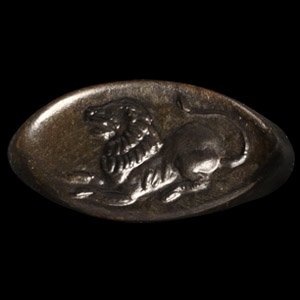
Greek Bronze Seal Ring with Lion
Circa 5th-3rd century B.C.Sold for (Inc. bp): £247
Comprising a D-section hoop with raised bulb to the base, lentoid-shaped bezel with a reclining lion. 5.73 grams, 23.51 mm overall, 20.22 mm internal diameter (approximate size British S 1/2, USA 9 1/4, Europe 20.63, Japan 19)
Ex German art market, 2000s. Acquired from an EU collector living in London. From the collection of a Surrey, UK, gentleman. This lot is accompanied by an illustrated lot declaration signed by the Head of the Antiquities Department, Dr Raffaele D'Amato.
