
Loading, please wait...

LOT 0149
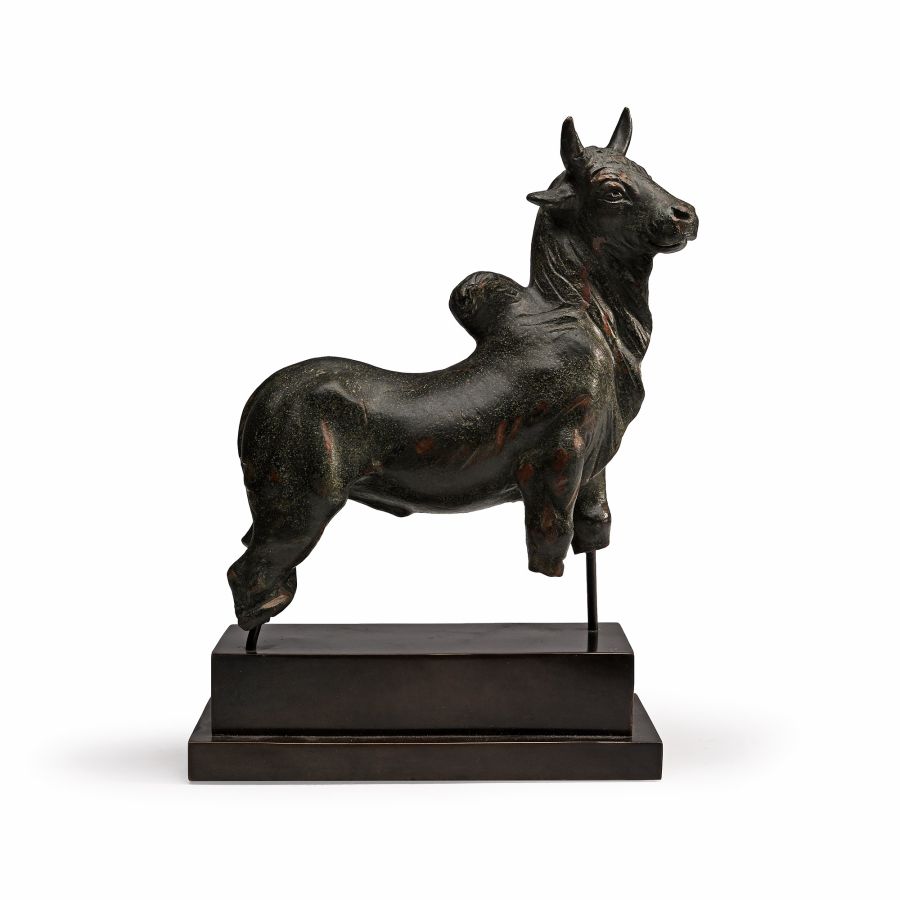
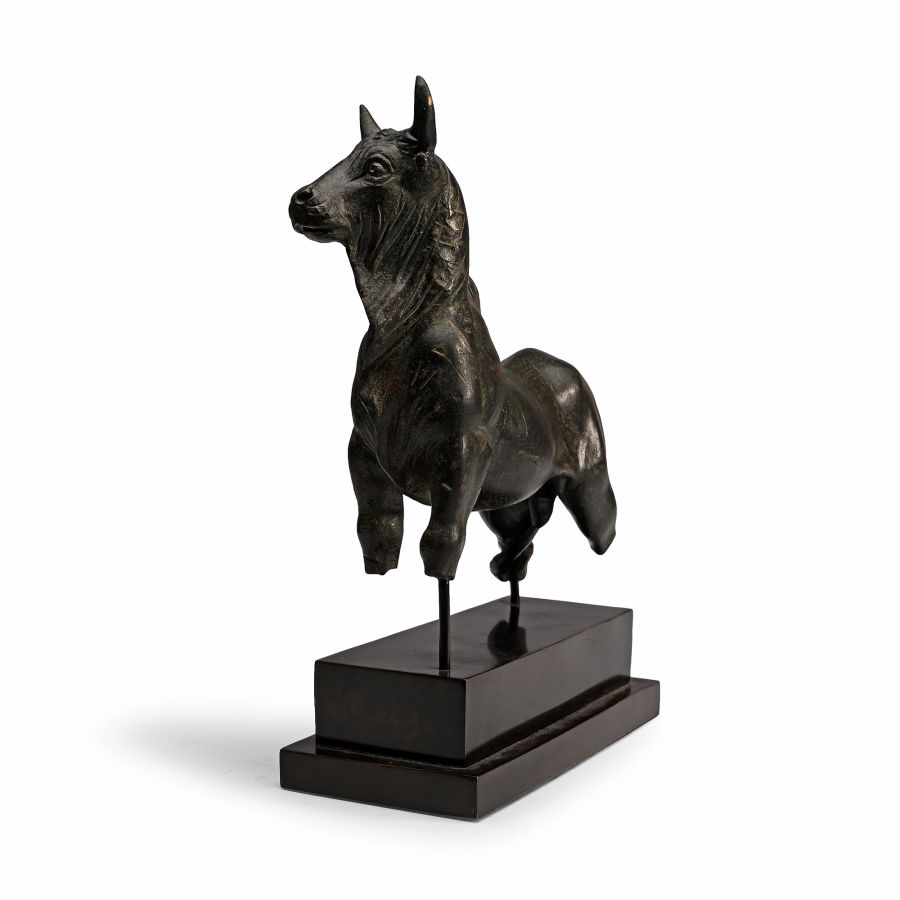
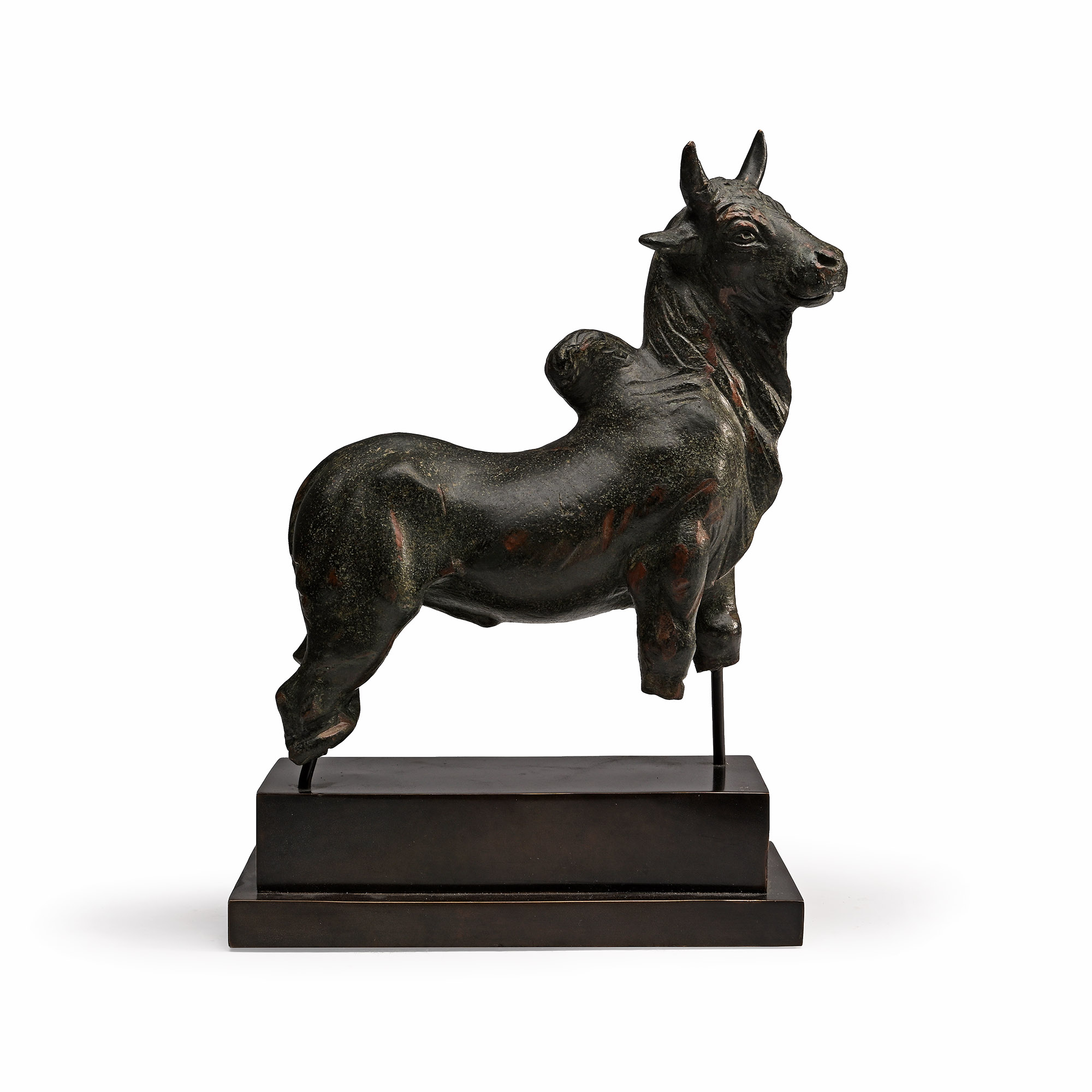
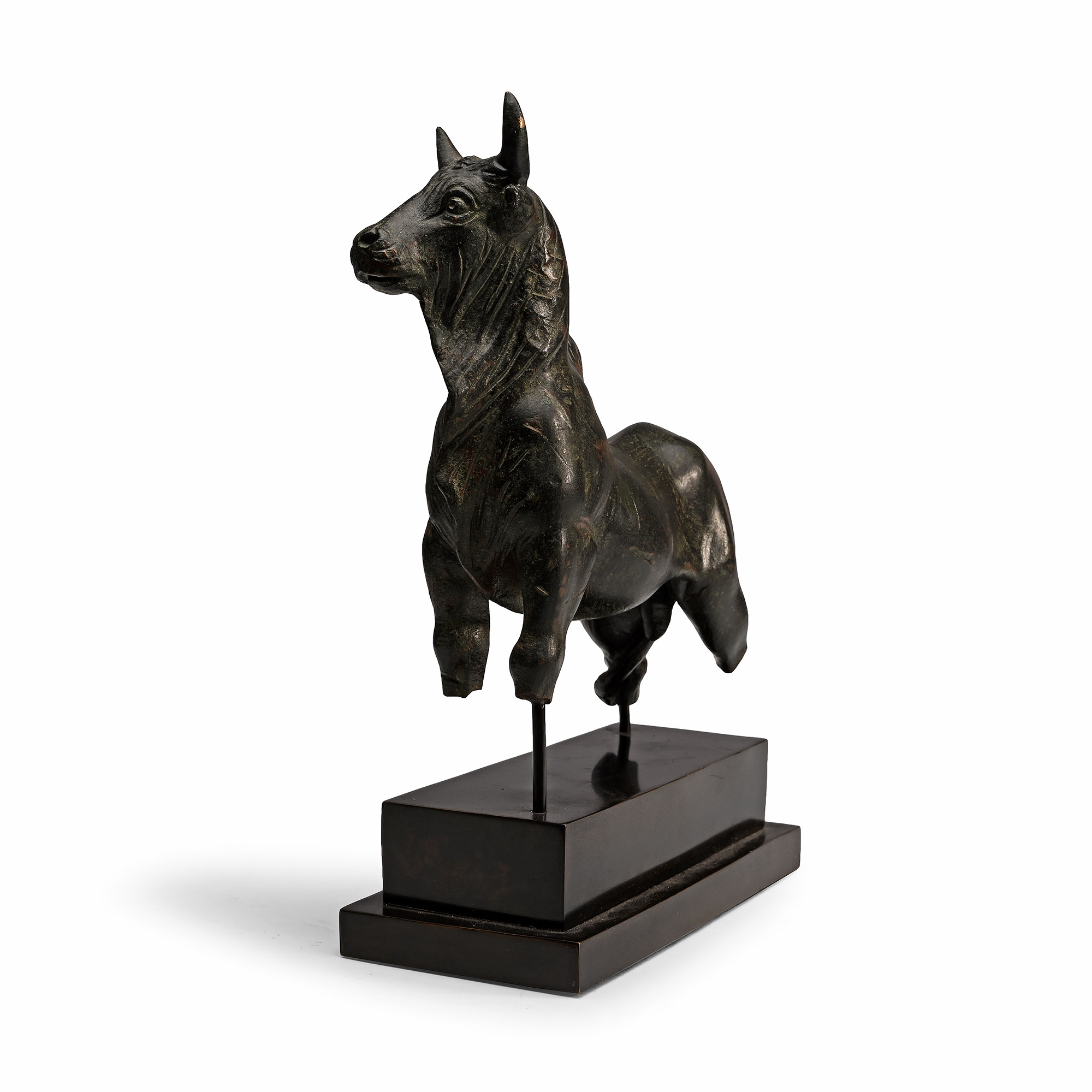
Bronze Figure of a Zebu Bull
ROMAN IMPERIAL PERIOD, 2ND-3RD CENTURY A.D.
7 7/8 in. (2.3 kg total, 20 cm including stand).
Modelled in the round in alert pose with head raised and slightly turned; hair texture to the forehead, neck and shoulders; mounted on a custom-made stand.
ProvenanceArt market, Bavaria, 1990s.
with Christie's, New York, 7 December 2011, no.188.
Accompanied by copies of the relevant Christie's catalogue pages.
Accompanied by a copy of an Art Loss Register certificate, no.S00122050.
This lot has been checked against the Interpol Database of stolen works of art and is accompanied by search certificate number no.12962-245248.
Cf. Rolland, H., Bronzes Antiques de Haute Provence, Paris, 1965, item 242, for type; cf. similar statuette in the Leo Mildenberg collection in Kozloff, A.P., Animals in Ancient Art, from the Leo Mildenberg Collection, Mainz, 1981, no.62; various parallels can be found in the Cincinnati Art Museum (inv.1956.13), in Walters Art Gallery (inv.54.1565) and in the British Museum.
FootnotesAfter the Roman annexation of Egypt, Egyptian cults such as that of the Apis bull were syncretised, becoming part of a distinctively Egyptian form of Roman polytheism. Representations of prancing Apis bulls, turned either left or right, have been found throughout the Roman Empire. However, it is also possible that this beautiful statuette is connected with the cult of Jupiter Dolichenus, where the armed god is usually standing upon a bull.
CONDITIONTimeLine Auctions follows a vetting process to ensure the authenticity and legality of all items, reinforcing our commitment to integrity and responsible trading. Each antiquity, antique, and coin lot undergoes thorough examination by a vetting committee of at least ten external specialists, professional trade association members, scientists, and archaeologists: Our Vetting Process
AUCTIONS:
TimeLine is a leading auction house specialising in antiquities, ancient art, collectables, natural history, coins, medals, and books. Our auctions offer museums, collectors, historians, and enthusiasts the opportunity to acquire unique and historically significant pieces.
-
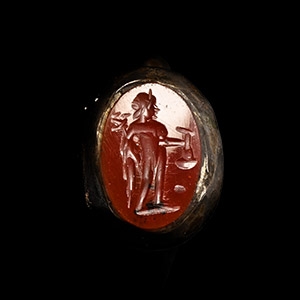
Eastern Roman Mercury Gemstone in Medieval Silver Ring
3rd-11th century A.D.Sold for (Inc. bp): £208
Eastern Roman carnelian cloison with intaglio Mercury standing with caduceus and coin-purse; in a medieval round-section hoop with scooped shoulders, tall hollow-formed facetted bezel with carinated rim; supplied with a museum-quality impression. 5.72 grams, 30.64 mm overall, 16.55 x 14.39 mm internal diameter (approximate size British G, USA 3 1/4, Europe 4.92, Japan 4)
Ex property of a North London lady; gifted from her father's collection; formerly with a Mayfair gallery, London, UK; previously acquired in the 1980s. -
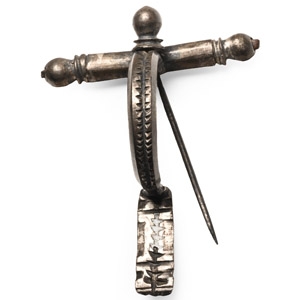
Roman Silver Crossbow Brooch
Circa 4th century A.D.Sold for (Inc. bp): £208
With barrel-shaped knops with collar beneath to the ends of the headplate and medially along the top edge; deep trapezoidal-section bow with median gusset and notch detailing; D-section footplate with chamfered sides open to one edge, its upper face of the bow with notched detailing; hinged pin to reverse. 15.3 grams, 54 mm
From a private Tyneside collection, formed since the early 2000s. -
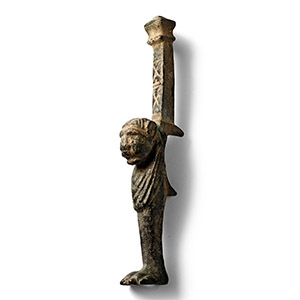
Roman Bronze Tray Leg with Lion
1st-4th century A.D.Sold for (Inc. bp): £91
Comprising: square-section shank with tapering finial and lug, incised geometric ornament; C-shaped socket with lion-mask to the outer face, lion's leg and claw at the base. 54 grams, 97 mm
Found Gloucestershire, UK.
