
Loading, please wait...
LOT 0035
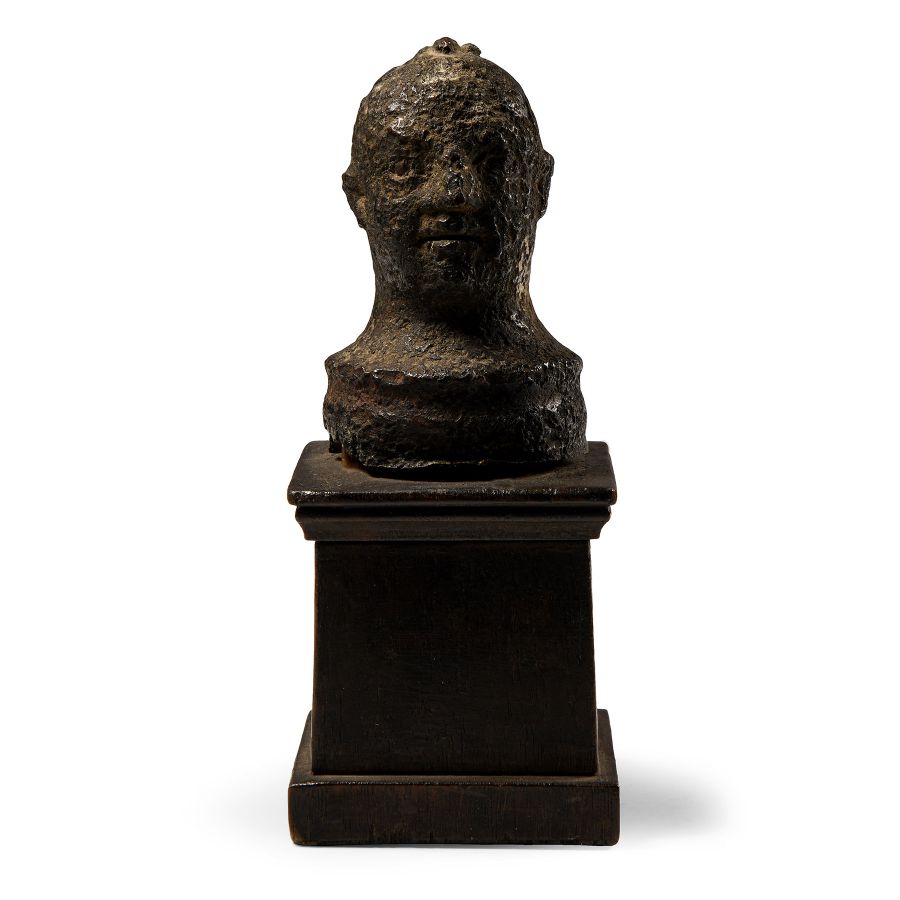
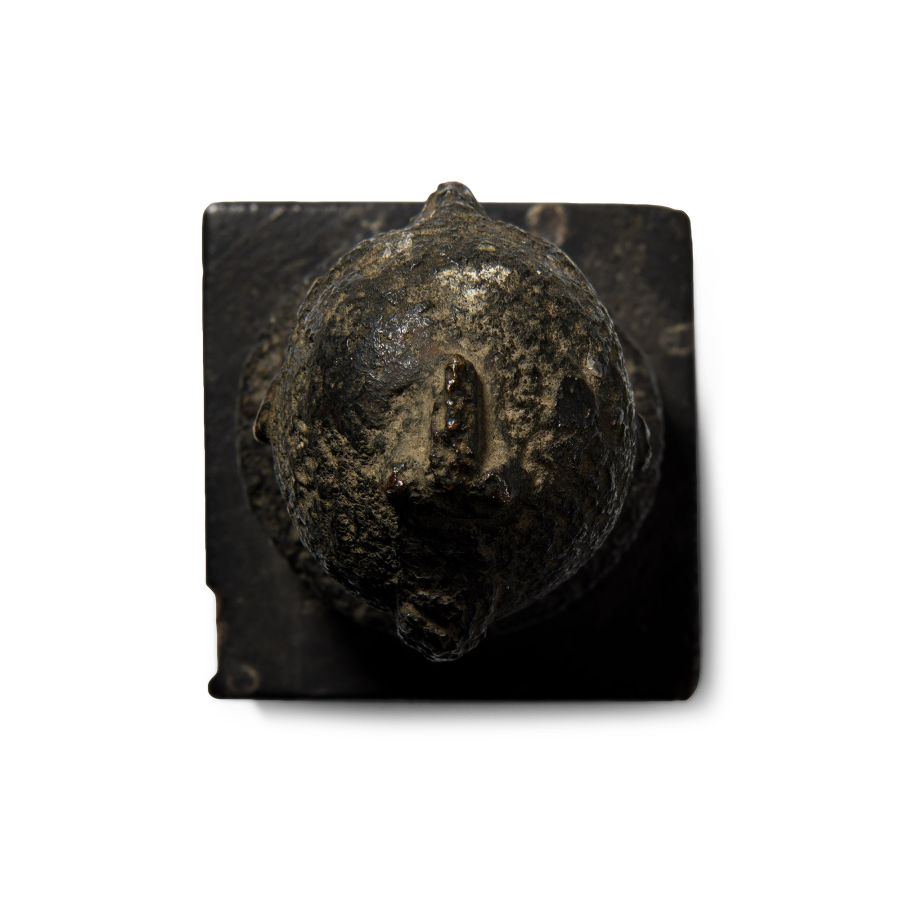
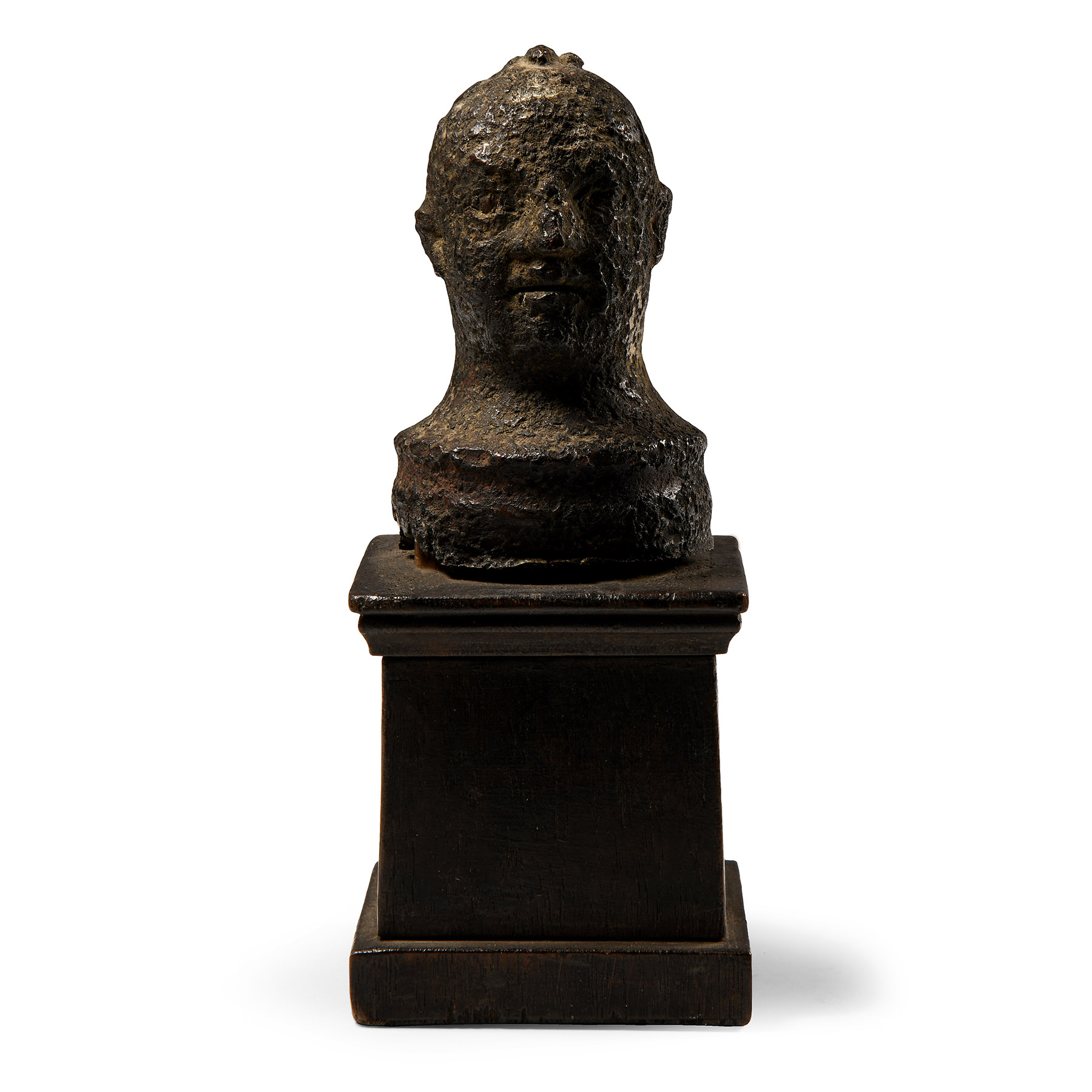
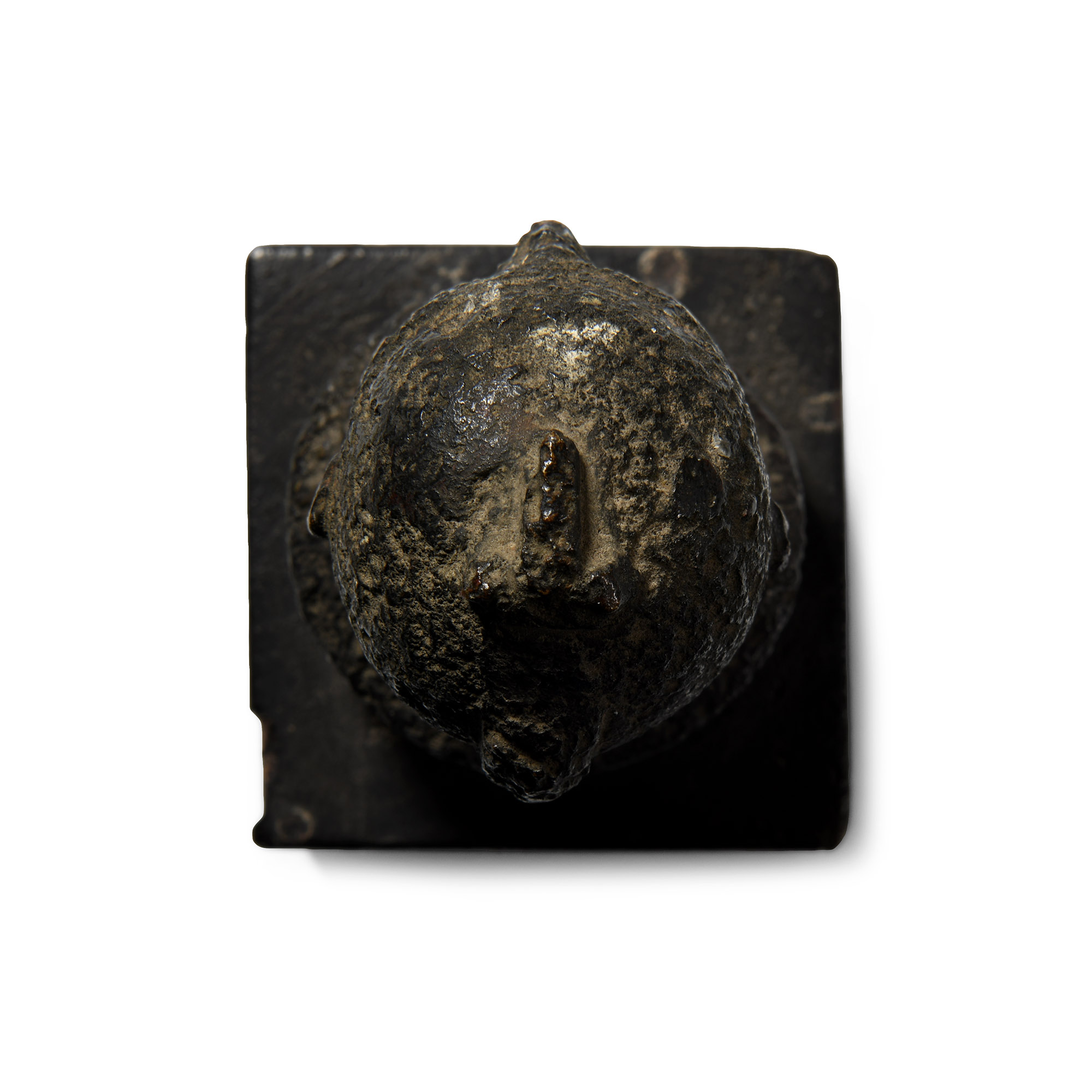
Bronze Bust with Phallus
ROMAN, 1ST-2ND CENTURY A.D.
5 3/4 in. (377 grams total, 14.5 cm including stand).
Modelled as a grotesque male head, depicted clean-shaven and hairless apart from a small tuft of hair to the rear with a raised phallus above; the neck developing to a broad circular socket with flange rim; mounted on a custom-made display stand. [No Reserve]
ProvenanceFrom an old Nevers collection, acquired before 1960.
Ex Hotel des Ventes de Nevers.
Property of a French collector.
This lot has been checked against the Interpol Database of stolen works of art and is accompanied by a search certificate number no.12035-214900.
Cf. Esperandieu, E. & Rolland, H., Bronzes Antiques de la Seine Maritime, XIII Supplement a Gallia, Paris, 1959, no.178; Rolland, H., Bronzes Antiques de Haute Provence, Paris, 1965, item 196; see also the Metropolitan Museum of Art, accession no.97.22.6.
FootnotesThe exact meaning of these grotesque busts surmounted by a phallus is disputed, although Rolland (p.106) believes that they originated in Alexandria among the priests of the cult of Isis. Similar busts have been discovered in the Roman Gallia, at Bavay and Strasbourg.
CONDITIONTimeLine Auctions follows a vetting process to ensure the authenticity and legality of all items, reinforcing our commitment to integrity and responsible trading. Each antiquity, antique, and coin lot undergoes thorough examination by a vetting committee of at least ten external specialists, professional trade association members, scientists, and archaeologists: Our Vetting Process
AUCTIONS:
TimeLine is a leading auction house specialising in antiquities, ancient art, collectables, natural history, coins, medals, and books. Our auctions offer museums, collectors, historians, and enthusiasts the opportunity to acquire unique and historically significant pieces.
-
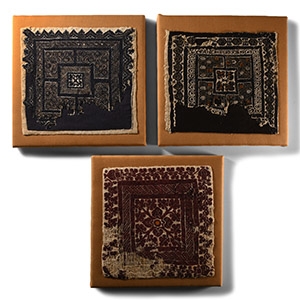
Egyptian Fabric Panel Group
Coptic, 4th century A.D.Sold for (Inc. bp): £130
Comprising: square panel with border of repeated motif of an amphora and vine issuing from the top, guilloche, radiating foliage; similar with guilloche enclosing repeating ring motifs, knotwork band and central radiating fleur-de-lys motifs; similar with concentric bands of roundels and central floret; each mounted on a wooden-framed fabric backing. 1.08 kg total, 25.3 x 25.5 cm each
Acquired from Esther Fitzgerald Rare Textiles, London, UK. Property of a North American gallery. -
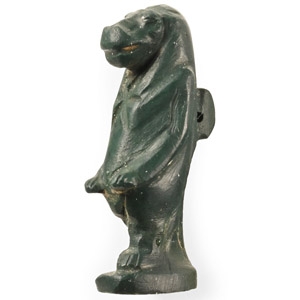
Egyptian Hardstone Tawaret Amulet
Late Period, 664-332 B.C.Sold for (Inc. bp): £442
Modelled in the round as a standing hippopotamus (Tawaret) figure on a rectangular base with loop to the rear. 1.98 grams, 24 mm
From the collection of Doctor Girard, a collector for over 60 years. with Hotel des Ventes de Clermont-Ferrand, 22 May 2017. Property of a French collector.
The goddess Tawaret was a female hippopotamus with the arms and legs of a lion and the back and tail of a crocodile. Despite her fearsome appearance, Tawaret was a household deity and protector of women in childbirth. -
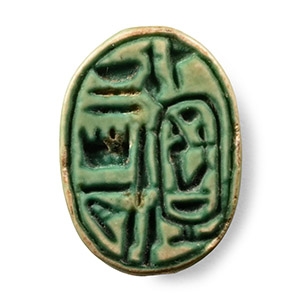
Egyptian Faience Scarab for Amenhotep III
New Kingdom, 18th Dynasty, 1410-1372 B.C.Sold for (Inc. bp): £1,300
Modelled with carapace and mouth details, the underside with hieroglyphic text giving the dedication: 'the good god, lord of the Two Lands, beloved of Amun', with the cartouche containing the throne name of Amenhotep III (Neb-Maat-Re). 2.53 grams, 17 mm
From the collection of Doctor Girard, a collector for over 60 years. with Hotel des Ventes de Clermont-Ferrand, 22 May 2017. Property of a French collector.
