
Loading, please wait...
LOT 0700
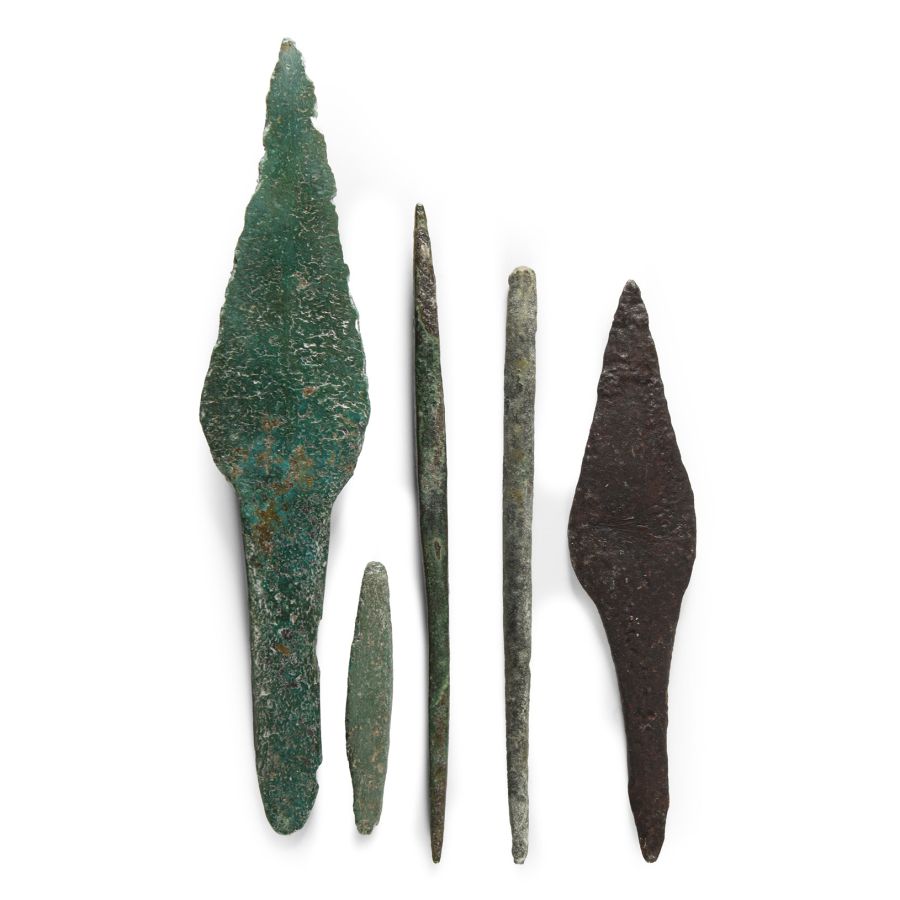
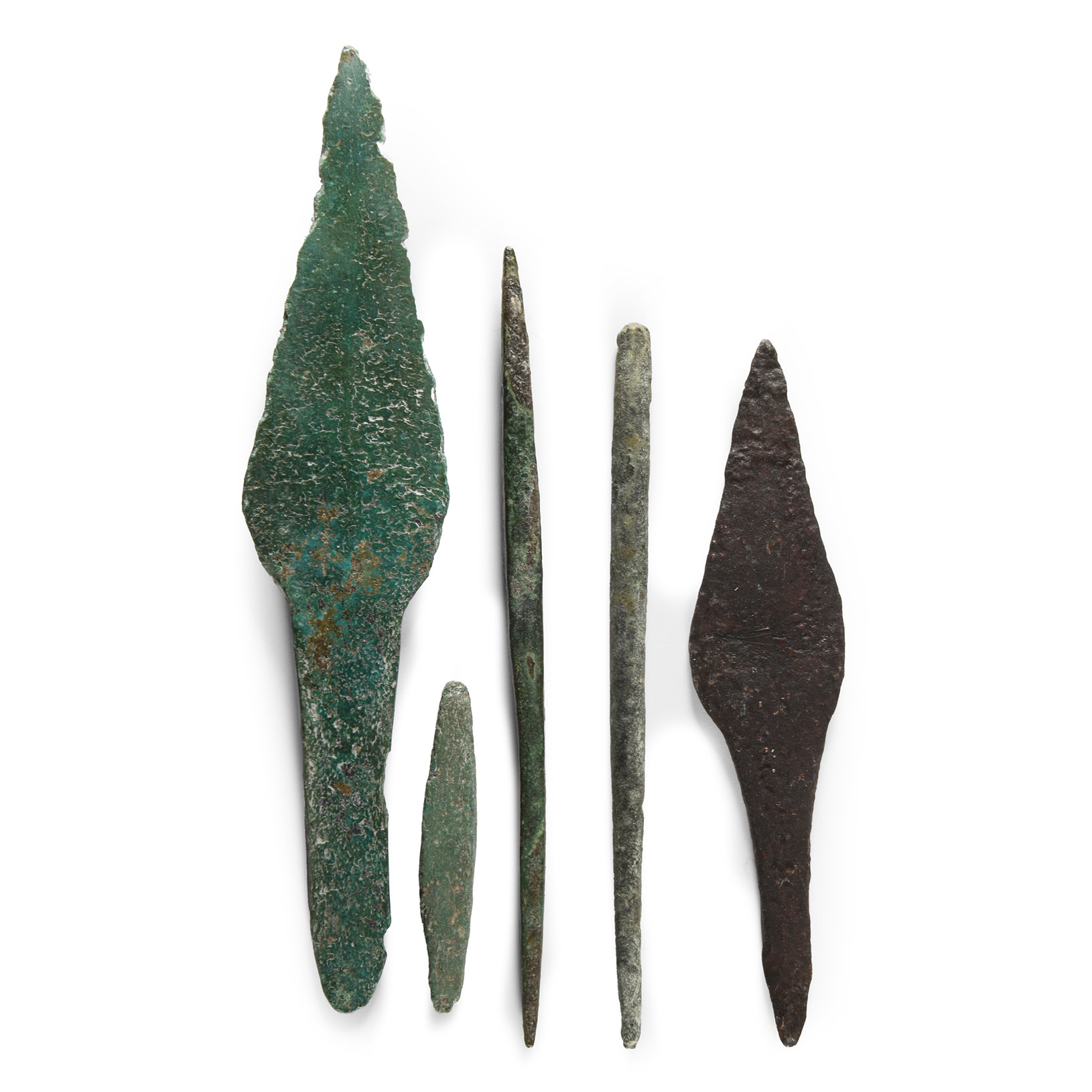
Bronze Age to Roman Bronze Artefact Collection
11TH CENTURY B.C.-3RD CENTURY A.D.
1 3/8 - 4 1/4 in. (45 grams total, 3.6-10.8 cm).
Comprising two arrowheads with foliate head and square-sectioned tang and three awls. [5, No Reserve]
ProvenanceAcquired prior to 2000.
Ex private collection, Cambridgeshire, UK.
Cf. Khorasani, M.M., Arms and Armour from Iran - The Bronze Age to the End of the Qajar Period, Tuebingen, 2006, cat.460, for the arrowheads.
FootnotesThe two arrowheads are similar to specimens found in Luristan. They belong to the type V of the Khorasani classification. The bow was widely used by the Luristan people. The shape of the blade is often flat or ovate in the cross section with lanceolate profile and two cutting edges.
CONDITIONTimeLine Auctions follows a vetting process to ensure the authenticity and legality of all items, reinforcing our commitment to integrity and responsible trading. Each antiquity, antique, and coin lot undergoes thorough examination by a vetting committee of at least ten external specialists, professional trade association members, scientists, and archaeologists: Our Vetting Process
AUCTIONS:
TimeLine is a leading auction house specialising in antiquities, ancient art, collectables, natural history, coins, medals, and books. Our auctions offer museums, collectors, historians, and enthusiasts the opportunity to acquire unique and historically significant pieces.
-
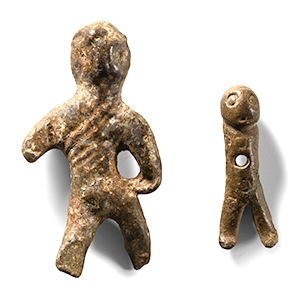
Roman Bronze Statuette Group
2nd century B.C-1st century A.D.Sold for (Inc. bp): £78
Comprising: small figure pierced at the middle wit pellet detailing to face and body, legs spread; figure in active pose with slanting stripes across the body, possibly intended for Hercules; probably votives for deposition at a temple. 42 grams total, 30-47 mm
From a collection acquired on the UK art market from various auction houses and collections mostly before 2000. From an important Cambridgeshire estate; thence by descent. -
.jpg)
Romano-British Bronze Statuette of Venus
Circa 1st-2nd century A.D.Sold for (Inc. bp): £546
The goddess modelled standing nude with her hair dressed in loose hanks at the sides and a transverse braid above the brow; left hand raised to one hank of hair, right hand extended with palm open to accept a patera; provincial workmanship; mounted on a custom-made stand. 235 grams total, 12 cm including stand
By repute found UK. From a collection acquired on the UK art market from various auction houses and collections mostly before 2000. From an important Cambridgeshire estate; thence by descent. -
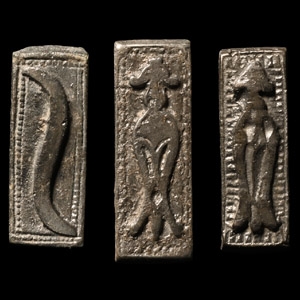
Roman Bronze Military Belt Mount Group
Circa 2nd-3rd century A.D.Sold for (Inc. bp): £85
Group of three rectangular mounts each with a beaded border and low-relief motif. 12.2 grams total, 31-34 mm
Property of the vendor's grandfather, thence by family descent, circa 1985. From the private collection of a New York, USA gentleman.
