
Loading, please wait...
LOT 1748
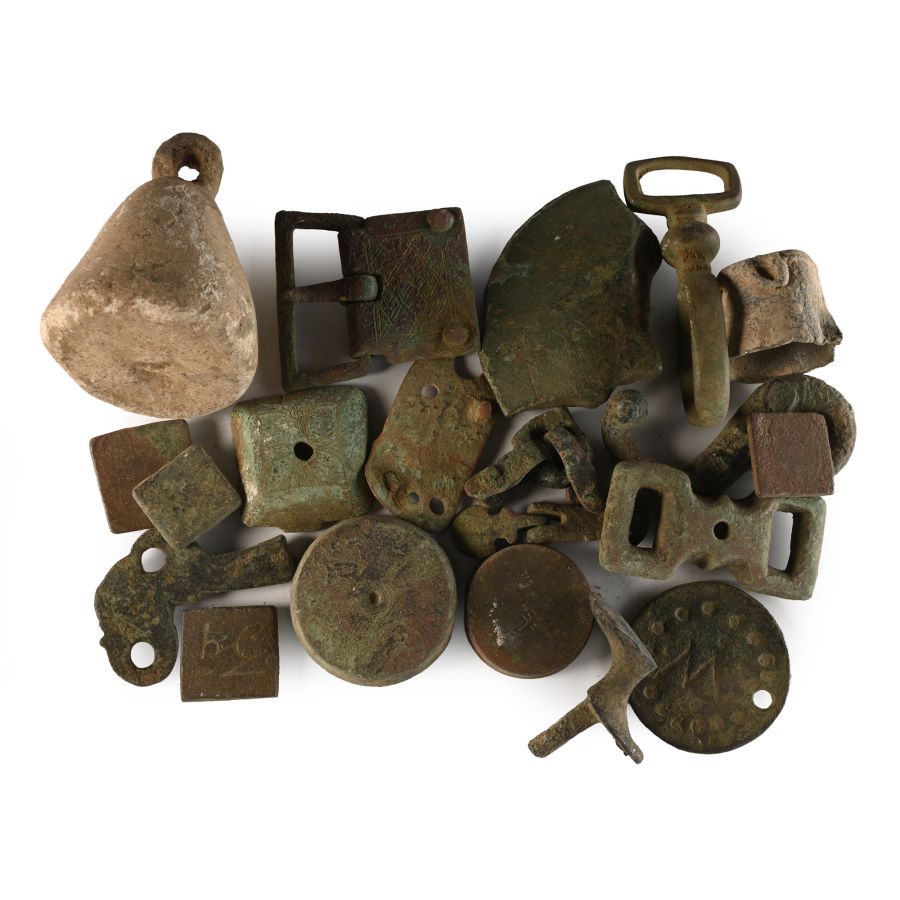
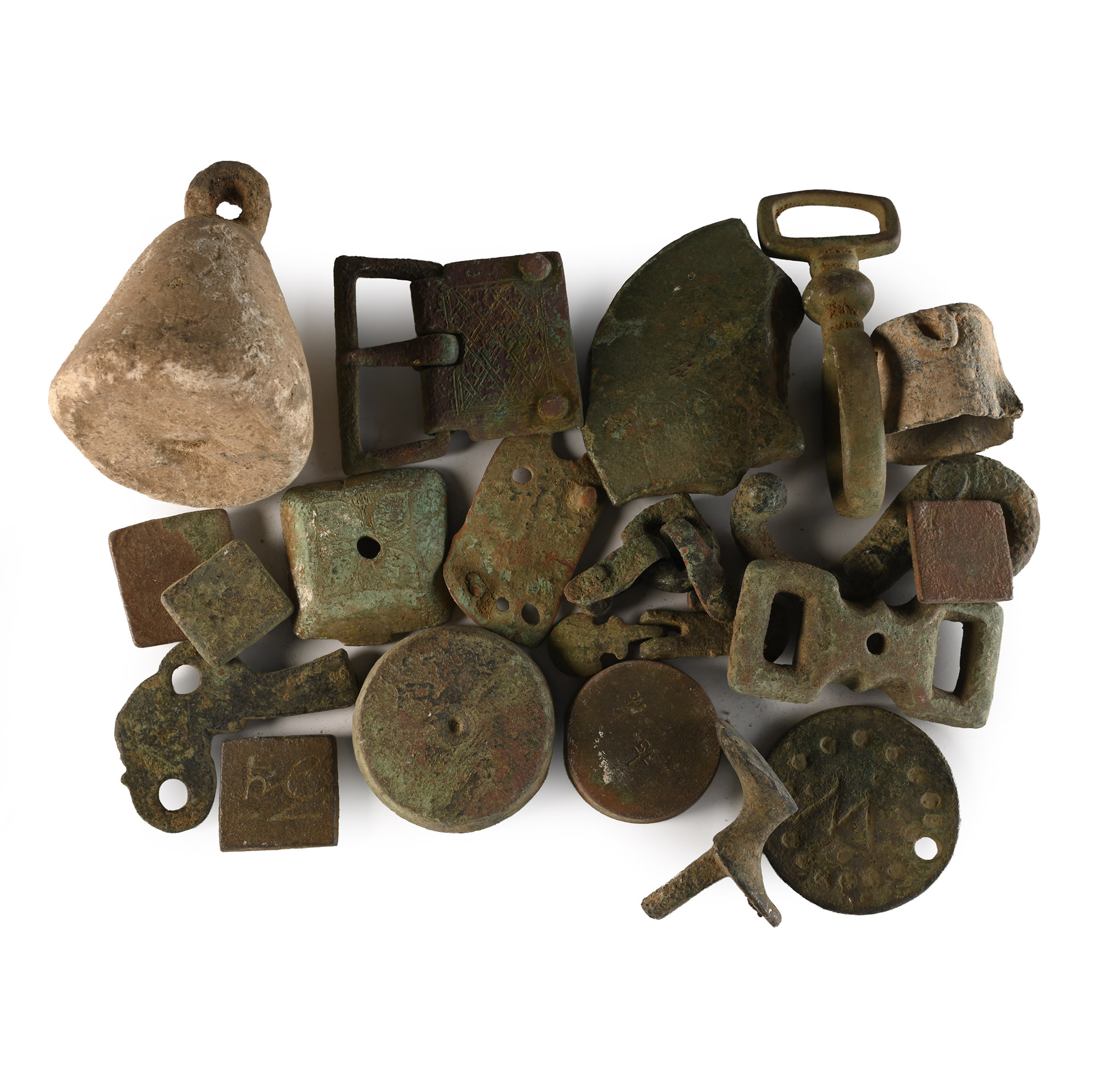
Bronze Age to Post Medieval Artefact Group
1ST MILLENNIUM B.C.-20TH CENTURY A.D.
1/2 - 2 in. (414 grams total, 14-51 mm).
Including lead weight, harness swivel, buckles and other items. [20, No Reserve]
ProvenanceFound Suffolk, UK.
CONDITIONTimeLine Auctions follows a vetting process to ensure the authenticity and legality of all items, reinforcing our commitment to integrity and responsible trading. Each antiquity, antique, and coin lot undergoes thorough examination by a vetting committee of at least ten external specialists, professional trade association members, scientists, and archaeologists: Our Vetting Process
AUCTIONS:
TimeLine is a leading auction house specialising in antiquities, ancient art, collectables, natural history, coins, medals, and books. Our auctions offer museums, collectors, historians, and enthusiasts the opportunity to acquire unique and historically significant pieces.
-
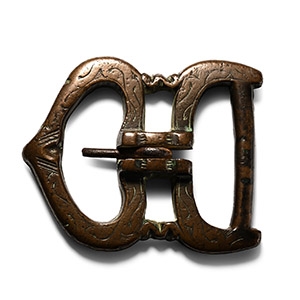
Medieval Bronze Buckle
European, 17th century A.D.Estimate: £100 - 140 (+bp*)
Opening Bid: £50
Pointed outer edge on rounded loop, bifid knop on either end of the strap bar, surface decorated with stylised vegetal ornaments. 253 grams, 95 mm
Private collection, UK.
These buckles usually have one rectangular and one rounded D-shaped loop on either side of the central bar. During the late 16th and 17th centuries the range of asymmetrical buckles becomes very wide. -
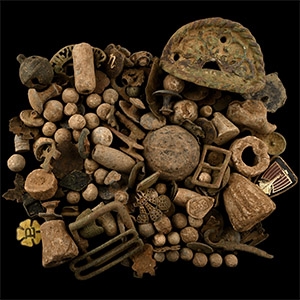
Medieval and Later Artefact Group
14th-20th century AD.Sold for (Inc. bp): £13
Including buttons, pendants, badges, musket and pistol balls, buckles, and other items. 2.23 kg total, 7-87 mm
Found Suffolk, UK. (Uk buyers only, not for export) -
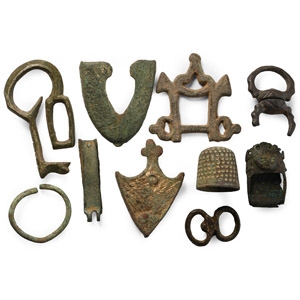
Medieval Bronze Artefact Collection
12th-15th century A.D.Sold for (Inc. bp): £20
Including a thimble, scabbard chape, buckle loop and other items. 90 grams total, 19.5-54 mm
Found Gloucestershire, UK. Acquired from the early 1980s. From the private collection of a late Gloucestershire, UK, gentleman; thence by descent.
