
Loading, please wait...
LOT 1521
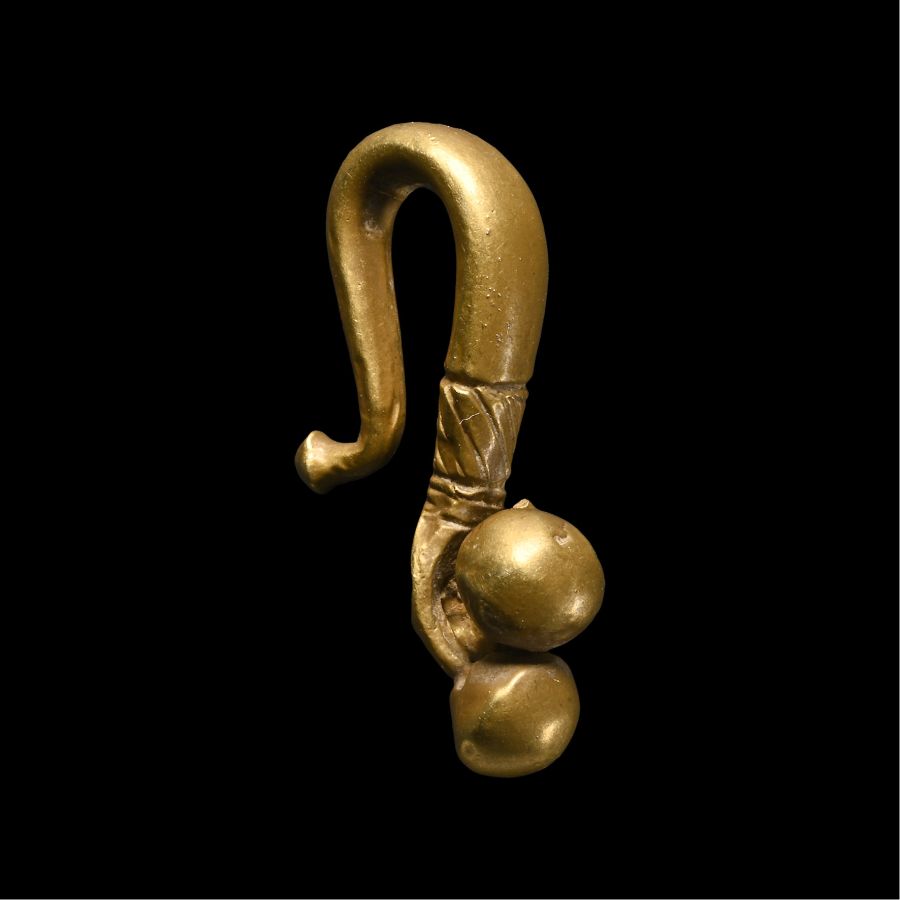
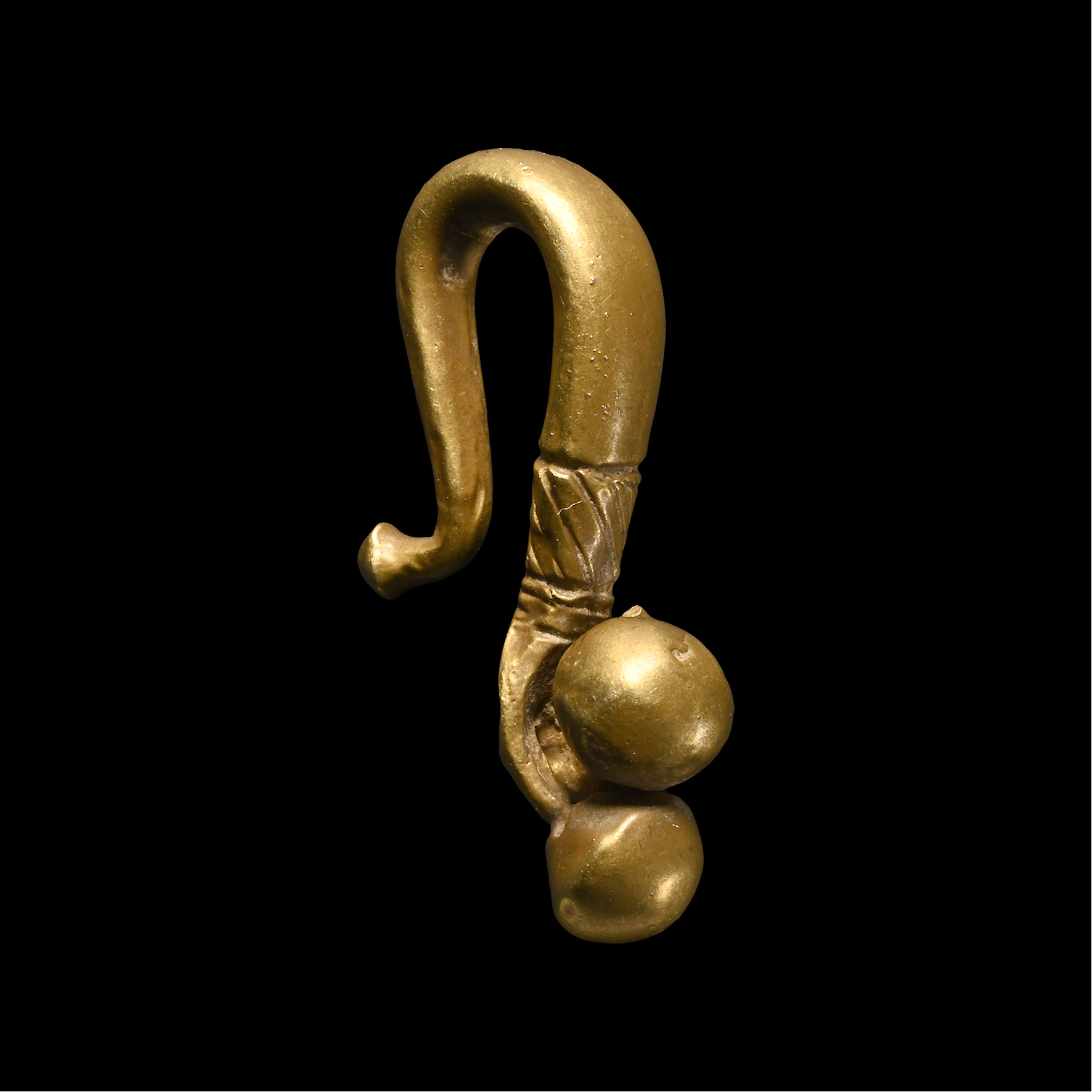
Bronze Age Solid Gold Earring
CIRCA 2ND-1ST MILLENNIUM B.C.
7/8 in. (4.61 grams, 23.90 mm).
S-shaped with fine decoration, the finial formed of two large spheres, incised decoration above.
ProvenanceFrom a late Japanese specialist collector, 1970-2000s.
CONDITIONTimeLine Auctions follows a vetting process to ensure the authenticity and legality of all items, reinforcing our commitment to integrity and responsible trading. Each antiquity, antique, and coin lot undergoes thorough examination by a vetting committee of at least ten external specialists, professional trade association members, scientists, and archaeologists: Our Vetting Process
AUCTIONS:
TimeLine is a leading auction house specialising in antiquities, ancient art, collectables, natural history, coins, medals, and books. Our auctions offer museums, collectors, historians, and enthusiasts the opportunity to acquire unique and historically significant pieces.
LOT 1521
Bronze Age Solid Gold Earring
Estimate £350 - 450€410 - 520 (for guidance only)$470 - 610 (for guidance only)
-
Extremely Large Bronze Age Pin with Knop Finial
Central Europe, circa 8th century B.C.Estimate: £1,000 - 1,400 (‡+bp*)
Opening Bid: £500
Round-section shank with bulb to the upper end with incised chevrons and ribbing, narrow neck, biconvex knop finial with median hatched band. 205 grams, 83 cm
Acquired on the Austrian art market, 2000. European private collection. -
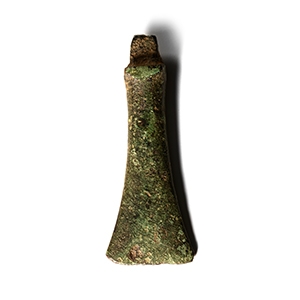
Bronze Age British Tanged Chisel
Circa 3rd century B.C.Sold for (Inc. bp): £26
With a flared blade and long neck; rectangular tang to the rear. 22.2 grams, 57 mm
Found near Oxford, Oxfordshire, UK. Property of a Shropshire private collector. -
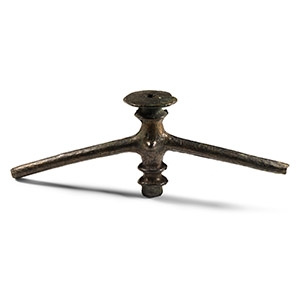
Bronze Age Decorated Sceptre Head
13th-11th century B.C.Sold for (Inc. bp): £650
Composed of a high profiled tubular shaft with two long arms slightly inclining downwards; three collars to the shaft and a flat round disc to one end. 558 grams, 27 cm
Acquired on the Austrian art market, 2000, from Mr N.C. European private collection.
