
Loading, please wait...
LOT 1261
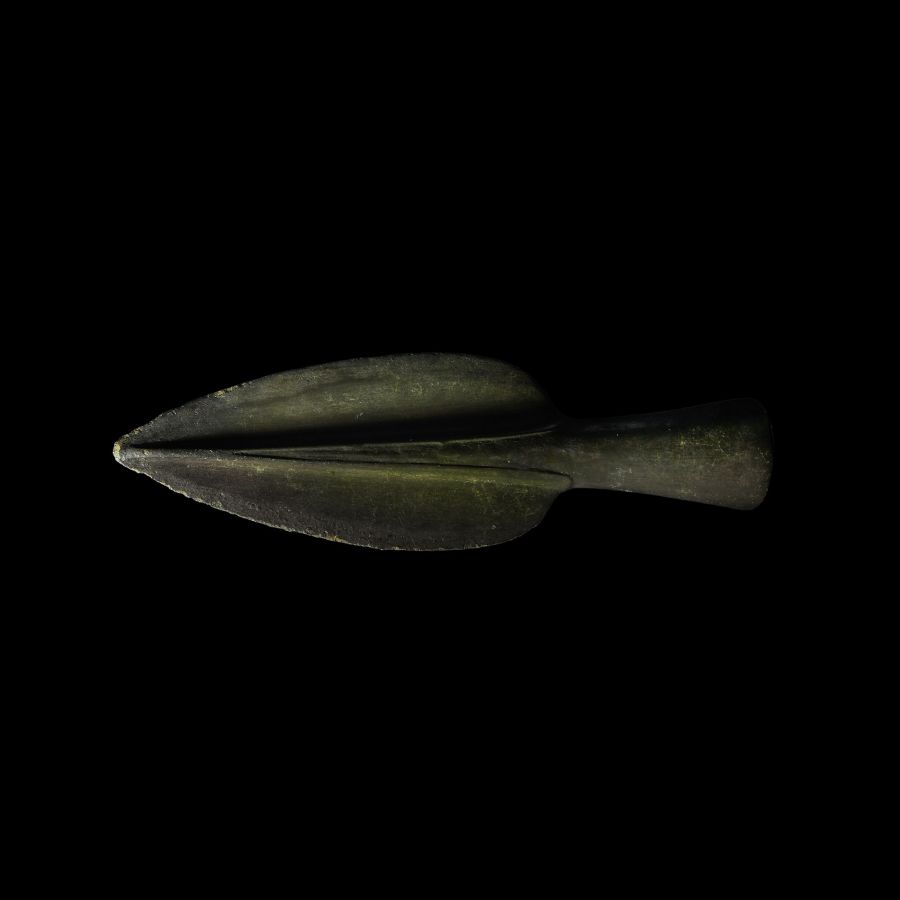
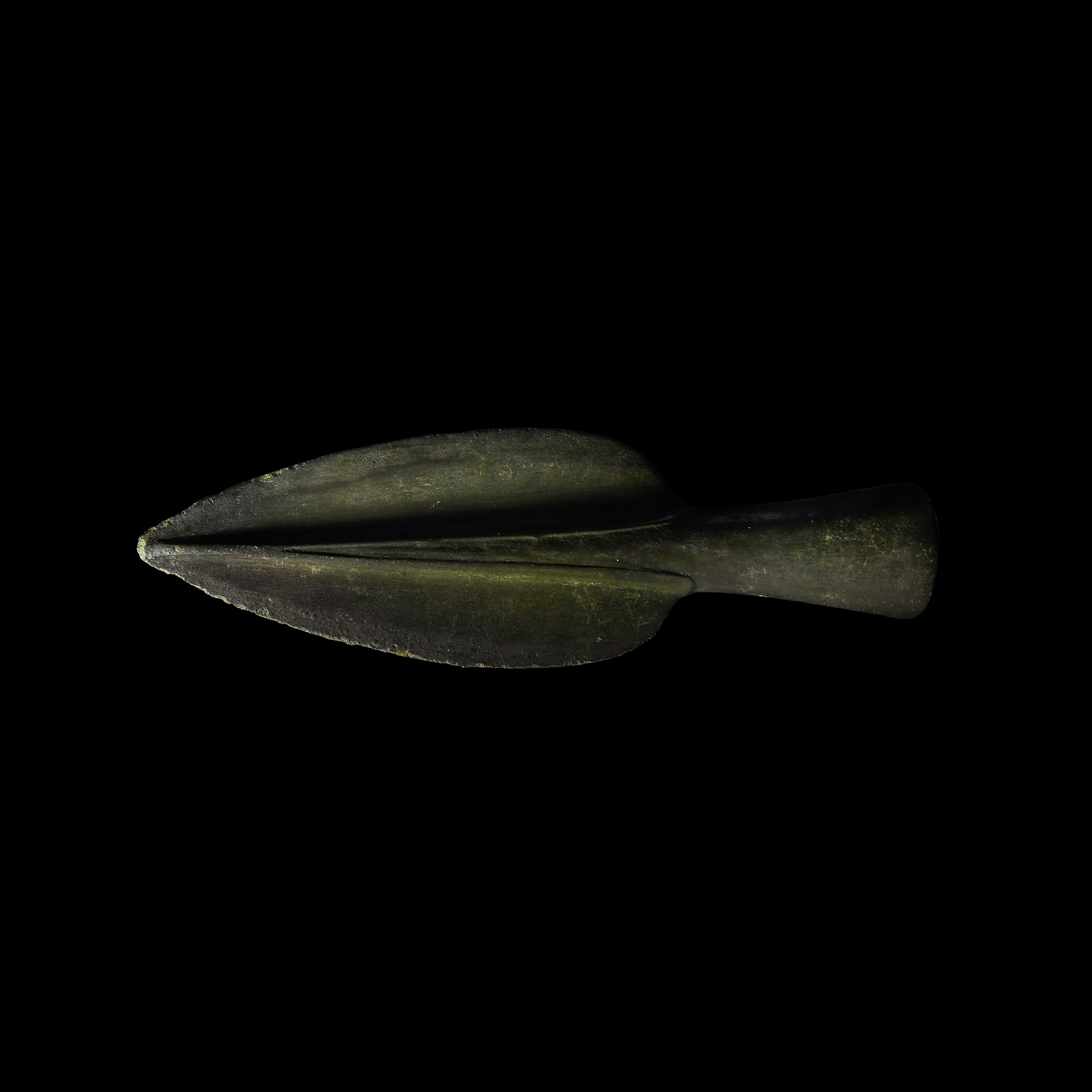
Bronze Age Socketted Spearhead
14TH-12TH CENTURY B.C.
6 in. (147 grams, 15.3 cm).
Lusatian with a broad, pointed-oval blade and a raised central groove with converging ribs.
ProvenancePrivate collection, 1950s.
Ex Gorny and Mosch, Munich, Germany, 18 December 2009, lot 463 (part).
Cf. similar spearheads in Mikołajczyk, A., Collections of the Archaeological and Ethnographical Museum of Łodz, (in Polish) Łodz, 1981, fig.38 p.43; Klochko, V., 'Weapons of the tribes of the Northern Pontic zone in the 16th – 10th centuries B.C.' in Baltic-Pontic Studies, Poznań, 1993, vol.1, figs.9, 10, 26.
FootnotesThe Lusatian Culture (1300-500 BC) is a Late Bronze Age culture, located in the geographic areas of Eastern Germany (Saxony and Brandenburg), Slovakia, Poland, the Baltic countries and the Black Sea area and is characterised by cremation burials. The dead were buried with their personal equipment: men were provided with weapons (comprising sword, dagger, axe, and spearhead) and ornaments (usually a pin or bracelet). At the start of the Middle Bronze Age, several innovations spread quickly and with a lasting effect across central Europe: swords (based on influences from the Danube region) and spears (socketted spearheads) appeared as new weapons, while two-edged razors, tweezers, knives, and sickles were the new tools.
CONDITIONTimeLine Auctions follows a vetting process to ensure the authenticity and legality of all items, reinforcing our commitment to integrity and responsible trading. Each antiquity, antique, and coin lot undergoes thorough examination by a vetting committee of at least ten external specialists, professional trade association members, scientists, and archaeologists: Our Vetting Process
AUCTIONS:
TimeLine is a leading auction house specialising in antiquities, ancient art, collectables, natural history, coins, medals, and books. Our auctions offer museums, collectors, historians, and enthusiasts the opportunity to acquire unique and historically significant pieces.
-
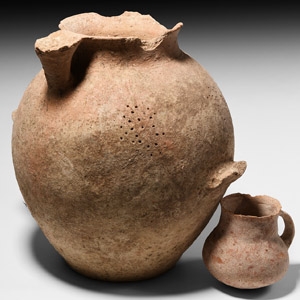
Bronze Age Ceramic Ritual Vessel with Cup
4th-3rd millennium B.C.Sold for (Inc. bp): £520
Comprising: one large ritual vessel with ledge handles to the equator, pointillé ornament on the shoulder, substantial handle with thumb-pad above; a second, smaller vessel with squat body, broad neck and strap handle. 2.65 kg total, 8.7-26 cm high
Fine condition.
Acquired before 1988. From an important deceased family collection by descent. -
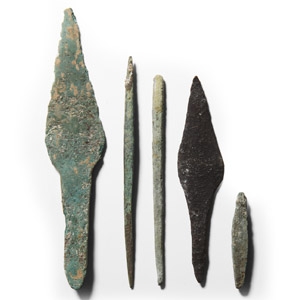
Bronze Age to Roman Bronze Artefact Group
11th century B.C.-3rd century A.D.Sold for (Inc. bp): £46
Comprising two arrowheads with foliate head and square-sectioned tang and three awls. 46 grams total, 3.7-10.8 cm
Ex American collector, acquired 1980-2000. The Kusmirek Collection, UK.
The two arrowheads are similar to specimens found in Luristan. They belong to the type V of the Khorasani classification. The bow was widely used by the Luristan people. The shape of the blade is often flat or ovate in the cross section with lanceolate profile and two cutting edges. -
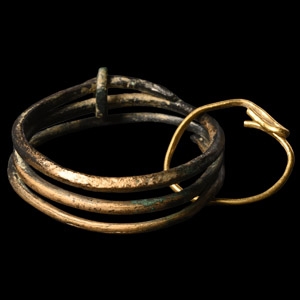
European Bronze Age Finger Ring with Attached Gold Earring
Circa 10th century B.C.Sold for (Inc. bp): £140
Coiled bronze square-section rod with small bronze securing collar, linked gold hoop earring with one returned end. 5.71 grams, 43 mm
Ex German art market 1980s. J.L. collection, Surrey, UK, 1990s.
