
Loading, please wait...
LOT 1601
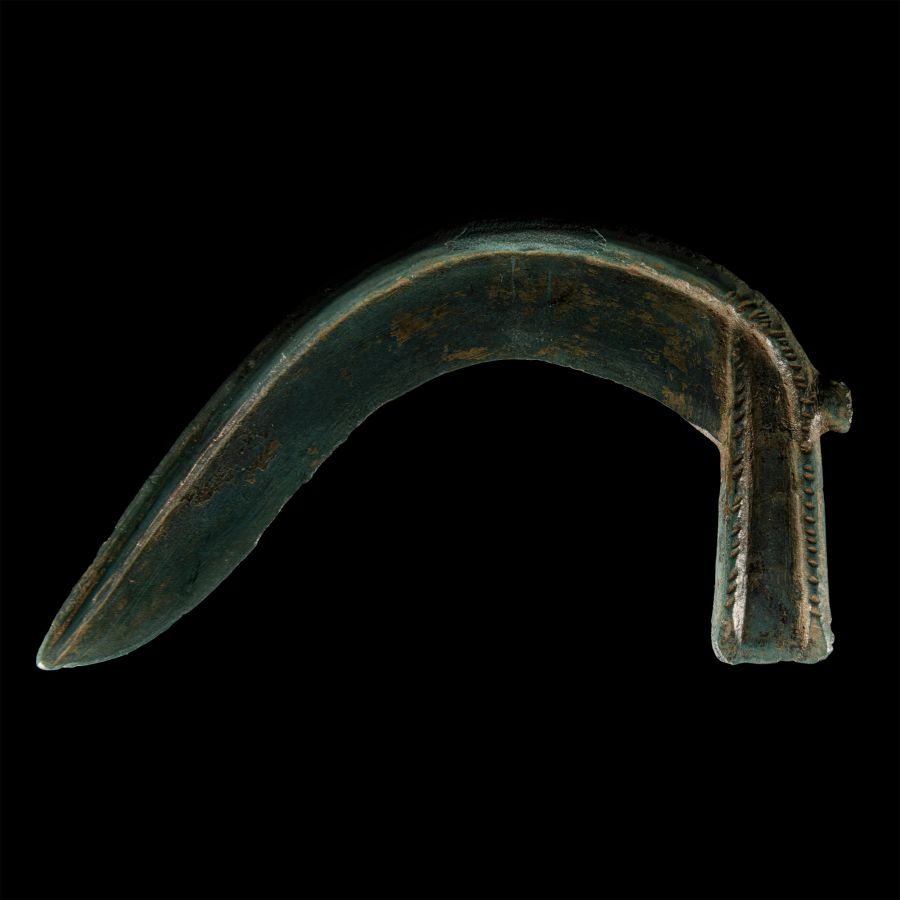
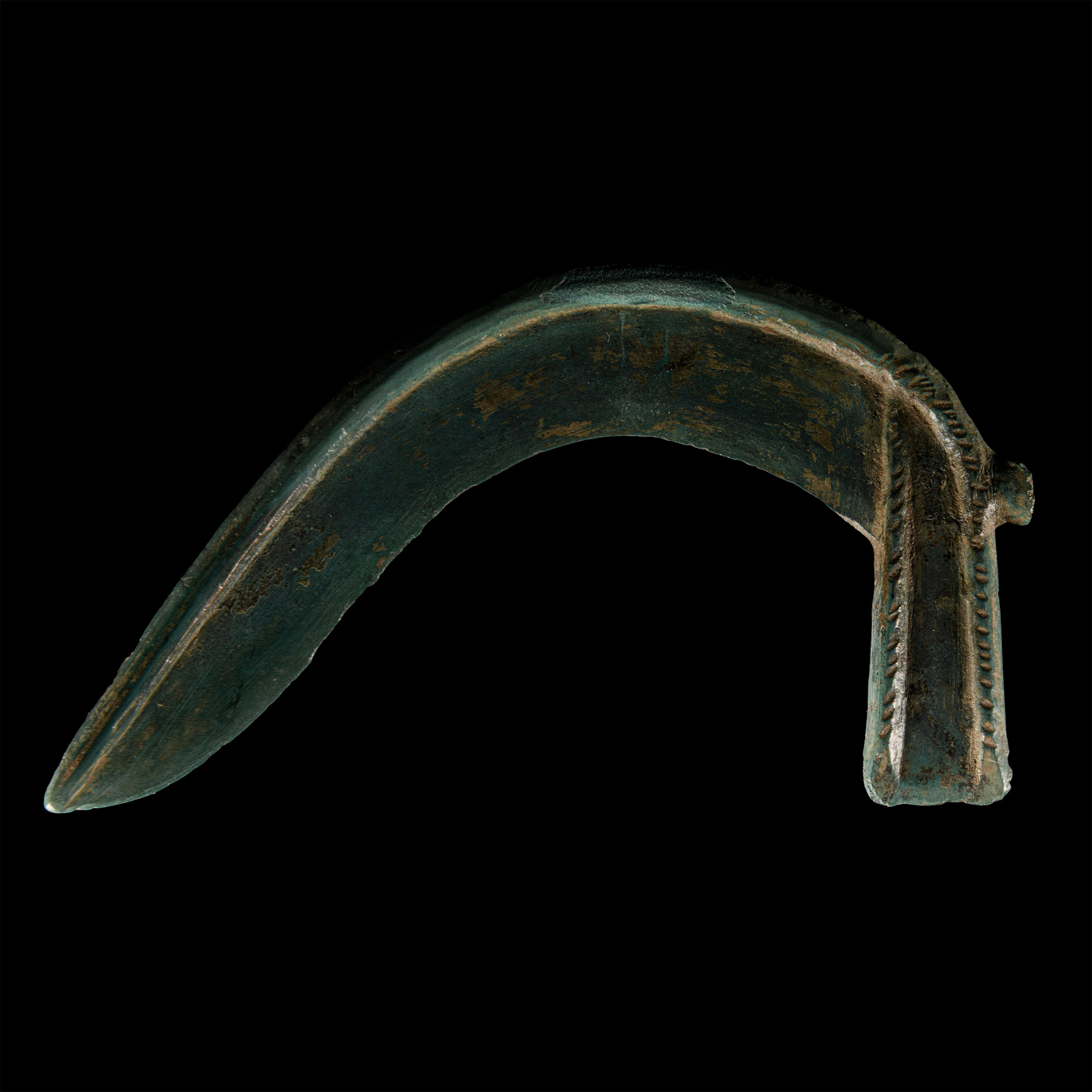
Bronze Age Sickle
2ND MILLENNIUM B.C.
7 in. (130 grams, 17.7 cm).
Of crescentic form with parallel raised ribs to the outer edges at the base, lateral spur to neck.
ProvenanceAcquired on the Austrian art market, 2000.
Ex Mr N.C. collection
European private collection.
Cf. The British Museum, museum number WG.283, for similar.
CONDITIONTimeLine Auctions follows a vetting process to ensure the authenticity and legality of all items, reinforcing our commitment to integrity and responsible trading. Each antiquity, antique, and coin lot undergoes thorough examination by a vetting committee of at least ten external specialists, professional trade association members, scientists, and archaeologists: Our Vetting Process
AUCTIONS:
TimeLine is a leading auction house specialising in antiquities, ancient art, collectables, natural history, coins, medals, and books. Our auctions offer museums, collectors, historians, and enthusiasts the opportunity to acquire unique and historically significant pieces.
LOT 1601
Bronze Age Sickle
Estimate £350 - 450€410 - 520 (for guidance only)$470 - 610 (for guidance only)
-
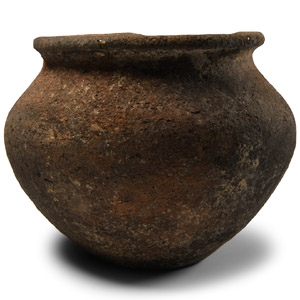
Bronze Age Terracotta Urn
3rd-2nd millennium B.C.Sold for (Inc. bp): £78
Squat jar with broad shoulder, rolled rim. 307 grams, 11.6 cm
From a collection acquired on the UK art market from various auction houses and collections mostly before 2000. From an important Cambridgeshire estate; thence by descent. -
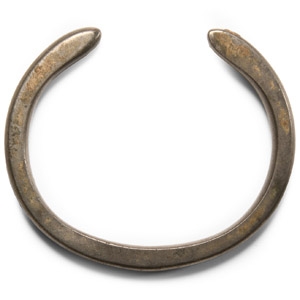
Bronze Age Penannular Bracelet
1st millennium B.C.Sold for (Inc. bp): £46
Square in section with rounded tapering ends. 28.3 grams, 59 mm
Private collection, Arundel, West Sussex, UK, 1975-late 1990s. -
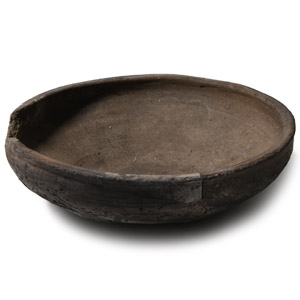
Large Bronze Age Decorated Grey Ware Bowl
Europe, 2nd millennium B.C.Sold for (Inc. bp): £52
Squat in profile with broad base and thick inturned rim. 711 grams, 19 cm wide
From a collection acquired on the UK art market from various auction houses and collections mostly before 2000. From an important Cambridgeshire estate; thence by descent.
