
Loading, please wait...
LOT 1547
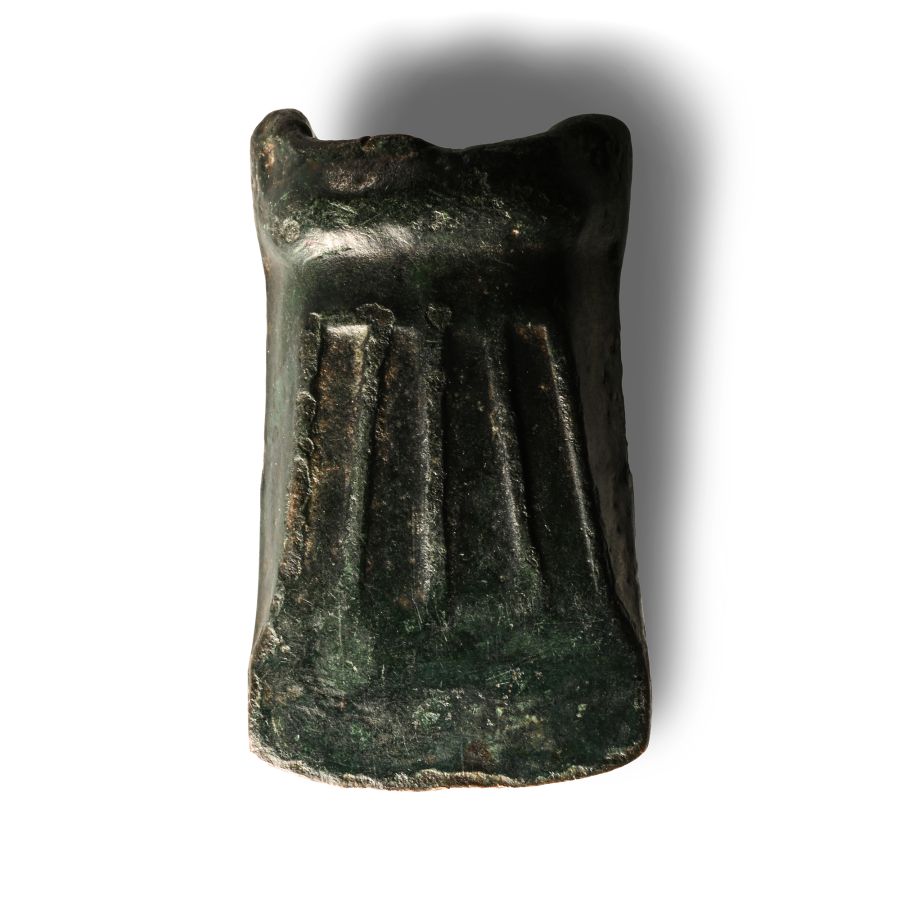
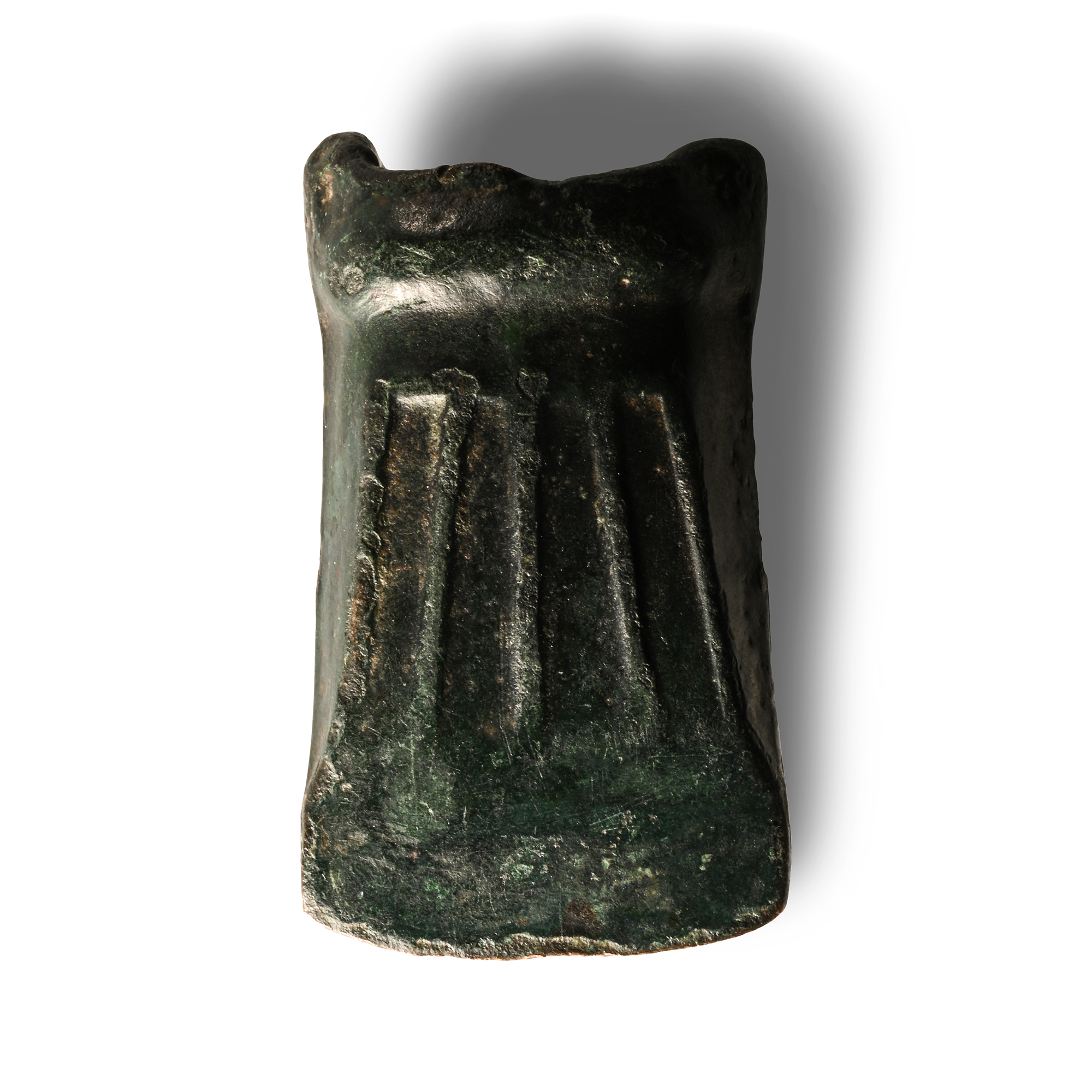
Bronze Age Ribbed Socketted Axehead
1ST MILLENNIUM B.C.
2 1/8 in. (88 grams, 55 mm).
With a gently curving cutting edge, raised horizontal ribs to the socket.
ProvenanceKuizenga collection, The Netherlands, formed from the 1970s onwards.
CONDITIONTimeLine Auctions follows a vetting process to ensure the authenticity and legality of all items, reinforcing our commitment to integrity and responsible trading. Each antiquity, antique, and coin lot undergoes thorough examination by a vetting committee of at least ten external specialists, professional trade association members, scientists, and archaeologists: Our Vetting Process
AUCTIONS:
TimeLine is a leading auction house specialising in antiquities, ancient art, collectables, natural history, coins, medals, and books. Our auctions offer museums, collectors, historians, and enthusiasts the opportunity to acquire unique and historically significant pieces.
LOT 1547
Bronze Age Ribbed Socketted Axehead
Estimate £150 - 200€170 - 230 (for guidance only)$200 - 270 (for guidance only)
-
Extremely Large Bronze Age Pin with Knop Finial
Central Europe, circa 8th century B.C.Estimate: £1,000 - 1,400 (‡+bp*)
Opening Bid: £500
Round-section shank with bulb to the upper end with incised chevrons and ribbing, narrow neck, biconvex knop finial with median hatched band. 205 grams, 83 cm
Acquired on the Austrian art market, 2000. European private collection. -
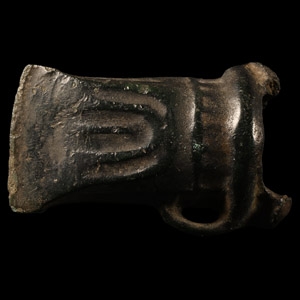
Bronze Age Looped and Socketted Axehead
Circa 8th century B.C.Sold for (Inc. bp): £176
Comprising of a wedge-shaped body and convex cutting edge, ellipsoid mouth and collar moulding; three raised moulded ribs to each face; D-shaped moulded loop to one edge; likely a South-Eastern variant. 73.2 grams, 59 mm
Acquired on the London art market in the late 1980s-1990s. From the family collection of an East London, UK, gentleman. -
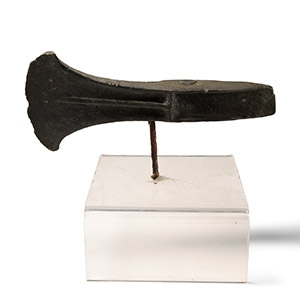
Bronze Age Palstave Axehead
Middle Bronze Age, 1400-1150 B.C.Sold for (Inc. bp): £143
Unlooped with long triangular flanges, raised mid-rib with expanding cutting edge; mounted on a custom-made display stand. 535 grams total, 16 cm wide including stand
From a collection acquired on the UK art market from various auction houses and collections mostly before 2000. From an important Cambridgeshire estate; thence by descent.
This is a Norman type palstave, widespread in south-eastern Britain and dated to the Taunton-Cemmaes period (MBAII). These are often associated with high nickel content.
