
Loading, please wait...
LOT 0340
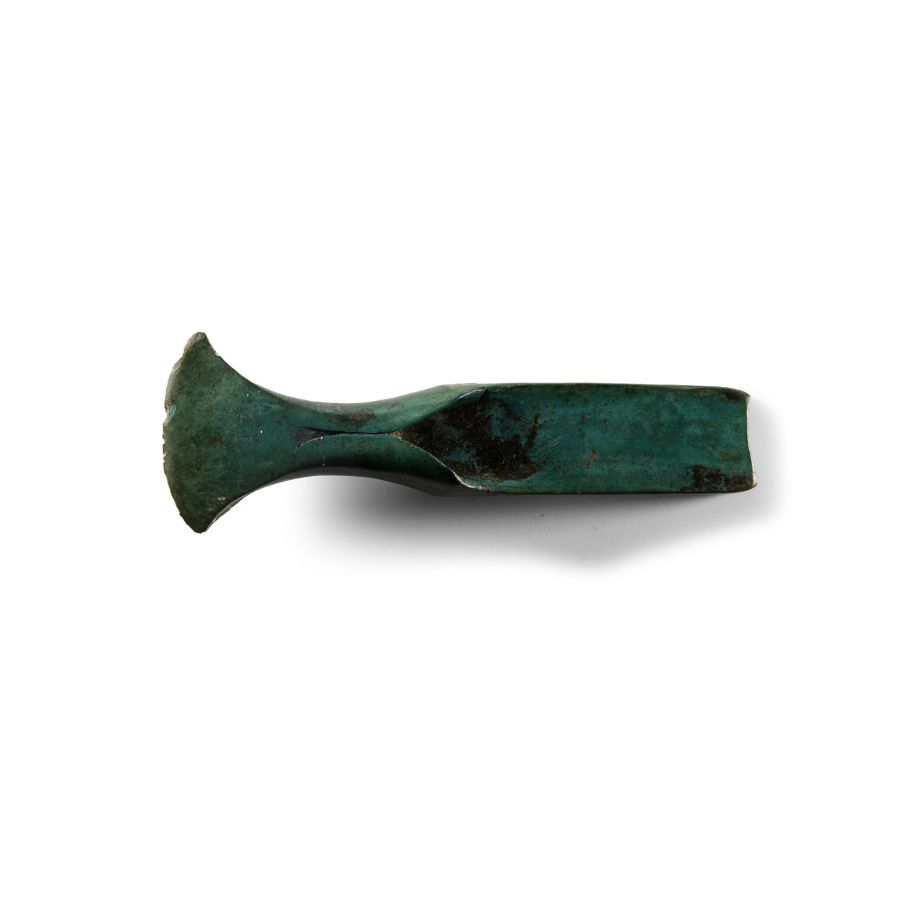
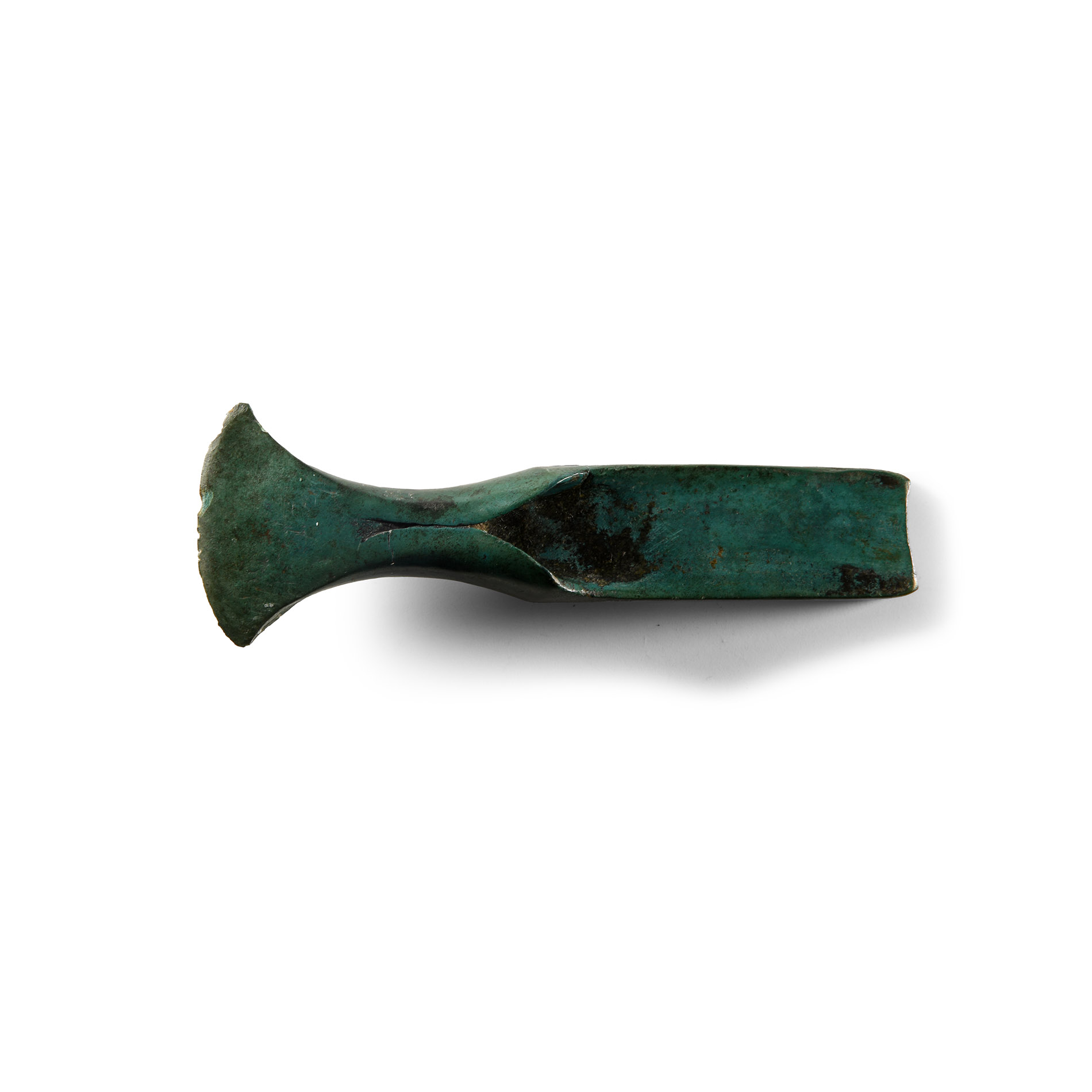
Bronze Age Palstave Axehead
CIRCA 1500 B.C.
4 7/8 in. (173 grams, 12.4 cm).
With a flared blade and a long flat-section shank.
ProvenanceNumisart collection, Munich, Germany, 1990.
Acquired in the 2000s.
From the private collection of John Lawton, Surrey, UK.
Accompanied by a previous illustrated catalogue page.
TimeLine Auctions follows a vetting process to ensure the authenticity and legality of all items, reinforcing our commitment to integrity and responsible trading. Each antiquity, antique, and coin lot undergoes thorough examination by a vetting committee of at least ten external specialists, professional trade association members, scientists, and archaeologists: Our Vetting Process
AUCTIONS:
TimeLine is a leading auction house specialising in antiquities, ancient art, collectables, natural history, coins, medals, and books. Our auctions offer museums, collectors, historians, and enthusiasts the opportunity to acquire unique and historically significant pieces.
LOT 0340
Bronze Age Palstave Axehead
Estimate £400 - 600€460 - 700 (for guidance only)$540 - 810 (for guidance only)
-
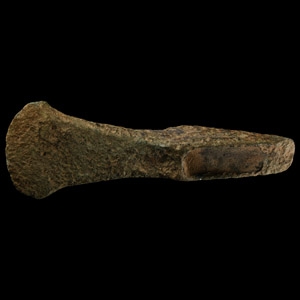
Bronze Age British Palstave Axehead
Circa 1500-1100 B.C.Sold for (Inc. bp): £169
Of Stop-Ridge type with slander shaft and deep step to each face, stop-ridge and depression below, shallow crescent blade. 400 grams, 15.5 cm
Found 15th July 2022 near Rudge, Shropshire, UK. Accompanied by a copy of the British Museum's Portable Antiquities Scheme (PAS) report no.WAW-A9C090. -
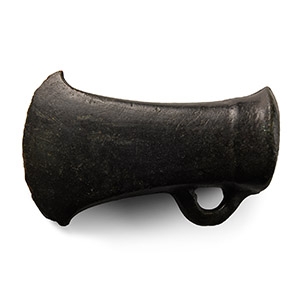
Bronze Age South-Eastern Type Looped and Socketted Axehead
Circa 10th-8th century B.C.Sold for (Inc. bp): £845
Broad hexagonal socket with thick rim to the mouth, basal loop, curved edge with lateral spurs. 308 grams, 94 mm
Found near Alton, Farnham, Surrey, UK. Acquired since the 1970s. From the private collection of a Surrey, UK, gentleman. -
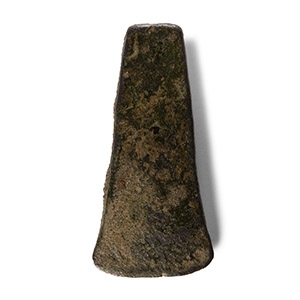
Bronze Age Copper Flataxe
2nd millennium B.C.Sold for (Inc. bp): £72
With a gently curving blade and tapering profile. 127 grams, 81 mm
From a North Yorkshire, UK, collection formed since the 1980s; thence by descent.
