
Loading, please wait...


LOT 1602
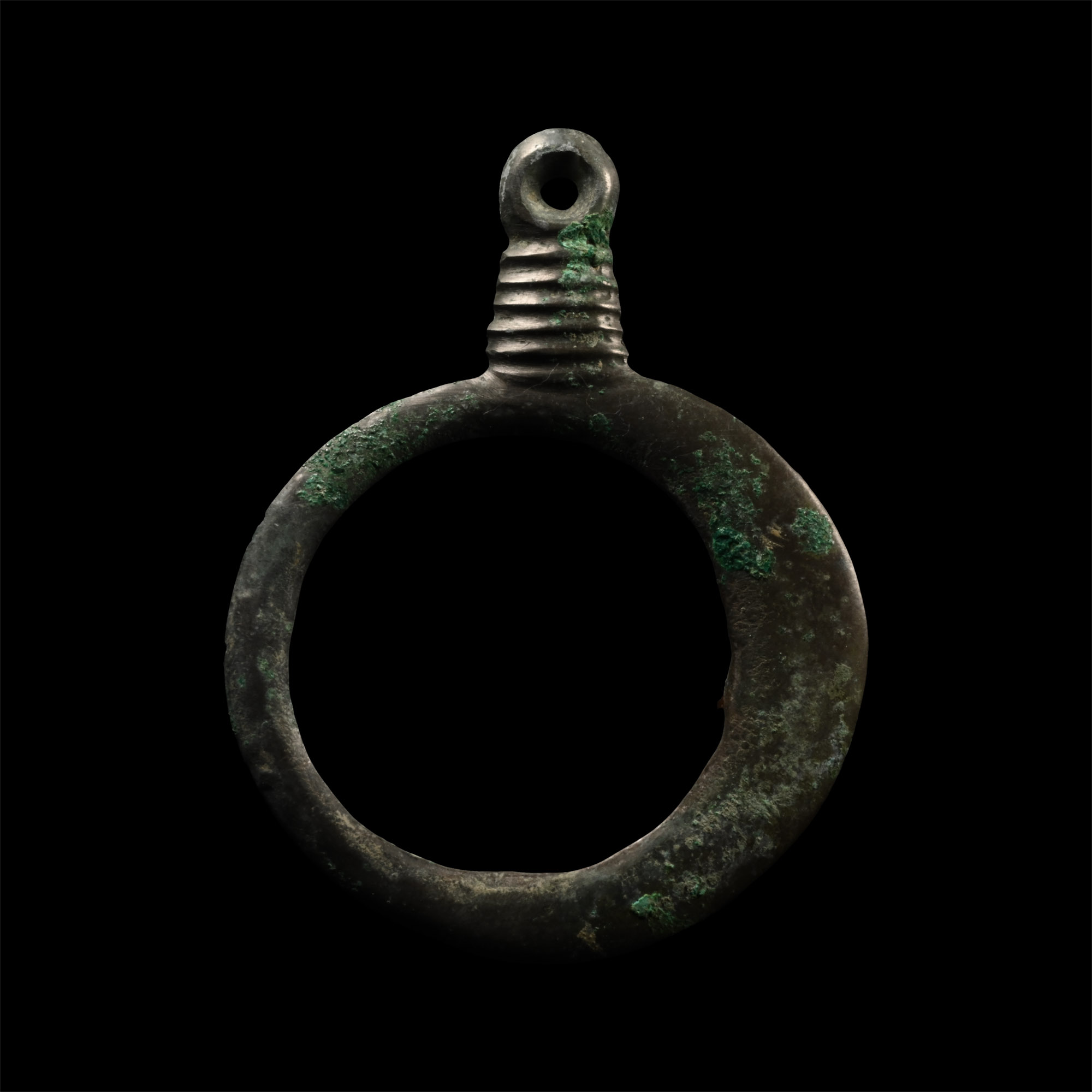
Bronze Age Loop Pendant
CENTRAL EUROPEAN, 1ST MILLENNIUM B.C.
2 7/8 in. (11.1 grams, 72 mm).
Discoid plaque with eccentrically placed circular void, ribbed neck and loop. [No Reserve]
ProvenanceFrom a 1990s German collection.
Ex London, UK, gallery.
TimeLine Auctions follows a vetting process to ensure the authenticity and legality of all items, reinforcing our commitment to integrity and responsible trading. Each antiquity, antique, and coin lot undergoes thorough examination by a vetting committee of at least ten external specialists, professional trade association members, scientists, and archaeologists: Our Vetting Process
AUCTIONS:
TimeLine is a leading auction house specialising in antiquities, ancient art, collectables, natural history, coins, medals, and books. Our auctions offer museums, collectors, historians, and enthusiasts the opportunity to acquire unique and historically significant pieces.
-
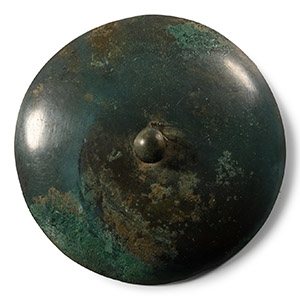
Large Bronze Age Shield Boss
1st millennium B.C.Sold for (Inc. bp): £520
Broad convex plaque with central button finial, ring to the underside. 107 grams, 13.1 cm
Ex Surrey, UK, collection, 1980s. -
.jpg)
Bronze Age Socketted Spearhead
1st millennium B.C.Sold for (Inc. bp): £520
With flared socket developing to a midrib with lateral step, leaf-shaped blade with stepped profile; opposed lateral holes to accept attachment pegs. 112 grams, 14.5 cm
Ex Surrey, UK, collection, 1980s. -
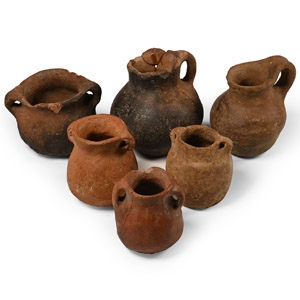
Bronze Age Ceramic Vessel Grave Group
Early Bronze Age, circa 4000-2000 B.C.Sold for (Inc. bp): £234
Earthenware vessel group comprising four with two opposed loop handles to the rim and two with a single thick loop handle; accompanied by an old collector's record card stating: 'Grave Group' of Pots. Late Neolithic or Early Bronze Age (4000-2000 BC). Central or S.E. Europe. Probably made for funerary use as they are too small to have been of practical value. The contents of a single grave (or at least 2-3 adjacent graves).' 486 grams total, 49-74 mm
From the collection of a late East Anglian teacher and antiquarian who retired to the Isle of Wight in Hampshire, UK. He amassed a large collection of objects between the 1960s-1980s.
