
Loading, please wait...
LOT 1240
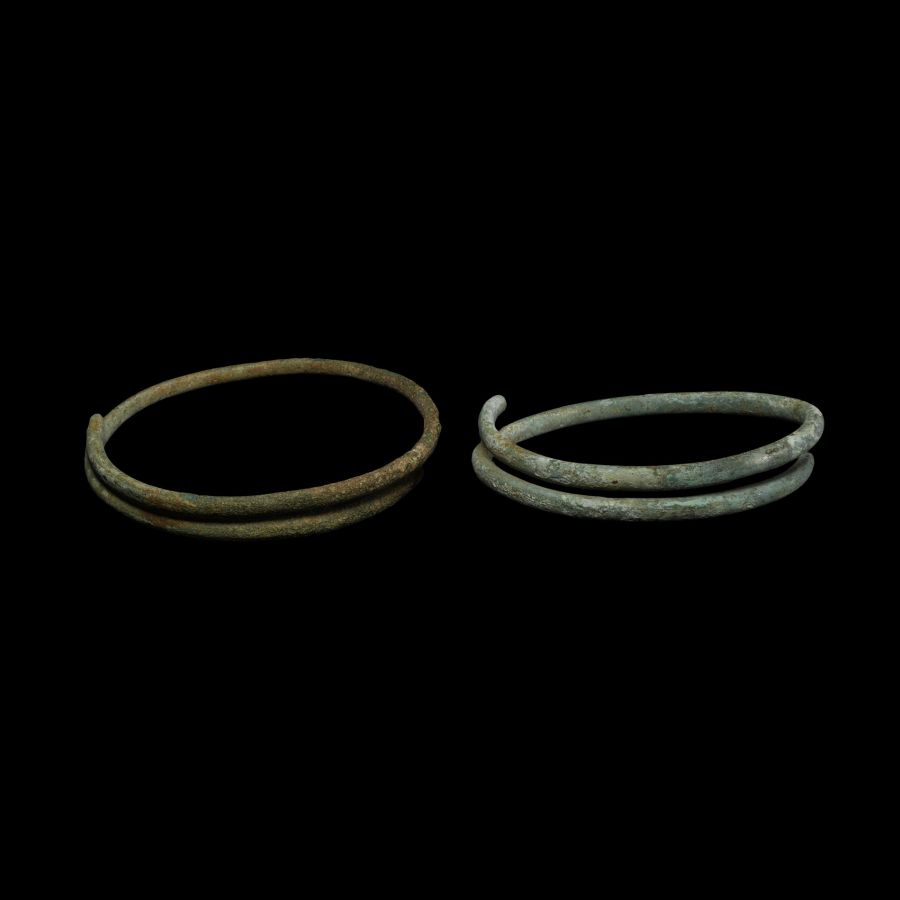
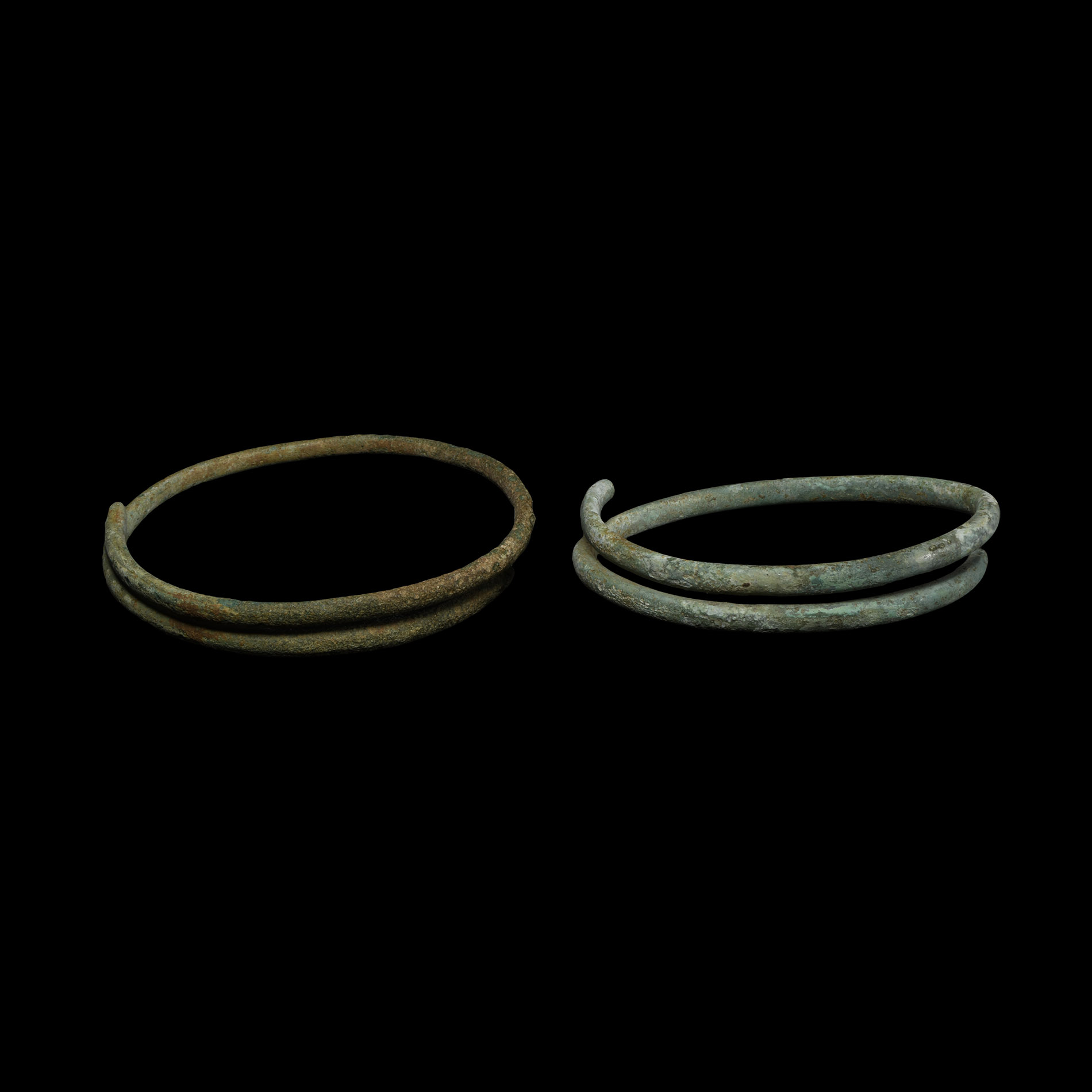
Bronze Age Large Bronze Bracelet Pair
CIRCA 2ND MILLENNIUM B.C.
3 - 3 1/4 in. (87 grams total, 77-84 mm).
Each composed of a coiled bar, one with decorative notching to the terminals; each differently sized. [2, No Reserve]
ProvenanceFrom an old family property, acquired before 1980.
Ex the Bavarian private collection of K.F.
TimeLine Auctions follows a vetting process to ensure the authenticity and legality of all items, reinforcing our commitment to integrity and responsible trading. Each antiquity, antique, and coin lot undergoes thorough examination by a vetting committee of at least ten external specialists, professional trade association members, scientists, and archaeologists: Our Vetting Process
AUCTIONS:
TimeLine is a leading auction house specialising in antiquities, ancient art, collectables, natural history, coins, medals, and books. Our auctions offer museums, collectors, historians, and enthusiasts the opportunity to acquire unique and historically significant pieces.
-
Bronze Age Single-Edged Sickle
2nd-1st millennium B.C.Sold for (Inc. bp): £65
Of curved form, parallel raised ribs to the outer edge, raised knop to neck. 61 grams, 12.2 cm
Ex German private collection. From the property of a London gentleman. Property of an Oxfordshire, UK, collector. -
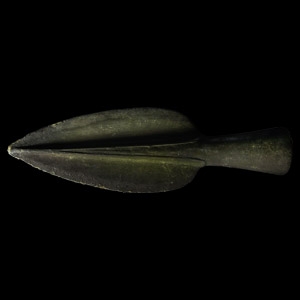
Bronze Age Socketted Spearhead
14th-12th century B.C.Sold for (Inc. bp): £234
Lusatian with a broad, pointed-oval blade and a raised central groove with converging ribs. 147 grams, 15.3 cm
Very fine condition.
Private collection, 1950s. Ex Gorny and Mosch, Munich, Germany, 18 December 2009, lot 463 (part).
The Lusatian Culture (1300-500 BC) is a Late Bronze Age culture, located in the geographic areas of Eastern Germany (Saxony and Brandenburg), Slovakia, Poland, the Baltic countries and the Black Sea area and is characterised by cremation burials. The dead were buried with their personal equipment: men were provided with weapons (comprising sword, dagger, axe, and spearhead) and ornaments (usually a pin or bracelet). At the start of the Middle Bronze Age, several innovations spread quickly and with a lasting effect across central Europe: swords (based on influences from the Danube region) and spears (socketted spearheads) appeared as new weapons, while two-edged razors, tweezers, knives, and sickles were the new tools. -
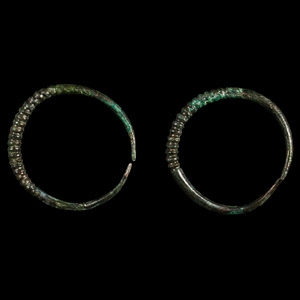
Bronze Age Ribbed Earring Pair
Circa 8th-6th century B.C.Sold for (Inc. bp): £85
Each formed as a penannular hoop tapering towards the terminals, the central lower body displaying a series of integral squat biconical ribs. 15.6 grams total, 41 mm each
UK collection, early 1990s and before. Acquired on the UK art market since the early 2000s. From a private collection, Lancashire, UK.
